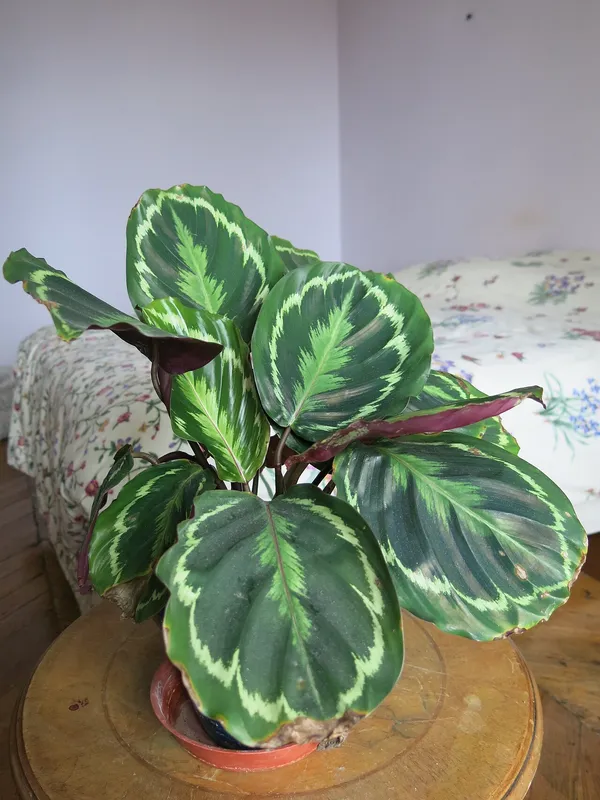
In the morning, the rounded leaves of Goeppertia orbifolia open with a thin brown line at the end of their silver-green stripes. The potting mix is still damp, yet the dry edge makes another drink feel tempting. A dry leaf tip and a dry root zone are not the same condition. When indoor heating begins, separating the path of warm air, the lifted weight of the pot and the water source makes the message at the margin easier to read.
The leaf edge and the pot hold different kinds of moisture
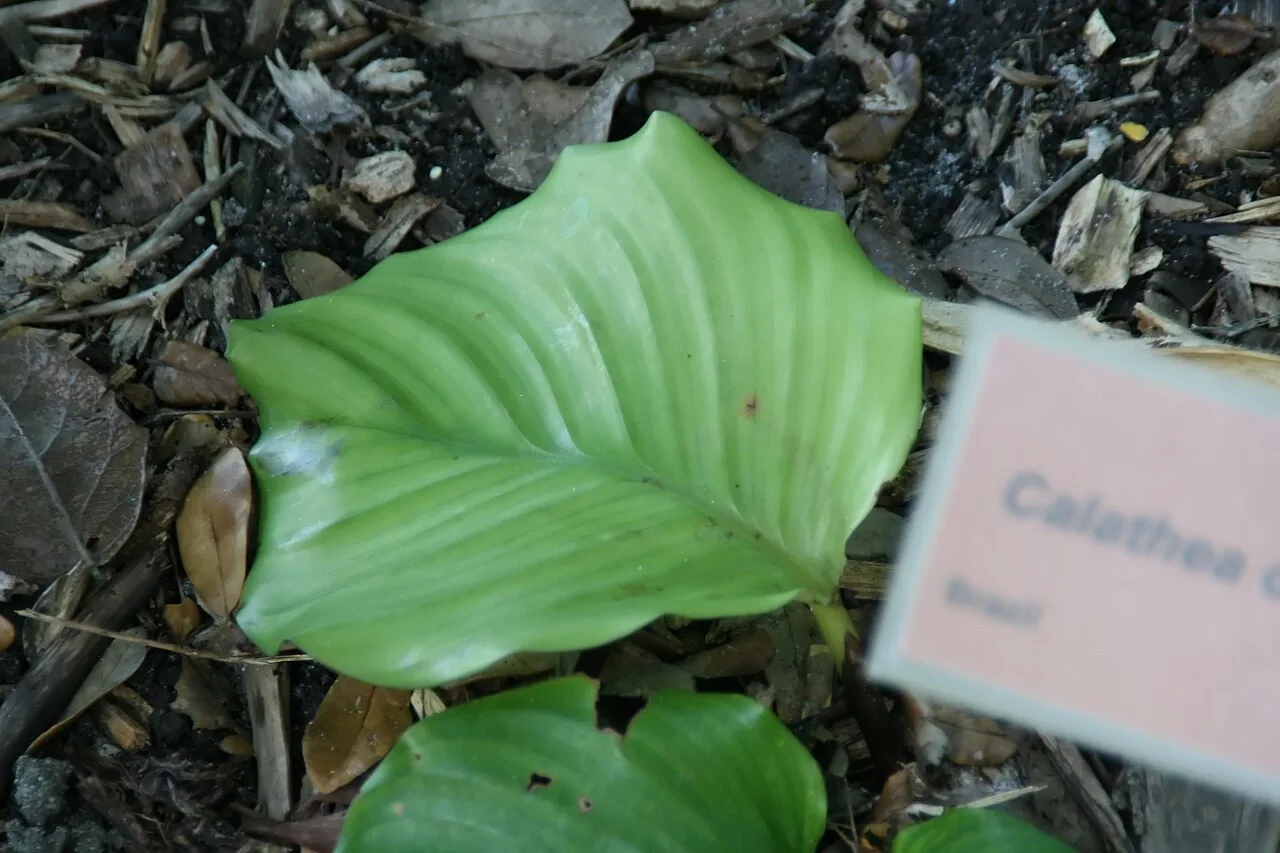
The accepted name is Goeppertia orbifolia, though it is still widely sold as Calathea orbifolia. This Marantaceae plant comes from the wet tropics of eastern Brazil. Its broad, thin leaves favour bright indirect light and humid air, while the roots do not favour stagnant, soggy mix. Neither a brown tip nor a dry-looking surface can describe the whole pot.
Direct heating air dries the space around a leaf before it dries the root zone. In lower winter light and cooler conditions, a pot may remain heavy even while its leaf margins lose moisture. Adding water then tries to correct dry air by making the roots wetter. Lift the pot first, and check that no water is standing in the saucer or cover pot. Do not fold leaf dryness and root dryness into one diagnosis.
Move the plant out of the line of a heater or vent, and keep its leaves from touching cold window glass. A stable bright position is more useful than repeatedly moving it for a day and returning it. Winter light may justify a brighter place than in summer, but retain enough distance to keep strong direct sun off the leaves.
Build humidity around the place, not a misting schedule
A humidifier, a group of plants, or a wide pebble tray can raise humidity around the foliage. Keep the base of the pot above the waterline. Misting may briefly wet a leaf, but its value as a way to stabilise room humidity is uncertain. Rather than creating foliage that stays wet into the night, remove direct heating air and keep the surrounding humidity gradual and steady.
Even moisture does not mean permanently wet mix. Let the surface begin to dry and wait until the lifted pot feels lighter than it did after the previous watering. Water as the room is warming, allow the excess to drain, and empty the saucer or cover pot. The useful interval sits between letting the root ball dry completely and leaving it constantly saturated. Learn that interval through the weight of the same pot.
Brown tissue will not turn green again. If you want to neaten the leaf, clean scissors can follow its outline and remove only the dead portion. Trimming does not correct the cause. The next unfurling leaf, and the still-green edges of older leaves, will show whether the change in position is reaching the plant.
Compare water quality last
Salts and fluoride in water can contribute to damaged tips on orbifolia. A brown edge alone, however, is not enough to blame tap water. If new leaves continue to brown after correcting heating air, pot moisture and fertiliser use, test rainwater or another low-mineral source on part of the routine, then compare later growth.
Concentrated fertiliser, especially on a dry mix, can add salts around the roots. Because growth slows in autumn and winter, do not keep a spring-and-summer feeding rhythm by habit. Changing humidity, watering, placement, water source and fertiliser on the same day hides the useful evidence. Remove the draught first and record pot weight. Stabilise humidity next. Test water quality only after that.
Once a week, photograph the same leaf from the same angle and note only pot weight and watering date. A small brown edge is less a verdict than a line showing where the timing of room air and root moisture has drifted apart. Before adding water, ask which side of the plant is dry. Caring for the rounded leaf begins not with a wetter pot, but with a calmer climate around one plant.