A label that says “cactus” can make winter watering feel like something to stop. Yet Rhipsalis baccifera, with fine stems trailing over the pot, is an epiphytic cactus that lives on trees as well as rock. As November approaches, pause before giving it the same dry rest as a rounded desert cactus. Read the rate at which the pot loses water together with the firmness of the stems.
A cactus that trails from trees
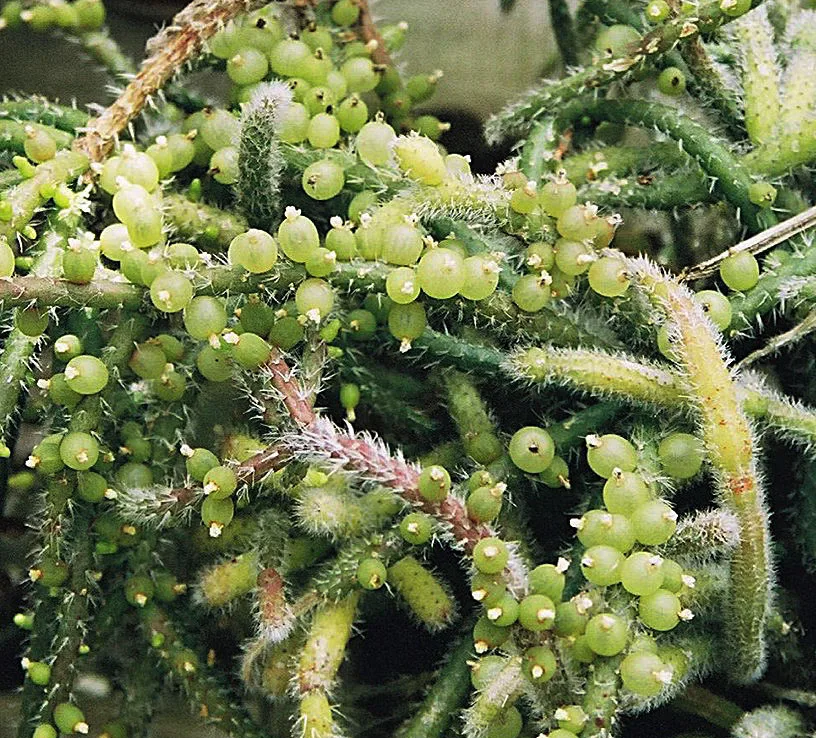
Rhipsalis baccifera branches into slender green lines that perform the work of leaves and loosen below the rim of a pot. Kew records the species as a succulent epiphyte or lithophyte, growing on trees and rocks. Although it belongs to the cactus family, the pattern of air and water around its roots is not the same as that of a species standing in dry ground.
In the hollow of a branch, rain passes through while a small amount of organic matter can retain some moisture. A pot does not need to reproduce that scene perfectly. It can, however, keep roots from sitting in water without leaving them completely dry for weeks. A free-draining mix for epiphytic cacti helps create that middle ground, including the return of air around fine roots as the mix dries.
The Royal Horticultural Society’s general cactus guidance gives desert cacti a dry rest from late autumn to early spring. Its page for Rhipsalis baccifera, by contrast, advises keeping the compost just moist in winter. “It is a cactus, so stop watering” is less useful here than first asking where this particular cactus lives. Plants beneath the same nursery label may still differ: a rounded stem rooted in open ground and fine stems hanging from branches do not necessarily share the same winter rest.
In winter, less water is not no water
Watering is reduced in winter because shorter days slow growth and water loss. Reduction does not mean choosing a date when watering becomes zero. Look beyond the colour of the surface: feel the mix within reach, note the weight of a pot that can be lifted, and record how long it has taken to dry since the last watering. A pot that became light after three days in October may still feel heavy after seven in November. That difference is the cue to change the rhythm.
North Carolina State University Extension treats Rhipsalis baccifera as a cactus that prefers more consistent moisture than many others. It advises watering when the soil is dry and reducing water in winter. When you do water, let the surplus drain from the base and empty the saucer. Separating a wet phase from a drying phase is more useful than adding a small amount every day. With a hanging pot, the weight you feel when lowering it can become a repeatable reference.
Bright, indirect light is the starting point. Once heating begins, air at the same window can become drier while the glass grows sharply colder at night. Do not translate a preference for humidity into a misting schedule alone. Move the pot out of direct heated airflow and notice whether its drying time has changed over the last several days. Where daytime light and night cold diverge sharply, moving the pot a few centimetres inward can make the conditions easier to read.
Read the fine stems and the pot on the same day
A thirsty stem may lose firmness and begin to pucker. Extension guidance also uses puckering and loss of rigidity as clues, but softness alone cannot establish the cause. If the mix remains wet, do not add more water. Check for discolouration or damage at the base and make sure drainage is open. Light and airflow differ between the outer and inner stems of a hanging pot, so compare several stems near the base with the tips rather than deciding from the most visible one.
If the mix is dry, the pot is light and the stems are also losing tension, several reasons to water are beginning to align. Use changes in both plant and pot, rather than a weekday schedule. A short note before and after watering makes the drying speed of this particular room visible over time.
When persistently wet mix, low temperature and weak light coincide, look beyond the interval between waterings to the drainage hole and the structure of the mix. A black, soft base, widespread stem collapse or a changed smell deserves closer assessment by a nursery or horticultural specialist rather than a distant assumption of thirst.
Preparing for winter is not the act of choosing a date to stop watering. It is noticing shallower morning light, the start of indoor heating and a change in the speed at which water leaves the pot. Remembering that this cactus trails from trees leaves a narrow, workable path between drying too far and keeping the roots wet. The stems will not all change at once. Space to compare yesterday’s pot with today’s is part of winter care.