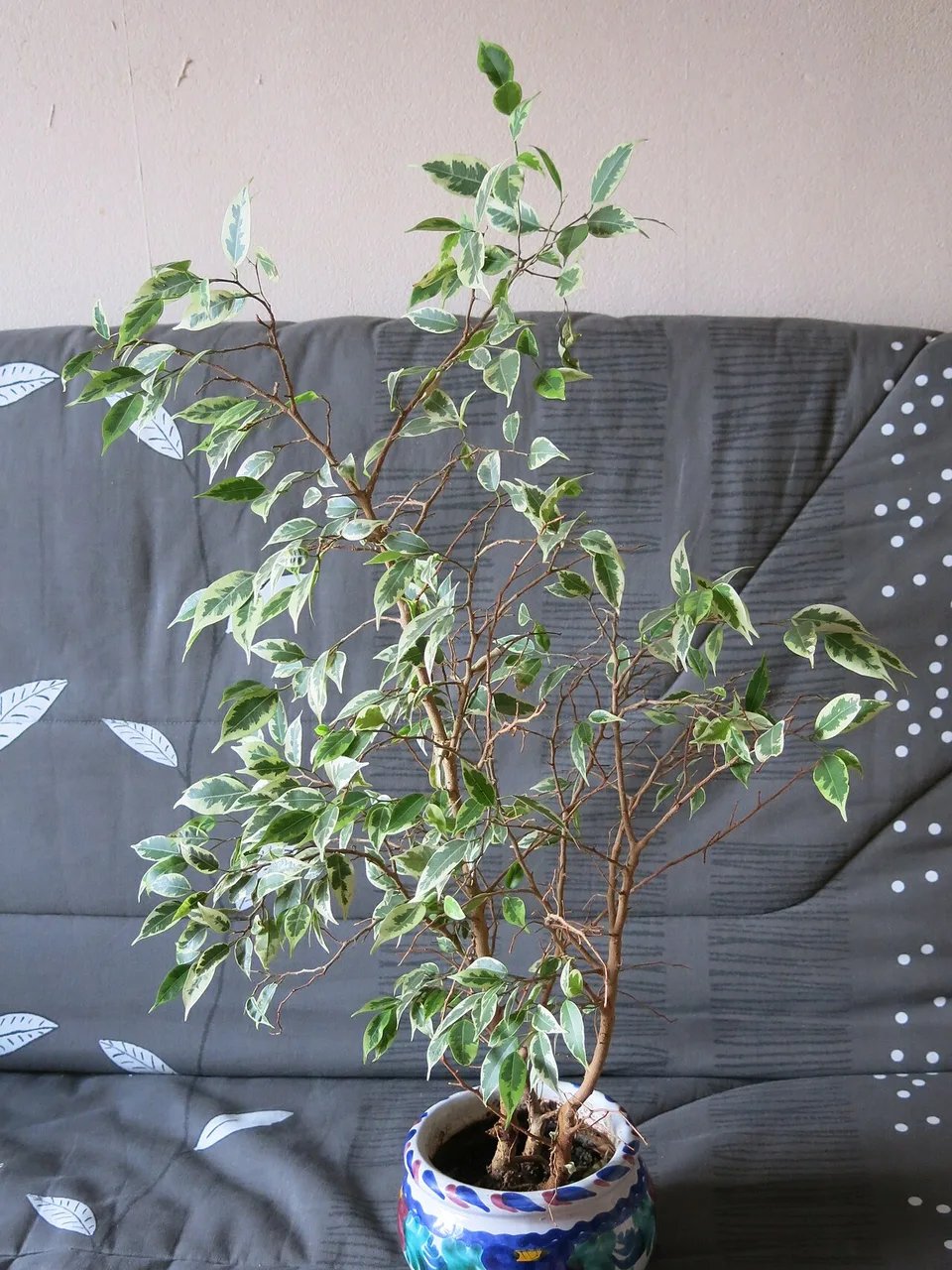
On an October morning, several still-green leaves lie beneath a weeping fig. When leaves that were attached the night before arrive on the floor together, it is tempting to settle immediately on one cause: too little water, or disease. Yet Ficus benjamina can shed leaves after a move from a window to the room, or from outdoors to indoors, as it responds to a different environment. Before adding anything, reconstruct the order in which position, light, temperature and watering changed.
Fallen leaves do not all mean the same thing
Ficus benjamina is an evergreen tree in the mulberry family, native from Southeast Asia to northern Australia. North Carolina State University Extension describes it as a plant for bright, indirect light and notes its sensitivity to changes in light. After a move, it may shed leaves and produce new ones suited to the new conditions. Leaf fall can be part of the plant reading a room again.
A move is not the only possible cause. The Royal Horticultural Society lists overwatering, low winter temperatures, insufficient light, excess fertilizer and cold drafts among reasons for sudden leaf drop. A single fallen leaf cannot make a diagnosis. The date of a move, how long the potting mix stays wet and whether the window cools sharply at night help narrow the possibilities.
The pattern offers clues. If green leaves fall soon after a move while the branch tips remain active, begin by recording the environmental change. If yellowing continues while the mix remains wet, check the rate of drying before adding water. Fine stippling, webbing or stickiness under leaves can point toward pests. Do not decide from one photograph; place the plant and the room on the same timeline.
Do not correct the position all at once
Choose a place that remains bright through the day without exposing the plant directly to harsh sun or cold moving air. Start with bright, indirect light and adjust the distance from the window gradually. Carrying the pot to another room whenever a leaf falls presents yet another set of conditions. In one stable place, observe morning and afternoon light, heating hours and the night temperature at the glass.
Watering should not become a reflexive answer to leaf fall. As light weakens, the rate at which a pot loses water changes from summer. Check more than the surface: feel the mix within reach, lift the pot if practical, and make sure surplus water can drain away. Using the rate of drying rather than a weekday helps prevent a plant with fewer leaves from receiving a summer quantity by habit.
A heating vent and a cold window can create different climates within the same room. Clemson University Extension notes that blasts of heat and drafts can contribute to leaf drop. If the pot cannot move far, begin with a small change: step it out of the airflow, increase the distance from the glass, or keep foliage from pressing against a heavy curtain at night.
Even when the outline of the branches grows lighter
National Garden Bureau named Ficus its 2026 houseplant of the year and presents the genus through its many indoor forms. Weeping fig is among the species that shows environmental change visibly through its leaves. In a slower season, do not try to replace fallen foliage quickly with fertilizer. Once light and temperature are steady and the roots are not staying wet, wait to see whether leaves suited to the new conditions begin to move.
If branch tips dry back, the base of the trunk softens, or leaf loss continues while new growth also stops, do not assume that placement is the only issue. Roots, pests and disease may need closer professional assessment. This article offers a calm first way to separate possible causes after a move; it cannot diagnose a declining plant from a distance.
Avoid prolonged contact with the white latex released by cuts or damaged tissue. Clemson University warns that latex from Ficus can irritate skin and cause problems if ingested. Clear fallen leaves before young children or animals can mouth them, then wash hands and tools after pruning. Safety is part of deciding where the pot belongs.
The useful response on the morning leaves fall is not to move the pot again and again. Note where it stood yesterday, its distance from the window, the night temperature and the last watering date. Waiting for the next leaves in one stable place turns leaf fall from a mark of failure into a record of how a weeping fig registered the changing room.