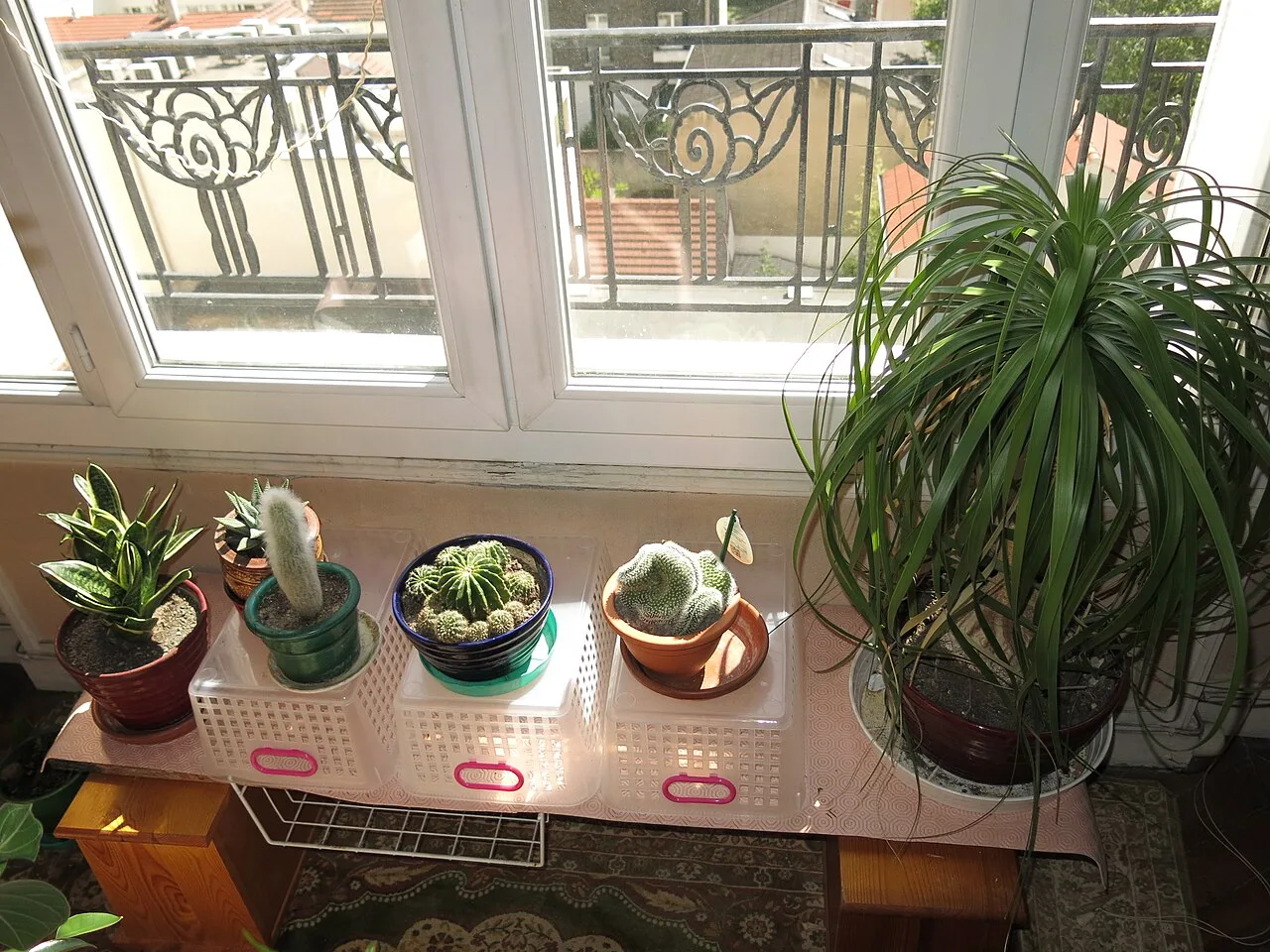
A pot that seemed bright at the back of the room in summer may begin turning its leaves toward the window in autumn. Before giving it a quick half-turn, record the direction from which the plant has been receiving light: the front of the pot, the overlap of its leaves and the distance to the glass. Reconsidering those three details makes a move less like rearranging a room and more like carrying forward the plant’s history of light.
Photograph the current front first
Plants grow toward light, and indoors the window side and room side often diverge. On the morning you move a shelf, take one photograph from the front and another from the side, including the rim of the pot. Note where new leaves point and where older leaves overlap. The record is not for styling; it helps distinguish a new lean after the move from the shape the plant already held.
For plants where even growth is desirable, turning the pot gradually can help. Changing the direction whenever the mood strikes, however, makes the plant’s response harder to read. Choose a consistent interval and amount, and put a small mark on the back of the pot. A quarter-turn is easier to compare than a half-turn. A vine trained to one side, or a flowering plant already facing the window, need not be hurried toward symmetry.
Wipe one leaf before moving closer
As days shorten and light weakens toward winter, many houseplants can benefit from moving nearer a south- or west-facing window. Distance is only part of the light they receive. Look once in the morning and again in the afternoon at shadows cast by neighbouring leaves, curtains and the window frame. Even a ten-centimetre shift along the same shelf can change how long light reaches a leaf.
If dust has settled, support each leaf and wipe it with a soft damp cloth. The RHS also advises removing dust so weaker winter light can reach the leaf surface. There is no need to polish away the texture with a leaf-shine product. Recording the day you clean creates a separate rhythm of care from watering and reveals how quickly dust gathers at that window.
A plant kept away from a bright summer window may scorch if moved abruptly into direct sun. Begin behind a sheer curtain or slightly back from the glass, then watch colour and texture over several days. Cacti and succulents that favour strong light will settle at a different distance from pothos or philodendron derived from forest understories. Move one pot at a time rather than advancing the whole shelf.
The brightest place may be coldest at night
A window that is bright by day can become one of the coldest indoor positions at night. Check whether leaves touch the glass and whether closing the curtain traps the pot on the cold side. At another window, a heater may change brightness and dryness together. Do not decide from daytime light alone; touch the leaves and the potting mix first thing in the morning as well.
Do not change watering just as dramatically on the day a plant moves. Growth slows through autumn and winter, and potting mix dries at a different rate. Rather than assuming a brighter window must mean faster drying, or a cold window means no water, judge each watering from pot weight and the surface of the mix. Changing light, temperature and moisture all at once makes the leaves’ response harder to interpret.
A windowsill shelf brings together pots with different leaves and different appetites for light. Notice the shadow a tall plant casts over a smaller one, the angle at which a thick leaf receives light and the older leaves retained on the room side. The arrangement does not need to reach a single correct orientation. Record an autumn view, move a little, and wait for the next leaf. Before the hand corrects the shape, it can acknowledge the direction the plant had already chosen.