At the end of autumn, a once-rounded caudex can look slightly narrower. It no longer feels as taut as it did in spring and summer. Does it need water, or is it preparing to rest? Winter care for Pachypodium rosulatum subsp. gracilius should not be decided by softness alone. Look at whether leaves remain, how dry and light the pot has become, and where the night minimum is moving. Read those three signals on the same day, and the small space between withholding water and adding it becomes clearer.
The rounded stem becomes a winter reservoir
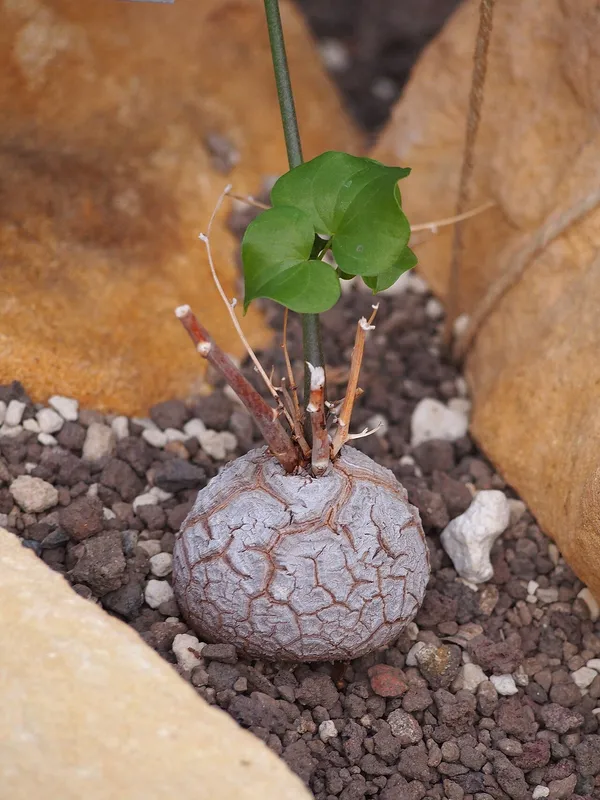
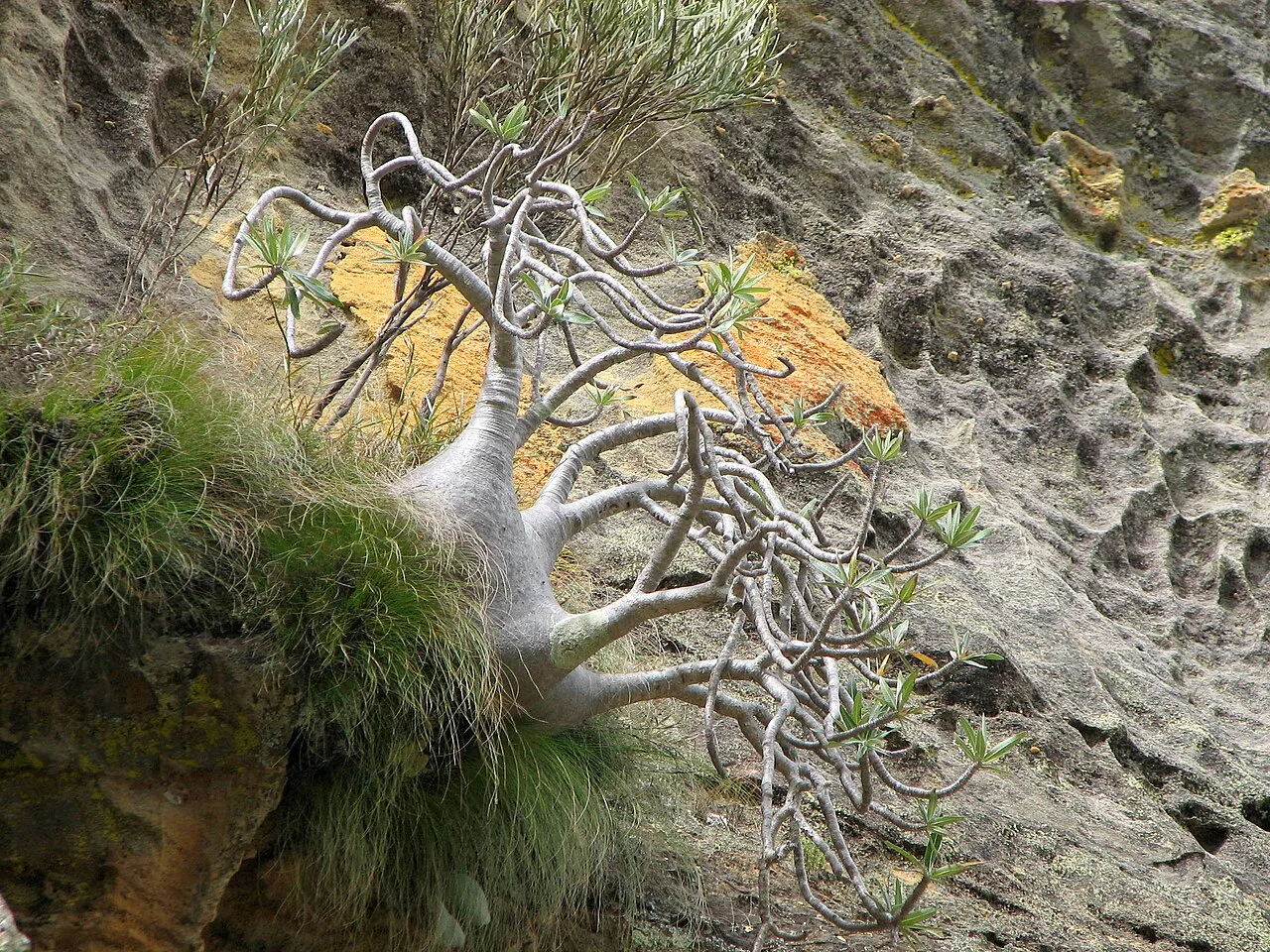
Pachypodium rosulatum subsp. gracilius is a caudiciform shrub native to the seasonally dry tropics of south-central Madagascar. It opens leaves during the wetter season, stores water in its swollen stem and crosses the dry period on those reserves. In a Japanese pot, yellowing and falling leaves as temperature and light decline usually accompany slower growth and lower water use. Holding a summer silhouette through winter is not the measure of success.
A plant entering dormancy may use stored water and contract a little. Another plant, kept warm under strong light, may retain leaves and never become fully dormant. A rule such as “stop watering in November” loses the difference between those rooms. Read the leaves and the growing tip before the calendar.
If the leaves have fallen, tip growth has stopped and the pot is light, yet the caudex retains an even firmness, do not rush to restore water. Keep the plant bright and warm and watch the direction of change. If leaves remain and daytime warmth rises at a bright window, a very restrained drink after the mix has dried thoroughly may suit it better than total withholding. In both cases, ask whether the plant is using water before asking how many days have passed.
Do not read a wrinkle as a single signal
When the caudex contracts, record three things on the same day: leaves and new growth, the lifted weight of the pot, and the night minimum. No leaves, a light pot and a low night temperature point toward a plant resting dry rather than actively absorbing water. Remaining leaves, a light pot and stable warmth can justify considering a small amount. The touch of one finger needs the context of all three.
Touch the same area each time without pressing hard. A uniformly narrower stem with shallow wrinkles, unchanged colour and smell, and a dry mix can be observed as the use of stored water. A single area that suddenly collapses, darkens or smells unusual, especially while the mix remains wet, should not be treated as ordinary thirst.
Adding water to a local collapse can leave a cool root zone even wetter. Pause routine watering and check pot temperature, drying time and discolouration around the base. Do not turn immediate unpotting or cutting into a universal instruction; if the change progresses, seek help from an experienced grower or nursery. The useful distinction is between a caudex that has rested and contracted slightly and one wet area beginning to fail.
In winter, drying time matters more than a schedule
If a small winter drink is appropriate, choose a bright morning with rising temperature rather than the evening. Do not simply miniaturise a summer soaking. Use an amount that will not keep a cool root zone wet for long, then observe how long it takes to dry. Empty the saucer. Lower nights, weaker light and still air all extend drying time.
For the related species Pachypodium geayi, the Royal Horticultural Society advises moderate water in growth, almost dry conditions in winter and an occasional sparse drink to prevent wrinkling. This is not a species-specific prescription for gracilius, but it helps avoid treating winter Pachypodium as a choice between abandonment and summer watering. Japanese gracilius guides similarly begin with dryness after leaf fall, then adjust very sparingly when stem contraction and room temperature support it.
A photograph taken from the same side, plus a short note of the night minimum and watering date, is enough to make the decision lighter. There is no need to press the plant every day. Compare changes over several days or a week under similar conditions. What winter care protects is not perfect roundness. It is the plant’s ability to receive water through living roots when warmth and light return in spring.