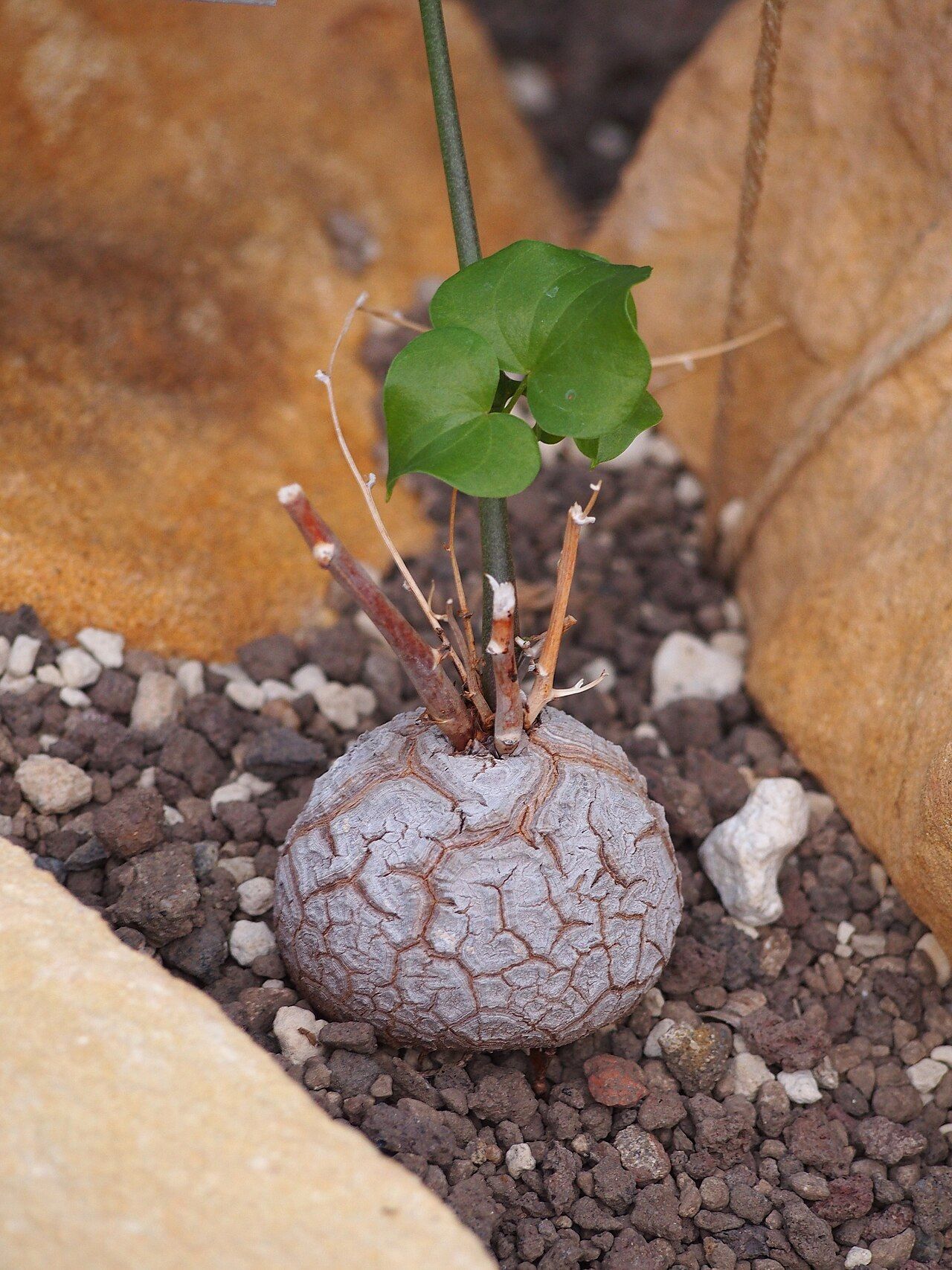
The tortoise-shell caudex does not reveal the date when watering should resume. The clue is a single green shoot beginning to move above it. Dioscorea elephantipes signals the end of dormancy with a new vine, not a square on the calendar.
A finer signal than the calendar
Dioscorea elephantipes is a climbing caudex geophyte native to South Africa’s Cape Provinces. In habitat it tends to grow through the cooler season, then lose its leaves and vine as it rests through hotter weather.
A plant kept indoors or under glass will not wake on a universal date. Before increasing water simply because September has arrived, look for a fresh bud at the top of the caudex and the first movement of a slender vine.
Check drainage before the first watering
Keep water limited while the plant is dormant and no fresh green growth is visible. Once a new vine is clear, resume watering only after confirming that water can leave through the base of the pot, and never leave the pot standing in a full saucer. Wait for the mix to dry and the pot to feel lighter before watering again.
Even a free-draining mix dries at different speeds according to the pot, the root system and the airflow around it. Do not give terracotta and plastic pots the same schedule. Read the weight of the pot together with the dryness just below the surface.
Give the caudex and vine different light
In habitat the caudex often sits in the shade of surrounding growth while the vine climbs towards light. In cultivation, protect the patterned caudex from prolonged fierce sun and heat, while giving the extending vine bright light and a fine support.
A fresh vine is soft and searches as it climbs. Guide it early towards a hoop or a slim branch instead of untangling it every day. The leaves can then receive light without forming a dense knot.
Yellow leaves become the next signal
As the growing period closes, yellowing leaves and a drying vine suggest that watering should be reduced. Do not decide from one leaf alone. Check whether new growth has stopped and whether the pot now takes longer to dry.
Dormancy is not a failure. A resting plant should not receive the same frequency of water it took while fully leafed. Conversely, if a green vine is still extending, do not force the plant dry simply because the calendar says summer.
One-line notes prepare the next season
Record the day a bud appears, the day the pot becomes light and the day you water again. The purpose is not to build another fixed schedule, but to learn how long your own pot takes to dry.
The photograph shows Dioscorea elephantipes in a greenhouse at the Wrocław University Botanical Garden in Poland. Its conditions differ from a room in Japan, but the active vine is clear. Do not choose the watering day first: wait for green movement, then read the weight of the pot.