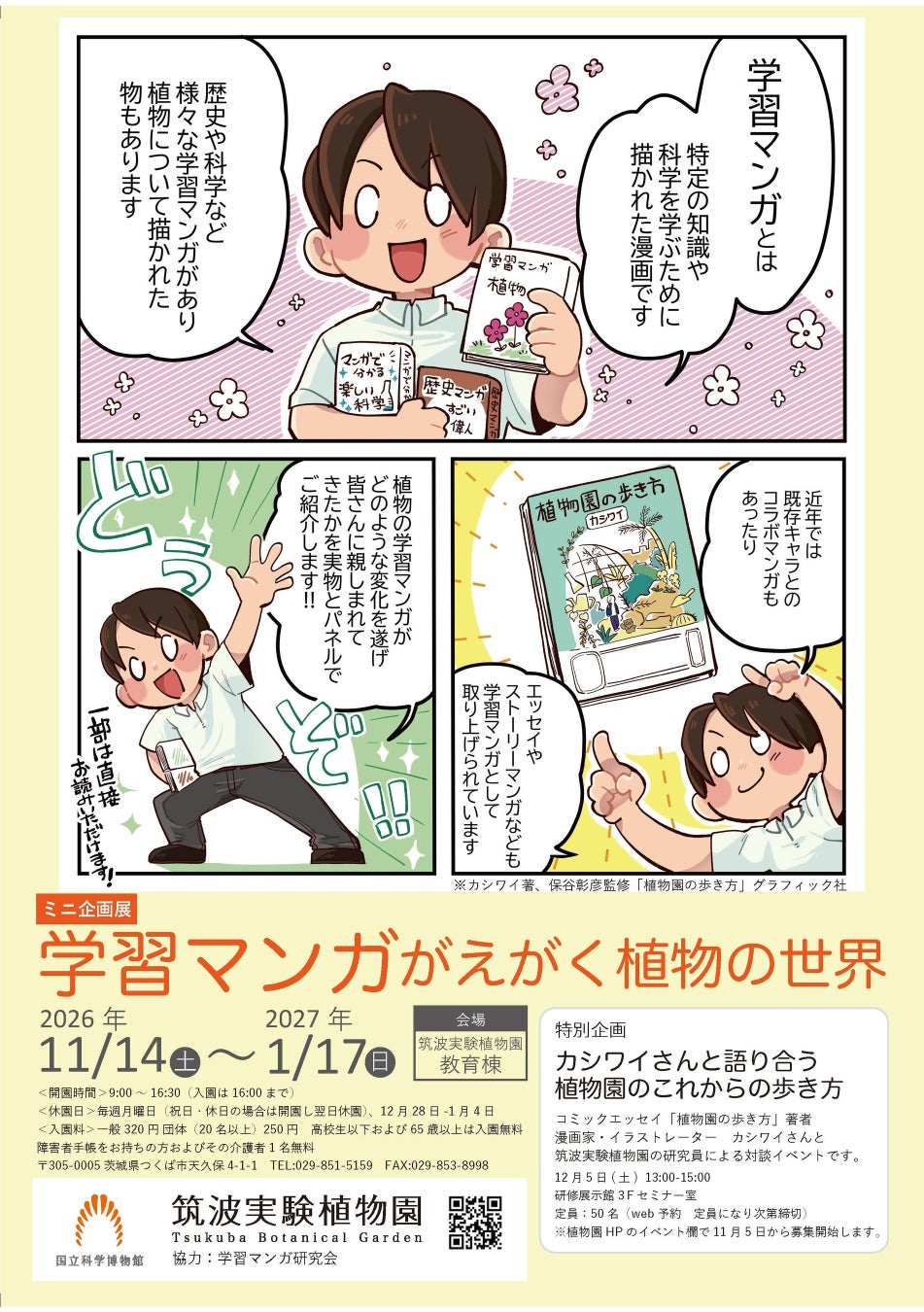
A root draws up water, a leaf receives light, and a flower opens. Educational manga has long placed those steps in sequence, turning the slow time of plant growth into something visible on a page. Opening at Tsukuba Botanical Garden on November 14, How Learning Manga Draws the World of Plants moves from science manga of the 1950s to specimens, biographies of researchers and present-day essays and entertainment. When did the plant shift from a subject of knowledge to a protagonist?
Placing hidden time between panels
The exhibition begins with changes in educational manga about plants. Early works often tied crops and horticulture to everyday life. From the 1970s, basic science devoted more space to structure and physiology. Recent books extend toward ecology, the environment and human society, and are designed not only to deliver answers but also to elicit a child’s why.
Plants rarely make large gestures. Germination, elongation, flowering and fruiting are movements, yet only a fragment is visible at one moment. Manga can place different moments beside one another, add sections, enlargements and words, then let the reader experience them as one continuous change. The useful question is therefore not only what is accurately drawn, but also how an otherwise hidden process has been ordered for the reader.
The same leaf plays different roles on a page about growing crops, one comparing form and another describing an ecosystem. The order of panels becomes an order of looking. Does the reader learn a name first, then observe shape, then reach everyday use? Or does a small question come first and lead through observation toward an answer? Changes in that design preserve differences in how each period imagined learning.
Making a story around a pressed leaf
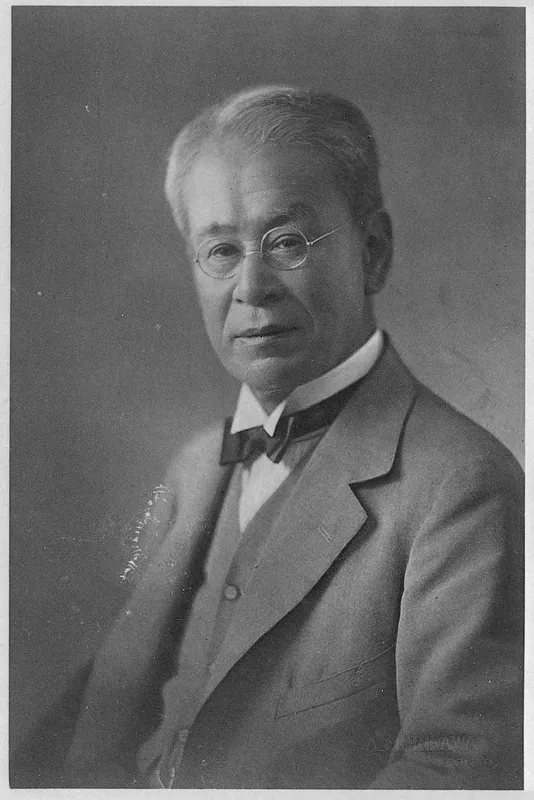
A second section looks at researchers and the manga that introduces their work. Alongside biographies of Tomitaro Makino and Kumagusu Minakata are books that explain, in detail, the path from collecting a plant to pressing it, adding a label and preserving it as a herbarium specimen. Rather than presenting only the finished sheet, these works show where a plant was gathered, what was recorded and how it was kept.
RareDex has previously read Makino’s specimen labels as small records that keep date and place beside a plant. This exhibition is not a reason to repeat that article or explain one label again. Its distinct subject is the way panels turn the complete sequence from collection to preservation into an entrance to learning. Manga moves between the quiet finished specimen and the actions that created it.
A researcher’s biography can easily push the plant into the background if it isolates discovery as drama. Where and in which season was a specimen seen? What uncertainty existed before a name or classification was settled? In the displayed books, it will be worth looking beyond facial expressions to the density of leaf shapes, collecting tools and label text on the page.
Plants step out of explanation
The final section presents recent essays and entertainment manga centred on plants. The organiser notes that plants, despite their familiarity, were not often protagonists. When a grower’s mistake, a single plant found in the street or time spent walking through a botanical garden becomes a story, the plant moves beyond a diagram used to deliver knowledge and enters the reader’s life.
On December 5, illustrator and manga artist Kashiwai, author of A Way of Walking Through Botanical Gardens, is scheduled to speak with a Tsukuba Botanical Garden researcher. Registration opens on November 5 for fifty participants. The conversation offers a chance to consider not only which books exist, but how manga can change the act of moving through a botanical garden.
The exhibition continues in the garden’s Education Building through January 17, 2027. When comparing books and panels, do not measure only the amount of explanation. One leaf may become a structural diagram, a specimen or the thing that changes someone’s day. The plant stays still while its depiction alters the time of reading. After tracing that shift, a single leaf in the glasshouse may appear in a different order.