Beneath a pressed plant lies a small slip of paper: a name, a date, a place and a collector. It attracts less attention than the outline of a leaf or flower, yet without it a specimen loses the answer to when and where that plant lived. The vast collections associated with Tomitaro Makino carry past vegetation into the present through these records, one sheet at a time.
Writing a plant’s place in the margin
The essentials of a specimen label are concise. Guidance from the Smithsonian’s National Museum of Natural History calls for the collector and collection number, date, a specific locality, and notes on the plant and its surroundings. Details that disappear in drying—flower colour or the height of a tree—belong here too. Words preserve what a pressed sheet can no longer show.
Makino travelled widely, collected plants, studied their names and drew them. Tokyo Metropolitan University records that its Makino Herbarium was founded in 1958 around roughly 400,000 unsorted specimens left at his home. About 160,000 organised Makino specimens are held there, while the herbarium of the Kochi Prefectural Makino Botanical Garden holds about 5,500 specimens collected by him. His material did not remain in one room; it became research infrastructure across collections.
Reading an old label involves more than transcribing handwriting. At Tokyo Metropolitan University, researchers check Makino’s localities against old maps and place-name dictionaries, then add present-day names to the labels. Administrative borders and spellings can change, but the collecting site can be joined back to a modern map. A short place name gathers the time of roads, mountains and villages around it.
Returning to the same sheet when names change
A scientific name is not a permanent tag. As more specimens are compared and classifications are revised, the treatment of a genus or species may change. When date, place and collector remain with a specimen, a researcher does not have to accept an old identification on trust. Leaf, flower and fruit can be examined again beside other material. Even when the name changes, the evidence remains available.
Natural-history specimens also document form and distribution at a particular moment. Tokyo Metropolitan University’s annual report describes collections as foundations for studying the morphology and distribution of organisms. A later researcher can ask where a species was found a century ago or in which month a flowering branch was collected. A careful label leaves room for questions the original collector could not have predicted.
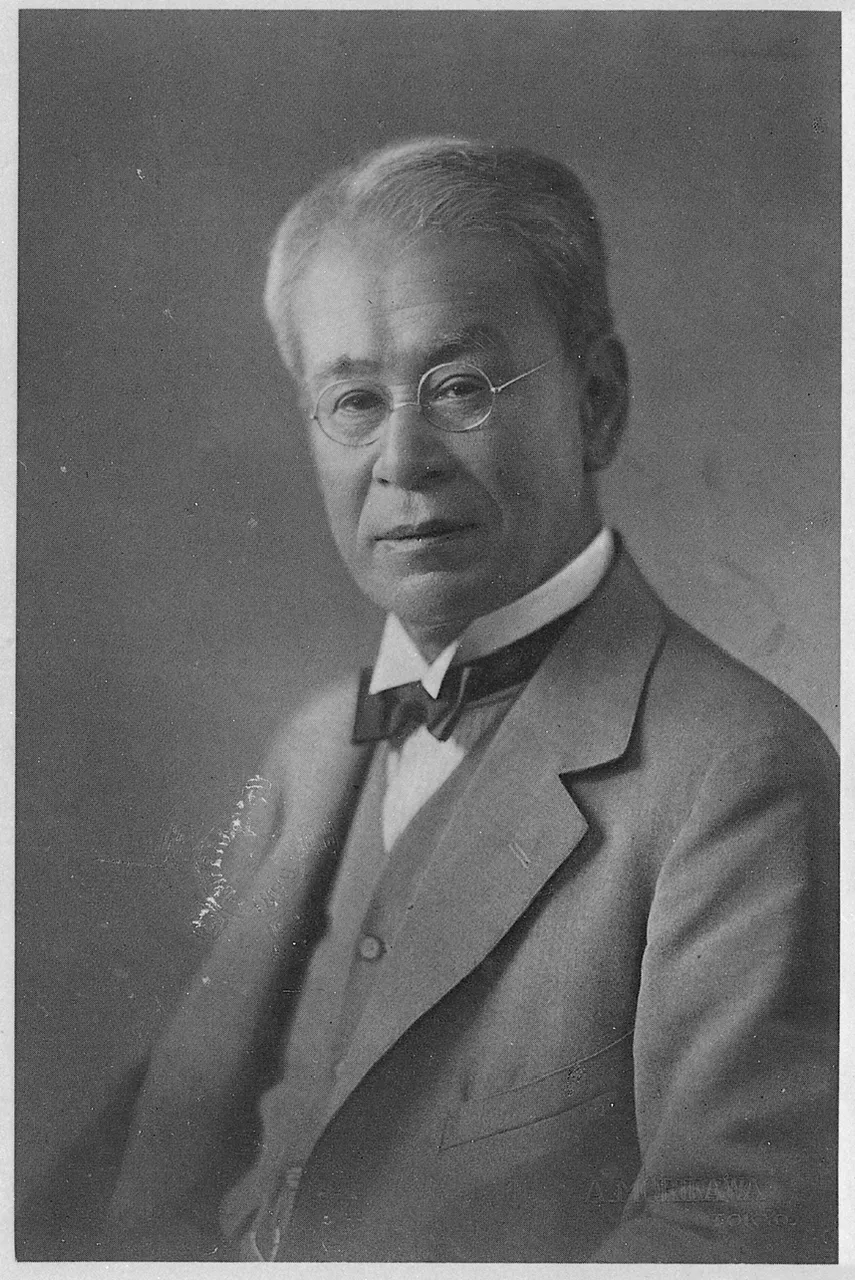
The photograph shows Makino at a desk in 1934. It is not a specimen image, but it conveys the time spent comparing material and checking names. Returning his work from heroic biography to the repeated actions of collecting bag, paper, pencil and label makes botany visible as an accumulation of small records.
Bringing the label’s logic to one potted plant
A houseplant does not need the rigour of an academic specimen. Still, recording the day it arrived, the name used by the seller, repotting dates, and the timing of flowers or new leaves makes seasonal change easier to compare. A memory that a plant “declined in autumn” becomes an observation: it moved indoors in early October and lost two lower leaves soon afterwards. The following year has something concrete to answer.
The aim is not to complete a beautiful journal, but to keep clues that can be checked later. Separate a trade name from a scientific name confirmed afterwards. Date a change of position. Record not only flowers but the opening of a leaf or the season when roots reached the base of the pot. If the plant cannot be named with confidence, leave it unidentified and preserve a photograph and its origin.
A specimen label is not a card that seals a plant in the past. It is an entrance back to that plant when a new classification, map or question appears. A small tag beside a pot, or a single line in a notebook, can work in the same way. Add one date and place to the time spent looking at today’s leaf. Those few words pass the plant’s continuation to the person you will be next year.