In everyday speech, many enlarged parts formed underground are gathered under one word: “imo,” or tuber crops. Yet their leaves, growth habits, and harvested forms are not the same. From September 19 to 27, 2026, Tsukuba Botanical Garden will present about 50 varieties—including sweet potato, potato, konjac, and oca—as living plants.
About 50 varieties shown alive
The exhibition, “Botanical Garden Festa: A Gathering of Many Imo,” spans the education building, multipurpose greenhouse, first floor of the tropical rainforest greenhouse, and an outdoor vegetable area. Alongside the familiar harvested forms are living plants with their leaves and stems. A walk through the greenhouses and garden offers a chance to discover the foliage behind everyday ingredients.
The education building follows the spread of sweet potatoes around the world and their place in human life. About 20 varieties developed by NARO’s Kyushu Okinawa Agricultural Research Center are brought together. Displays on their use as food coloring reveal an appeal that extends beyond flavor.
Sweet potato, potato, and konjac share the multipurpose greenhouse with Andean oca and Chinese artichoke. Ornamental sweet potatoes grown for their foliage are included too. The shapes of their leaves and the ways their stems grow may offer a different impression from the crops familiar at the table.
The colors and shapes of oca
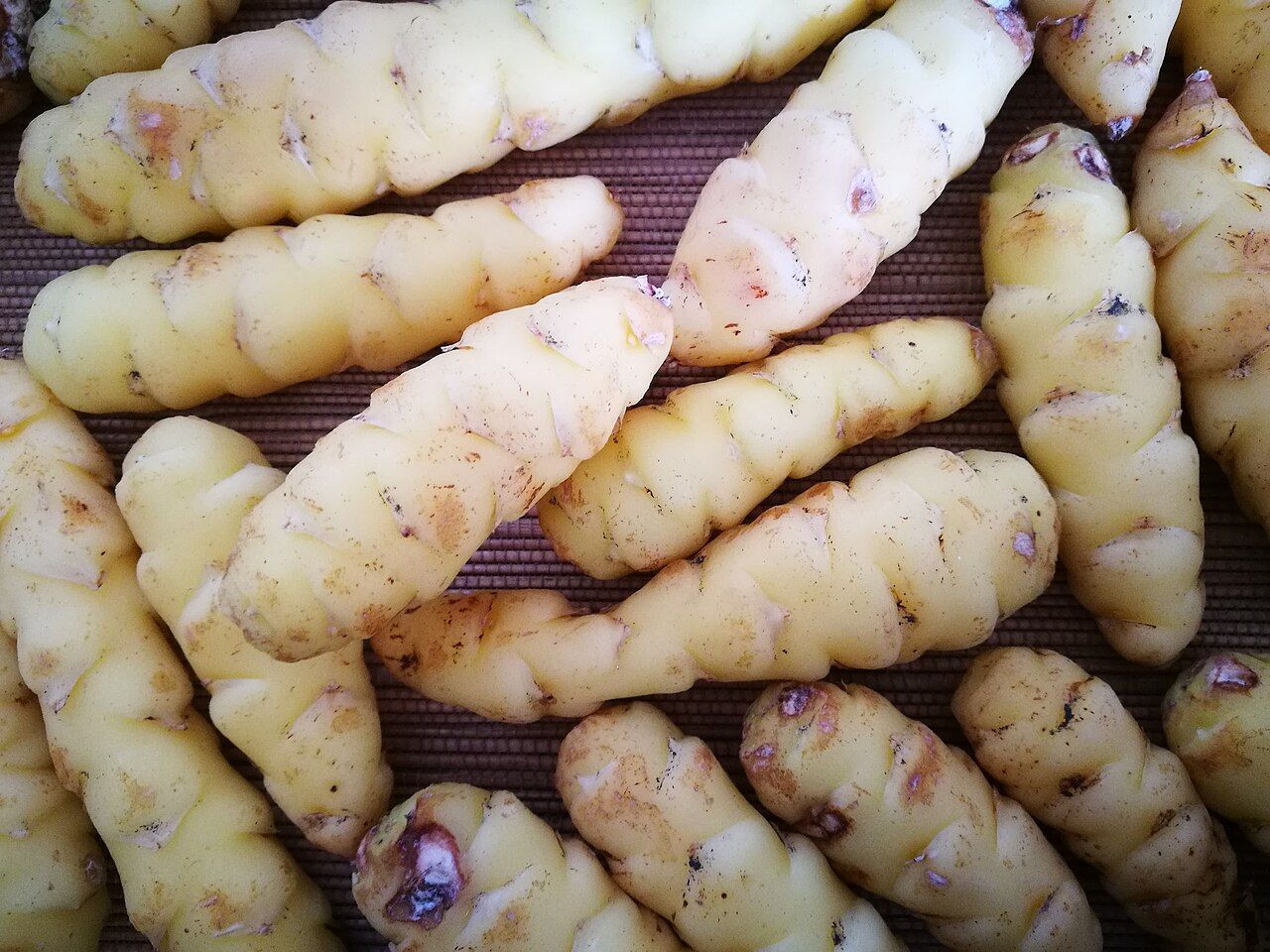
The photograph shows harvested oca, Oxalis tuberosa. Pale-yellow tubers overlap, with touches of pinkish red and repeated swellings along their elongated forms. Tsukuba Botanical Garden introduces oca as an Andean tuber crop and says visitors can observe living plants in the multipurpose greenhouse.
Ceseonico photographed these oca tubers in September 2020; they are not objects from this exhibition. Tubers most often encountered after harvest can be seen in the greenhouse as living plants, complete with leaves and stems.
After noticing the colors and forms of oca, there are leaves and stems to discover in the greenhouse. Connecting the harvested tuber with the growing plant gives an unfamiliar crop a more complete presence.
Four spaces connect field and glasshouse
Konjac, American groundnut, and the plant known in Japanese as “uchu-imo,” or air potato, grow in the outdoor vegetable area. Guided sessions on September 21, 22, and 27 are planned around lifting sweet potatoes and examining their shape—a chance to see how the crop is arranged as it emerges from the soil.
The tropical rainforest greenhouse displays members of the konjac group maintained by the garden, including a living titan arum. The official notice says flowers may not be visible. Its growing form offers something to notice beyond the moment of flowering.
There are cultivars grown to eat and others enjoyed for their foliage. The ornamental sweet potatoes may offer an introduction to tuber crops as plants to enjoy in a garden or a pot.
From a food word to a whole plant
The nine-day exhibition has no closure day. Admission is listed as ¥320 for adults and free for high-school students and younger visitors as well as people aged 65 and over. Some talks require booking while other explanations use first-come entry, so times and availability should be checked on the official page before visiting. Flowering also depends on current growth.
Familiar crops and less familiar ones meet at the exhibition. Their differences extend beyond the harvested parts to the arrangement of their leaves and the way their stems grow. Even taking home the name of one plant that caught your attention could add something to a future visit to the shops.
Sweet potato and potato, konjac and oca: behind the shared name ‘imo’ are many different leaves and stems. A little time in an autumn botanical garden could bring the plants behind familiar foods closer.