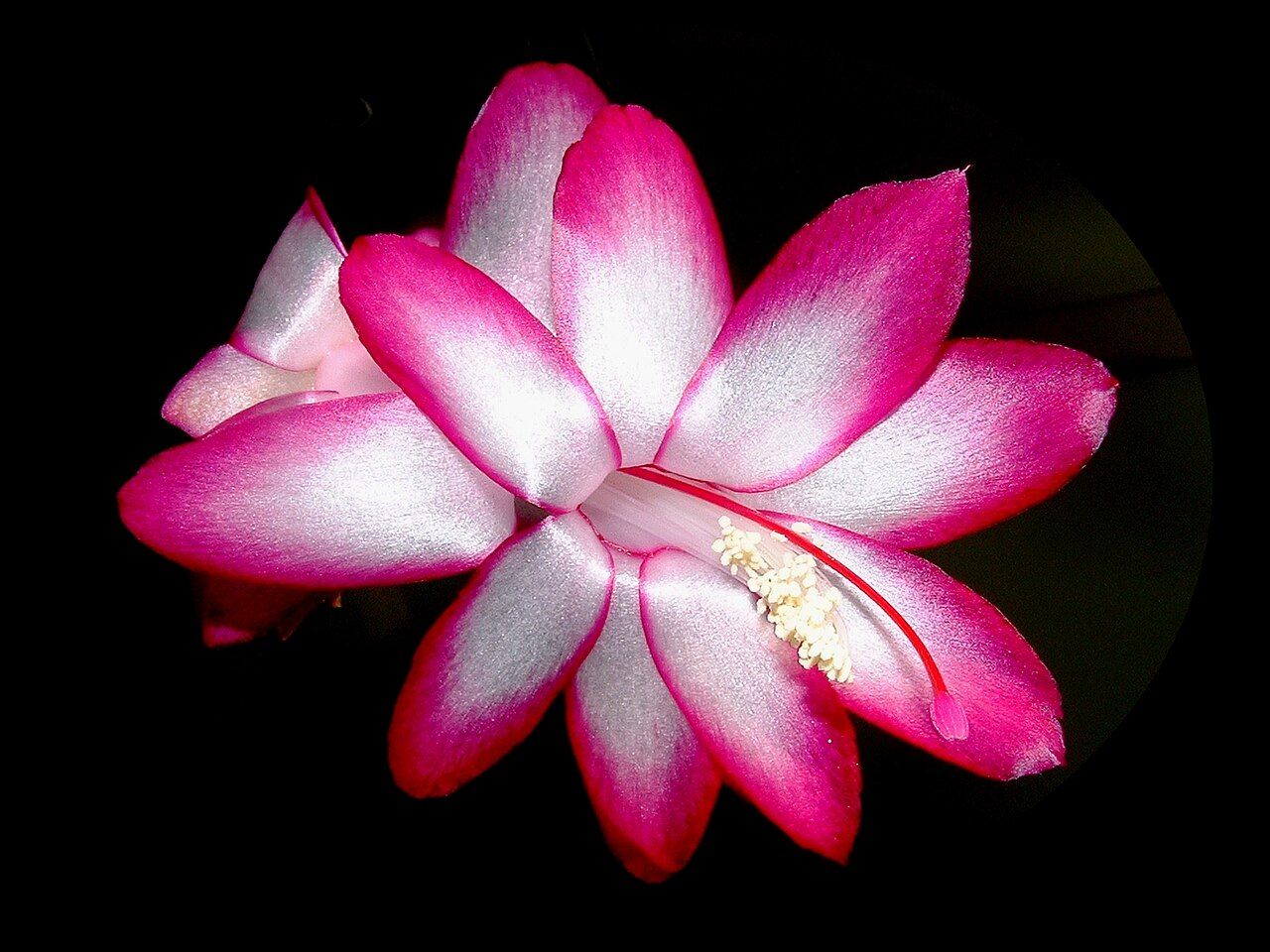
Holiday cacti carry red, pink or white flowers at the ends of flat, jointed stems. If a plant bought in bloom is to flower again, autumn matters before the first bud is visible. Shortening days and cool nights help initiate buds, so plants kept in brightly lit rooms need a deliberate nighttime routine.
Flat stems receive autumn’s signal
Holiday cacti do not live like desert cacti. University of Minnesota Extension recommends bright, filtered light, freely draining growing media and comparatively moist conditions for much of the year. Roots are vulnerable when the plant remains in heavy, wet soil.
The names Thanksgiving cactus, Christmas cactus and Easter cactus are only broad references to flowering season. Check the plant label or purchase record instead of assuming that every holiday cactus follows the same calendar. Easter cactus generally needs a longer period to set buds, so its autumn care should not be treated as identical.
Keep each long night uninterrupted
When nights are about 16–18°C, the university guidance recommends at least 12 hours of complete darkness every night for roughly six weeks. Return the plant to bright light during the day, creating a clear division between light and dark within each 24-hour cycle. Hallway lamps and room lights left on late can interrupt that dark period.
A box or cupboard can provide darkness, but it must not trap damp air or heat from a nearby radiator. Bring plants that spent summer outdoors inside before frost threatens, and inspect the undersides and joints of the stems and the rim of the pot for pests. Avoid moving them straight into harsh direct sunlight.
The same guidance notes that nights near 13°C may bring flowering in about five to six weeks even without strict control of day length. This is a guide, not a guarantee. One thermometer reading cannot describe the whole plant: watch for cold glass, heating vents and abrupt differences between day and night.
Once buds appear, let the plant settle
A plant with developing buds becomes sensitive to change. Drafts, sudden shifts in temperature or humidity, and a different direction of light can cause buds to drop. If the plant will flower in a warmer room, move it as soon as buds appear, then avoid repeatedly turning or relocating it.
Water according to the growing medium rather than a fixed weekday. Let excess water drain and never leave the pot standing in a saucer or cachepot of water. Bud initiation does not mean withholding all water: protect the uninterrupted nights while managing the roots separately from excess moisture.
The flowering season begins with the plant
Six weeks is a working period for arranging light and temperature, not a promised flowering date. Until small swellings appear at the stem tips, build a sequence of long, dark nights and cool conditions. Once buds form, keep the light and air around the plant consistent. Winter flowers begin with autumn nights left unbroken.