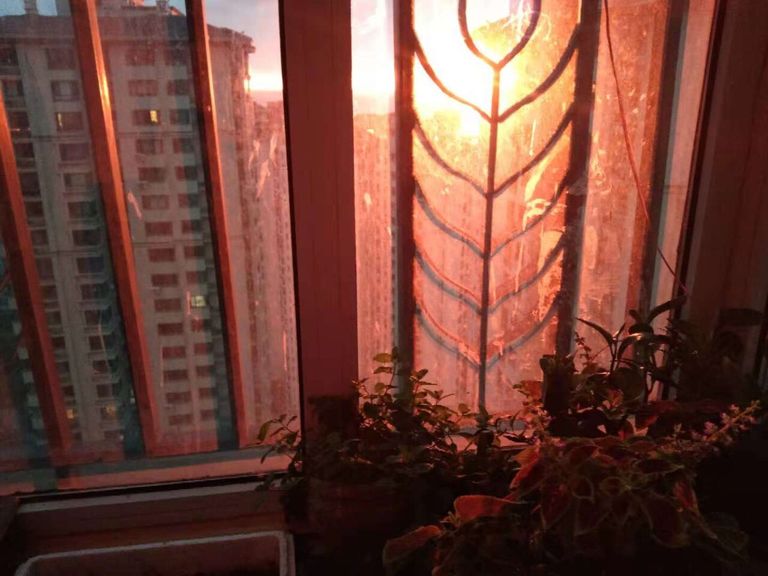
Two plants stand by a wall crossed by light. In summer, an indoor position changes over the course of a day: sunlight moves, glass warms, and cooled air begins to travel from a vent. Read those changes at leaf height, not only from the place where a person sits.
Read the Line of Light Separately from the Line of Air
University of Nevada, Reno Extension advises keeping houseplants away from direct drafts from windows, heating and air-conditioning vents, and fans. The University of Connecticut likewise cautions against drafts from air conditioners and doors.
Avoiding a draft does not mean giving up light. The Royal Horticultural Society notes the strength of summer sun. A small sideways move, a sheer curtain, or a change in stand height can keep useful brightness while taking leaves out of harsh rays and direct airflow.
Remeasure How Each Pot Dries in Summer
A pot near warm glass can dry quickly, and moving air can increase water loss. A shaded position or a large ceramic container may dry more slowly. Even within one room, each pot has its own microclimate.
Do not water by a fixed day of the week. Guidance from Nevada and the RHS recommends checking the growing medium by touch and considering surface dryness and pot weight. Differences in container size and material also matter.
Lift the pot, test the soil with a finger or skewer, then water thoroughly when the plant needs it and let excess drain. Do not leave the pot standing in water. Recording the date of a move can help connect a new position with a changed drying rate.
Do Not Diagnose the Cause from Leaf Tips Alone
Brown tips, yellowing, and leaf drop can have several causes. Review the plant’s position, the number of days the medium takes to dry, exposure to sun and moving air, and signs of pests before deciding why it changed.
Grouping plants may modestly raise humidity nearby. A pebble tray can be used only with the pot above, not submerged in, the water. Misting has limits and may not suit every plant or room; keep water away from electrical equipment.
Redraw the Room’s Map for Summer
Use Japan Meteorological Agency forecasts along with the room’s orientation and changes by time of day. Outdoor heat does not translate evenly to every window or hour indoors.
A pot’s place is not permanent. Move it a little, observe longer, and let light, airflow, and the soil’s actual drying pace define its midsummer position.