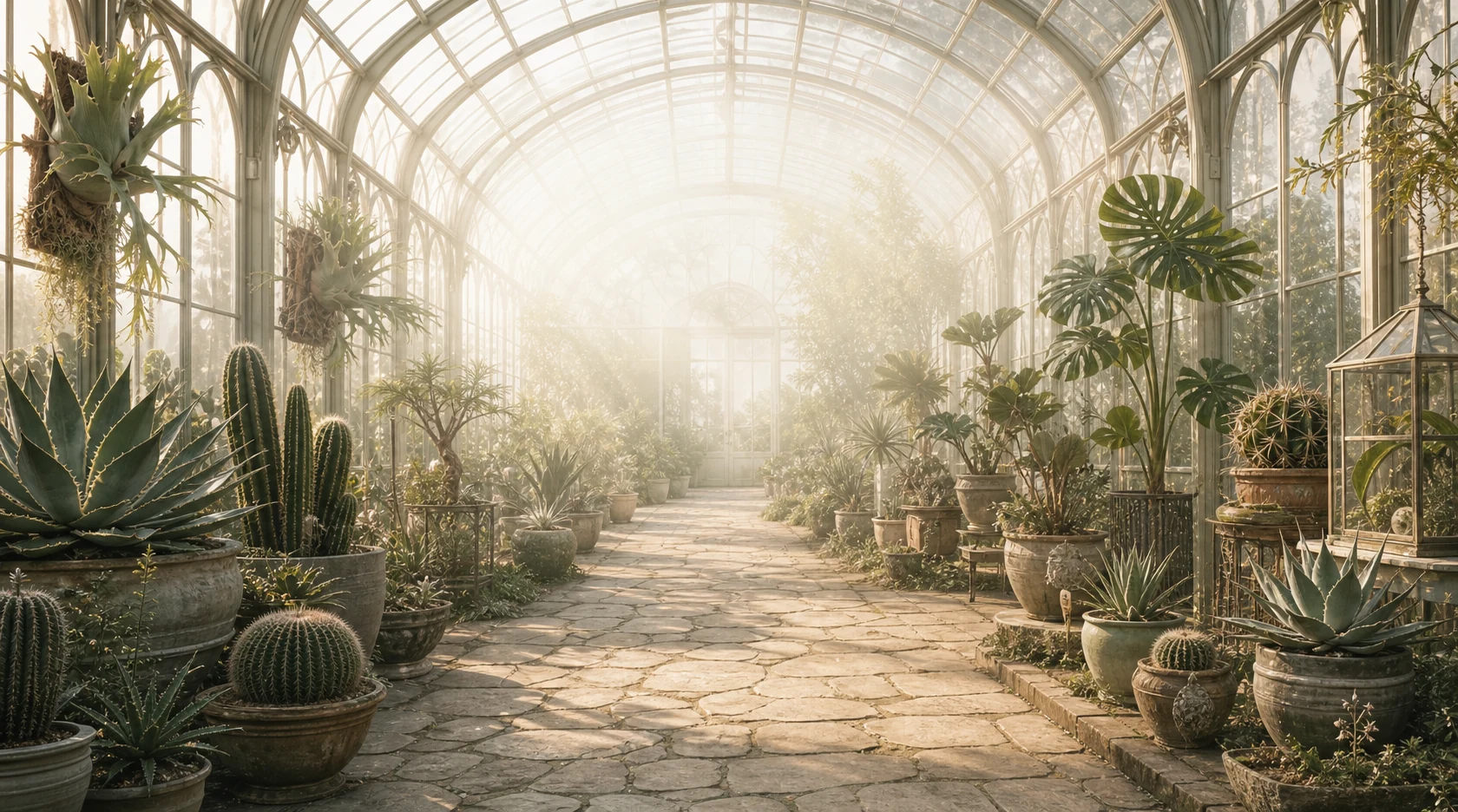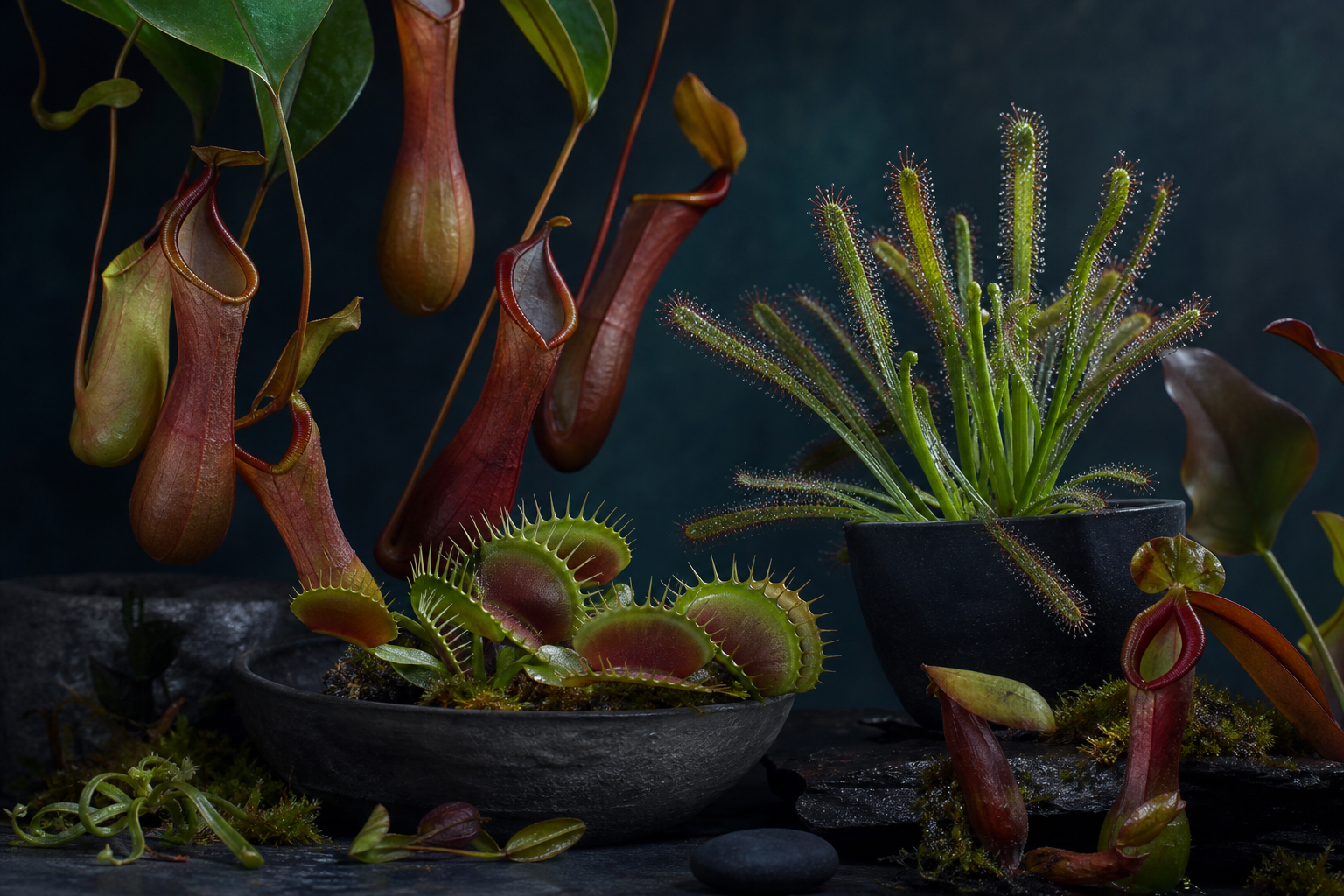
The opening image was created for this article, not photographed at the venue. Hanging pitchers, low-spreading traps, and fine light-catching hairs shift attention from carnivorous plants as one collective oddity toward what each leaf’s form does. Different designs emerge within the same green.
Jindai Botanical Gardens in Chofu, Tokyo, presents the summer Carnivorous Plant Exhibition July 28–August 9, 2026, in the Great Greenhouse rest area. Official information introduces diverse plants from cold and tropical regions, including those native to the Guiana Highlands and highlands of Southeast Asia. Midsummer Tokyo offers a view of leaf forms adapted to distant environments.
Pitchers, Teeth, Droplets: Capture Becomes Outline
Royal Botanic Gardens, Kew explains that carnivorous plants evolved mechanisms to catch and digest insects and other prey to supplement nutrients in poor environments. Pitfall pitchers, leaves closing upon stimulation, and adhesive surfaces turn functional difference into differences of line, thickness, and growth.
A pitcher leaf makes one vessel from rim and descending interior. A closing trap’s paired surfaces and marginal projections imply motion even while open. Droplets on fine hairs alter the density of a sticky leaf. These are not added decorations; survival functions produce strong form.
At the exhibition, compare methods before counting species. Read origin labels, then see whether a trap entrance faces upward or sideways and the angle at which leaves rise from the base. Official information also promises a section for observing capture methods. The mechanism appears during stillness as well as action.
Seeing Cool-Highland Plants in Midsummer Tokyo
“Tropical” can suggest only heat tolerance, yet the highland Nepenthes highlighted by official information grow at elevation. A shared carnivorous habit does not mean identical temperature, humidity, or light needs. If choosing a plant after the exhibition, verify origin and growing environment as carefully as preferred form.
This changes how the exhibition is seen. Do not make only large pitchers protagonists: notice why small leaves spread close to ground and where slender stems reach light. Plant outlines formed in response to place. Temperature, water, and soil turn strange forms from spectacle into concrete clues from habitat.
Jindai Botanical Gardens holds approximately 100,000 plants representing about 4,800 kinds, with rose and azalea gardens and the Great Greenhouse. Compare the exhibition with outdoor leaves and flowers: leaves in sun, thin leaves spread in shade, and leaves gaining height in the greenhouse. Walking different environments in one day makes form-making conditions dimensional.
The Distance from Viewing to the Next Pot
Carnivorous plant sales are planned July 31, August 1, 2, 7, 8, and 9. Do not assume a striking exhibition form transfers unchanged to a room. Beyond pitfall, snap, and adhesive traps, habitats and needs vary. Record the name and ask the seller about summer maximums, winter placement, and available light and water before purchase.
See the plant’s line when choosing a pot. Hanging pitchers benefit from vessel or shelf height; low rosettes need a place viewed from above. Rather than double rarity with a forceful container color, leave space for margins and droplets. Exhibition observation can guide a corner at home.
Carnivorous forms do not exist to shock. In nutrient-poor settings, leaves became pitchers, closed, and grew sticky. More valuable than a list of rare names is the view that form has reason. Decide whether to bring one home only after comparing that reason with your conditions.
What to Know before Visiting
The Carnivorous Plant Exhibition runs July 28–August 9, 2026, in the Great Greenhouse rest area at Jindai Botanical Gardens. Exhibition hours are 9:30 a.m.–4:30 p.m.; final garden admission is 4:00. Viewing is free with garden admission, ¥500 for adults. Sales are planned July 31, August 1, 2, 7, 8, and 9. Check official information for weather or operational changes.