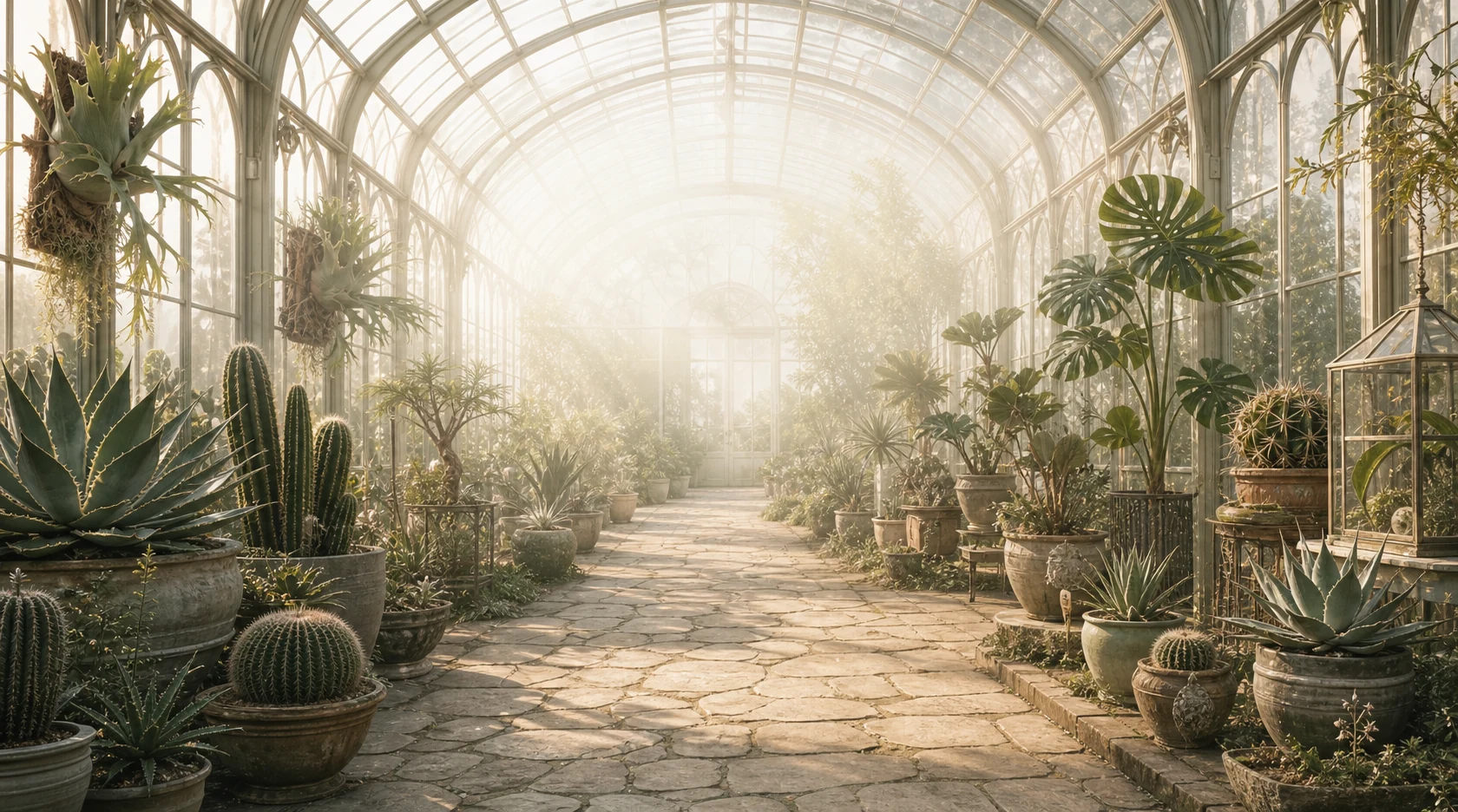
Straight growth is not the only good face. Bent stems, old scars, changed skin, and leaves unfurling unexpectedly show time spent by one plant just beyond symmetry. As one studies tailoring and age in clothes, ask plants why their outlines formed. The exhibition offers that way of seeing.
KINTO plant brand MOLLIS sets its 2026 exhibition theme as “Cherish gestures. Delight in change.” Official information names shifts from growth stage, season, and adaptation: flowering, protective woodiness, and growth through grafting are treated not as unfinished irregularities, but expressions shown while a specimen lives.
Choosing Change in Progress, Not a Final Form
When plants enter as interiors, the purchase-day appearance easily becomes the standard. Living things extend toward light, exchange leaves with seasons, and move into new forms while retaining old tissue. Do not assume woodiness is damage or a graft seam must be concealed. Naming changes “gestures” slows the gaze.
This does not reject orderly plants. Meaning lies in comparing refined lines and accidental lines made by years on the same shelf. RareDex Editorial notices differences among individuals becoming reasons for choice without ranking only by species or rarity. See front impression, height when placed, shadows on wall, and room for months of extension.
A Plant Gallery Rises inside a Store for Vessels
KINTO STORE Tokyo is a Nakameguro flagship for tableware, tea and coffee ware, and flower vases, with a physical MOLLIS shop. KINTO presents it as a place to see tactile furniture, plants, and vessels together. Unlike a plant-only sale, pots share view with everyday tools, revealing coexistence with room materials and hand movement rather than isolating ownership.
Spatial composition is by Kohei Oda, founder of plant shop Qusamura. A MOLLIS interview says Oda designs spaces around plants and opened Qusamura in 2012. He expanded from foliage plants to succulents with wider expressions and found value in individual difference. See not only the force of specimens, but intervals among different expressions, furniture, and vessels, and how each changes the next. Placement from floor to wall and plant to vessel reveals Oda’s edit binding the venue as one landscape.
Do Not Decide on a Pot by Today’s Appearance Alone
The Tokyo venue presents and sells a broader-than-usual selection centered on store-first and event-exclusive plants. Individual condition and inventory vary. If seeking a specific specimen, confirm current availability. Do not declare an encounter immediately “correct”; discussing light, air, width, and frequency away from home is part of choosing.
The exhibition runs through August 27, 2026, six minutes on foot from Nakameguro Station’s Main Exit. Official hours are noon–7:00 p.m. weekdays and noon–6:00 p.m. weekends and holidays. Even without plans to buy a pot, visit to change how plants are seen. Read woody skin and irregular line as history, and the plant at home may look different tomorrow.