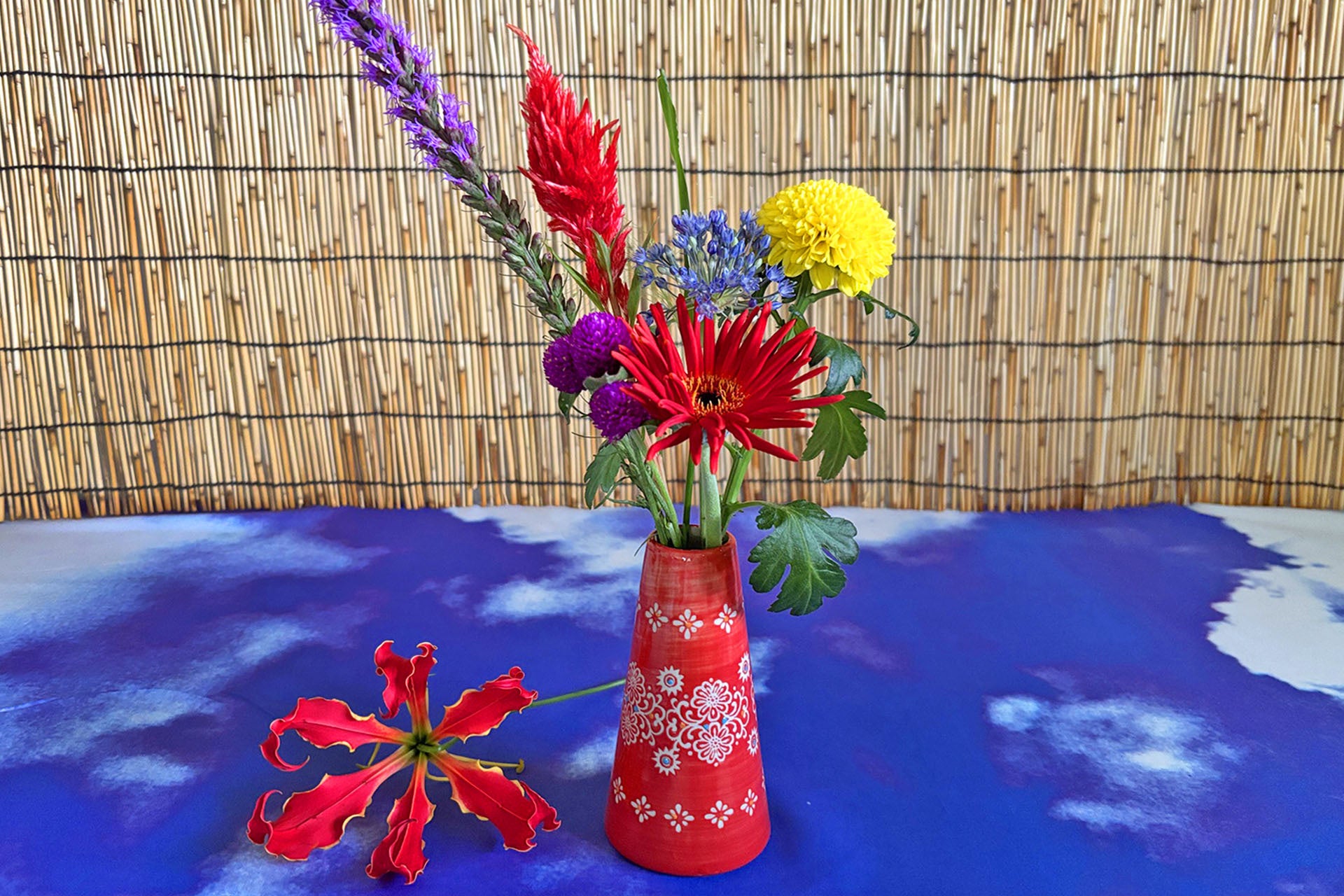
In Merci Flower’s official photograph, blue ground and red vessels stand before a bamboo blind. Above them, flowers face different directions: yellow blooms gather like spheres, red petals curl outward, and purple spikes rise high. Within one bouquet, the composition invites searching for aerial fireworks, sparklers, and light just before it fades.
Running from July 30 through the weekend, the Fireworks Fair proposes comparing flower outlines and bringing a summer event indoors. It appears in Greater Tokyo supermarkets where the company operates consignment displays, inserting a moment with one flower into the usual path of grocery shopping.
Choosing the Night Sky through Floral Outlines
Official guidance lists sunflowers, gloriosa, disbud mums, asters, and liatris. Sunflowers and mums spread petals from a center; asters gather fine points of light; gloriosa’s reflexed petals carry flame motion; slender liatris spikes recall sparklers. The fair is interesting because choices begin with spreading, curling, and rising before color matching.
Fireworks need not mean one large bundle. One round flower in a low vessel emphasizes outline; leaving a gloriosa stem long carries the eye into its petals. When combining flowers, vary heights as though setting the order in which light launches so each line remains visible.
RareDex notices that living material itself makes the fireworks scene rather than borrowing a seasonal graphic. Flowers shift opening and direction. The same bouquet changes balance after several days. Fireworks leave a form for seconds; cut flowers slowly rearrange it.
The Supermarket Flower Display Becomes a Seasonal Entrance
Merci Flower manufactures and supplies casual flowers for mass retailers and builds their displays. Its site says the core business is consignment sales, visiting partner stores to maintain products and merchandising. Seasonal flowers appear within everyday shopping without making a specialty shop the destination.
Fair flowers are priced from ¥398 to ¥698 before tax. Varieties and combinations depend on store deliveries and sales end when stock is gone. Instead of seeking the pictured bouquet, compare the lines available that day. Choosing a vessel first helps select a bloom for its mouth and height.
Red and purple strengthen contrast with a night sky; one yellow bloom suits a daytime room. Glass reveals crossing stems, while ceramic brings flower color forward. Though named Fireworks, the arrangement is not fixed; seasonal symbols can be translated into the room’s materials.
Photograph the intended shelf or table before shopping. A white background may suit a fine outline; dark wood may receive a bright flower. One bloom for a narrow mouth, two or three distinct lines for a wide one. Choosing by placement rather than amount reduces uncertainty at home.
Watching Flowers in a Cool Place after Bringing Them Home
In midsummer, choosing cut flowers includes choosing where they will stand. Japan’s Ministry of Agriculture, Forestry and Fisheries advises removing surplus leaves below the waterline and replacing vase water daily rather than only topping it up. Avoid direct sun and direct air-conditioning airflow, choosing the coolest practical position.
Recutting and water depth differ by flower. Ministry guidance says soft-stemmed flowers such as sunflowers should be cut straight across and arranged in shallow water. In mixed bouquets, prioritize purchase labels and store guidance. Follow labeled dilution when using preservative.
Whether going to fireworks or staying home, summer can begin at the hand choosing flowers. Light in the sky disappears in seconds, while lines in a vase change each morning. A bouquet for noticing that difference keeps the seasonal entrance beside the grocery bag from being missed.