One seedling is divided into three branches, each ending in one large flower. The blooms are not simply lined up at the same height; they are trained into a composition with depth and variation. Opening on October 31, Jindai Botanical Gardens’ Chrysanthemum Exhibition brings together this bon-yō form with compact fukusuke and daruma training, classical chrysanthemums and small-flowered bonsai. Before counting the flowers, it is worth looking for the time that made each shape.
Three flowers divide from one seedling
Bon-yō, a fundamental form for large-flowered chrysanthemums, extends three branches from a single plant and balances one bloom on each. Water and nutrients rise from the same roots, but the grower must decide how each branch is pinched, supported and directed. Those decisions finally become visible as the distance between three flowers. Even when blooms look similar in isolation, the opening of the stems and the leaves left below them reveal a different sequence of work.
Fukusuke training uses a five-gō pot and keeps the plant below forty centimetres from the base of the container to the neck of its single large bloom. Daruma training uses a seven-gō pot, divides into three stems and remains below sixty centimetres at the highest flower. Rather than allowing a large bloom to rise freely, both forms concentrate scale within fixed limits. Seen beside bon-yō, they make the difference between spreading branches and compressed height immediately legible.
Small-flowered chrysanthemum bonsai are trained for about fifteen months to suggest the bearing of an old tree. A stem begins to read as a trunk, roots appear to hold stone, and small blooms gather at the ends of branches. This is not decoration added to pretend an age the plant does not have. It is a technique that gives a fast-growing herbaceous plant the visual scale of a mature tree. Moving between one large bloom and an entire bonsai reveals different ways of showing time within the same plant group.
Edo, Ise and Higo — regional ideas remain in the flower
The exhibition also includes classical groups such as Edo, Ise and Higo chrysanthemums. The organiser describes them as varieties cultivated according to distinct regional aesthetics. Often centred on medium-sized flowers, they differ in the opening and curling of petals and in the distance between centre and edge. Their names need not remain geographical labels. They can be read as evidence of what each tradition considered balanced, and which irregularities it chose to preserve.
The official account traces the chrysanthemum’s distinctive development in Japan to the Edo period and the nationwide spread of large-flowered cultivation to the Meiji era. Differences in flower form are therefore not sudden novelties but the accumulation of plants selected, propagated and brought to bloom. Before moving past a classical flower on colour alone, compare whether its petals gather inward or loosen outward, from both front and side.
From November 7, a panel display titled Edo’s Cutting Edge — Horticultural Culture Coloured by Chrysanthemums is scheduled to join the exhibition. The outdoor area will also include an ukiyo-e-style illustration about 1.8 metres high and six metres wide, street lamps and stall-like structures. A visit beginning with historical material may alter how the same classical flower is read. Before the panels open, the trained plants themselves remain the clearest subject.
Seventy-two lanterns rise behind the flower cart
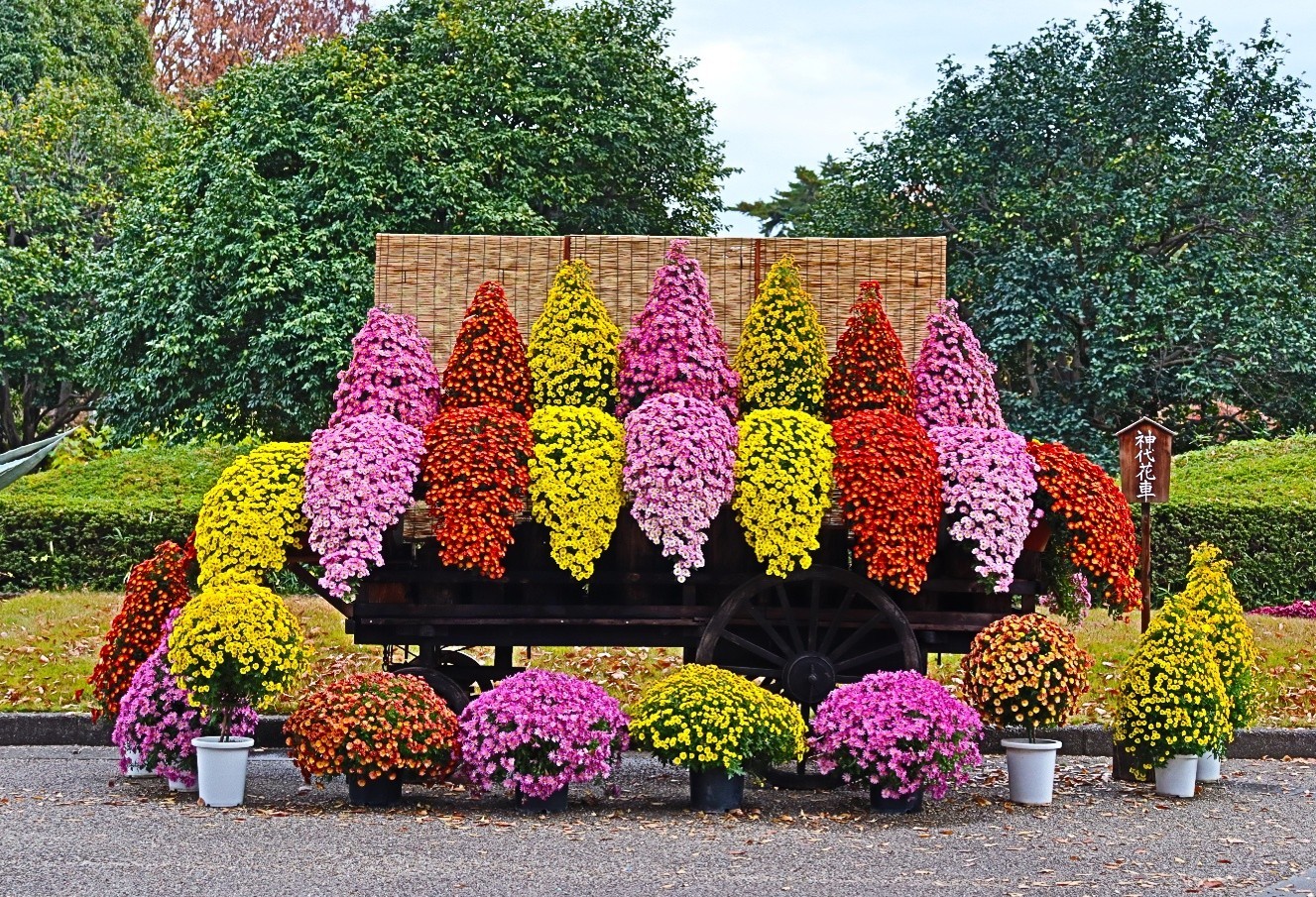
The Jindai flower cart is the exhibition’s emblem: coloured small chrysanthemums built up around an old cart. It has been shown for more than thirty years and is assembled by five or six members of staff. The organiser’s distributed photograph shows the cart in 2025, not the 2026 installation. Even so, its tiered cones of flowers above and below the cart bed, set against the dark wheels, show how techniques developed pot by pot can become a much larger scene.
In 2026, a lantern stand approximately eight metres wide and 2.8 metres high, holding seventy-two lanterns, is being added behind the cart. Rather than imagining those lanterns into last year’s photograph, the useful question on site is how far the light-bearing structure stands from the mass of flowers. Some varieties may be absent depending on growth conditions, so visitors seeking a particular training style should check the garden’s current notice.
The 66th exhibition runs in the outdoor display area just inside the main gate of Jindai Botanical Gardens through November 23. The garden opens from 9:30 a.m. to 5 p.m., with last admission at 4 p.m.; the final day’s exhibition ends at 4 p.m. Mondays are closed, or the following day when Monday is a public holiday. General admission is ¥500. Before heading for the flower cart, look at where the three bon-yō stems divide, where a fukusuke plant stops rising, and which direction a bonsai branch takes. The larger spectacle is built from those small decisions.