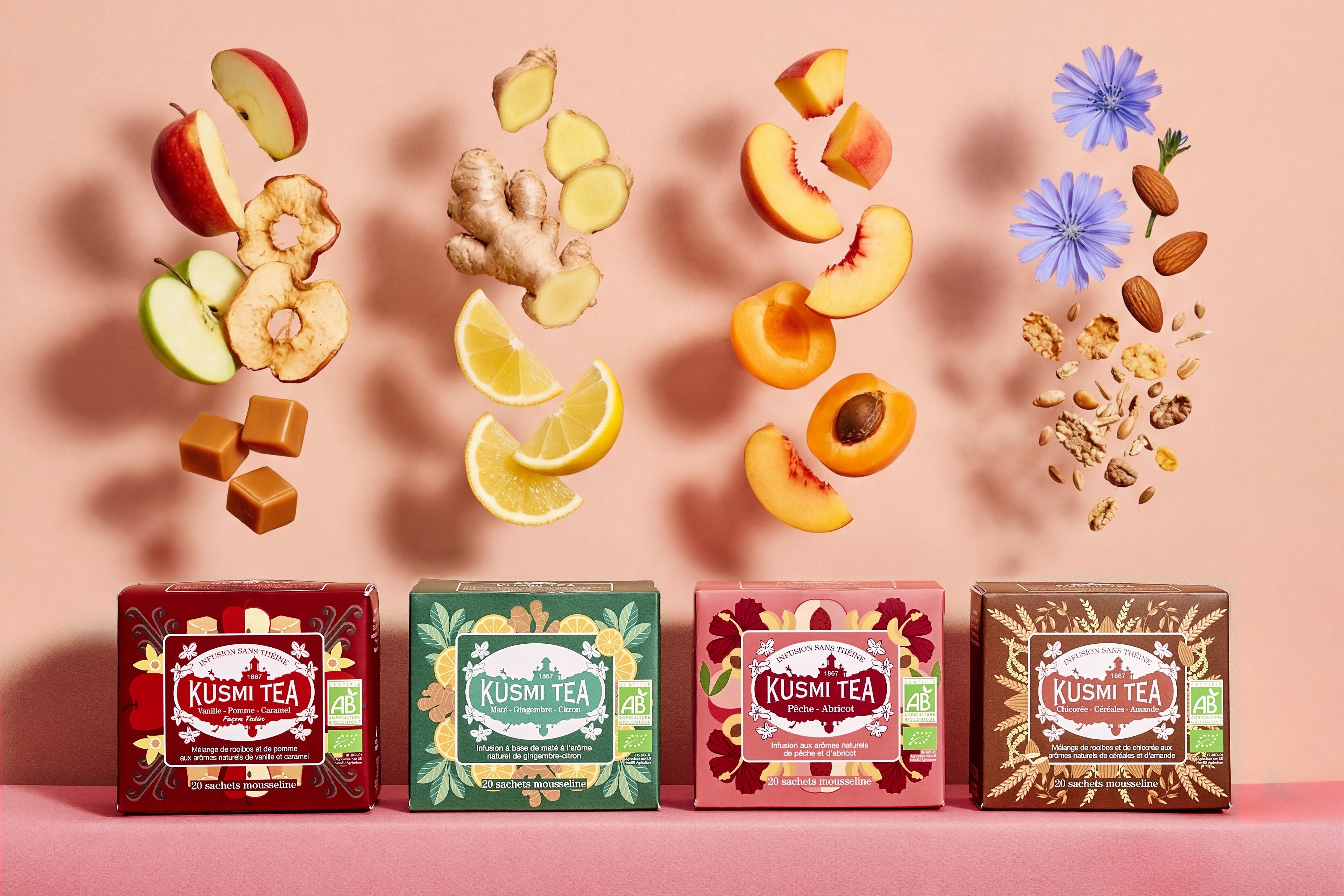
In the official key visual, the ingredients above each box align with its name: apple and caramel; ginger and lemon; peach and apricot; chicory flowers and almonds. Suspended as if about to fall into the boxes, they combine the lightness of confectionery with the ordered visibility of a botanical display. The packaging quickly conveys a mood, but the composition inside each sachet is more layered than the picture alone.
The Gourmet Infusions range launched on September 4 in boxes of 20 tea bags, each listed at ¥2,484 including tax on Kusmi Tea's Japanese store. With format and price held constant, the useful points of comparison become the botanical base, aromatic design, water temperature, steeping time, and presence or absence of caffeine. Price and availability were checked on September 4.
Botanical names and memories of flavor occupy different layers
Maté Ginger Lemon combines organic maté and organic rosehip with ginger and lemon flavoring. The maté leaf forms the base, while ginger and lemon shape the aromatic layer named on the box. It is the only one of the four whose official page does not identify it as caffeine-free, an important distinction for anyone choosing an evening cup.
Chicory Cereal Almond pairs organic rooibos and chicory with cereal and almond flavoring. Chicory belongs to a drinking culture built around a roasted root rather than a leaf; here it shares the blend with rooibos. The official page marks it caffeine-free. Because almond appears in the product name, anyone concerned about allergies should also check the physical label before use.
Peach Apricot combines organic apple, hibiscus, and rosehip with peach and apricot flavoring. The two stone fruits dominate the name and picture, while apple fruit, hibiscus, and rosehip are the ingredients prepared by infusion. It is caffeine-free and offers the clearest choice for someone drawn to a blend structured around fruit and flower.
Vanilla Apple Caramel Tatin blends organic rooibos, apple, and cinnamon with vanilla and caramel flavoring. Despite the pastry reference, rooibos, fruit, and bark form the part extracted in the cup. The official page describes it as caffeine-free. A dessert-like name should not be treated as a statement about sugar content.
From 85 to 95 degrees, steeping time sets the pace
The official brewing instructions are not uniform. Maté Ginger Lemon calls for 85°C water and three to four minutes. Vanilla Apple Caramel Tatin uses 90°C and four minutes. Chicory Cereal Almond uses 95°C and four minutes. Peach Apricot asks for 95°C and five to seven minutes. The longest wait is almost twice the shortest. Although every box contains 20 tea bags, adjusting water to each botanical combination keeps the collection from becoming merely four variations in aroma.
That difference belongs to the movement of a day rather than a ranking of flavor. Maté fits a short morning steep after the kettle rests; chicory or vanilla marks a four-minute pause; peach and apricot suits a moment when five minutes or more is available. Recording water volume and time for the first cup makes the next adjustment a decision in one's own terms. Even without a thermometer, the choice between freshly boiled and slightly rested water turns preparation into a small ritual.
Four boxes need four reasons, not a ranking
There is no need to collect the full set. Choose maté for leaf, lift, and citrus direction; chicory for the language of root and grain; peach and apricot for a fruit-and-flower structure; or vanilla and apple when a pastry memory should be translated through rooibos and cinnamon. Brand descriptions are a starting point, while perception still changes with water volume, vessel, and drinking temperature.
A polished product image does not guarantee a finished experience. Separating the plants shown in the photograph from the plants actually infused and the names added as flavoring returns the advertisement to a personal decision. Caffeine, allergens, and ingredients should be checked again on the official page and the physical package before drinking.
A short steep can still hold long botanical histories
A cup may last only minutes, yet it gathers South American maté leaves, South African rooibos, chicory prepared as a root drink, fruit, flowers, and bark. Bringing different origins and plant parts into the shared format of a tea bag is itself an act of editing within contemporary blending culture. The interest of the collection lies not only in four dessert-inspired names, but in translating those materials into 85–95°C and three to seven minutes. Choosing the time available today before choosing a package color lets a memory of dessert remain in the cup without hiding the plants beneath it.