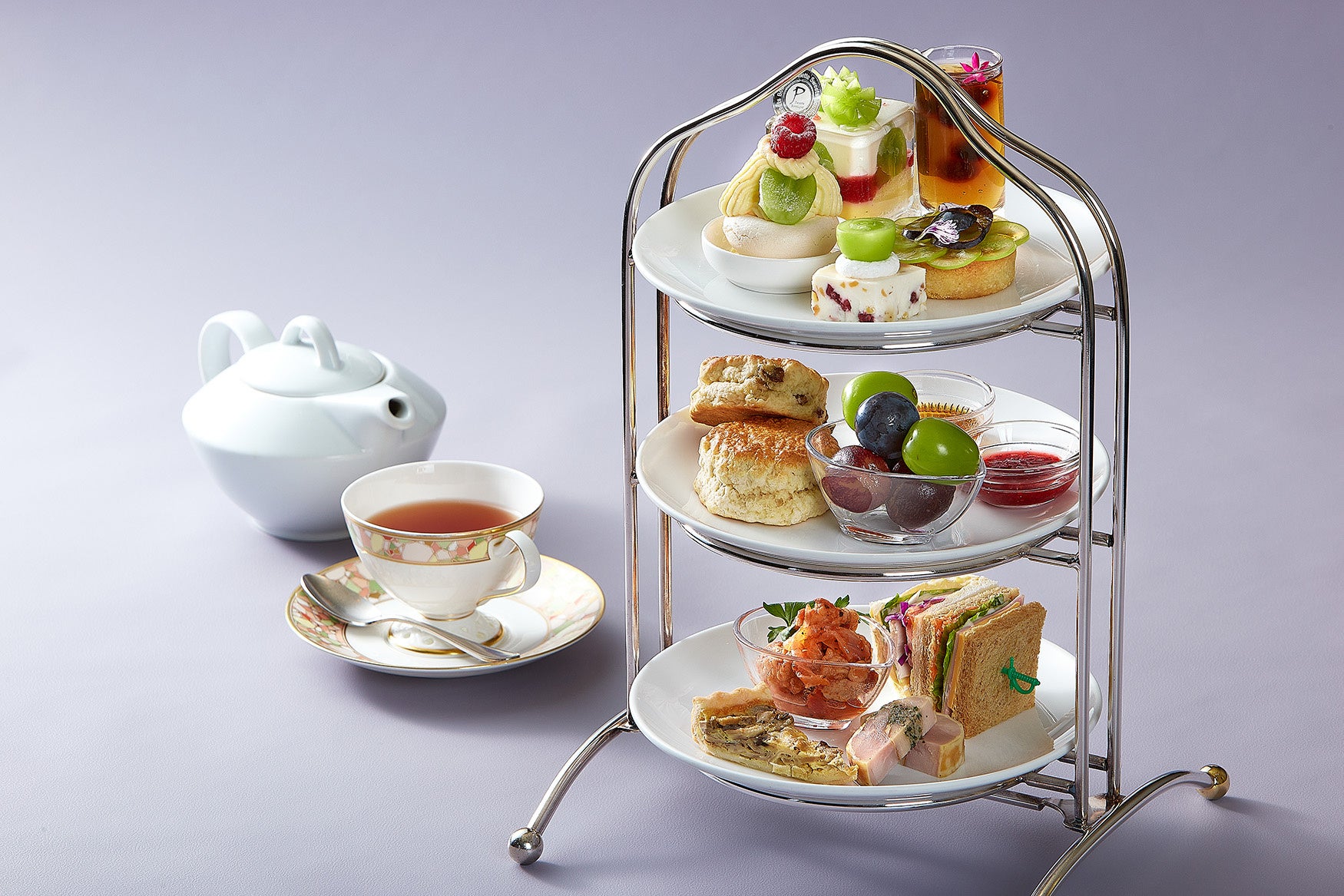
In the opening photograph, green and purple grapes meet the eye directly against white dishes and a silver stand. The top tier holds meringue chantilly topped with one grape and tarts layered with thin fruit slices. An intermediate glass dish preserves unprocessed grapes. Fruit is not added as decoration, but arranged so its form as pastry and its earlier form share one field of view.
Keep One Grape from Before the Pastry
Mito Plaza Hotel’s Muscat Afternoon Tea Set runs August 21–October 15. Shine Muscat from Honda Vineyard in Hitachiota, Ibaraki, becomes trifle, Japanese-black-tea jelly, tart, and meringue chantilly, joined by an assortment of fresh fruit selected by the farm for each period.
The fresh fruit at the center drew the editors’ attention. A grape layered with cream and pastry creates the line and color of the whole sweet. An untouched grape offers a way to compare skin color, size, and texture before reaching the flesh. Look at the assortment before returning to pastries, and consider which qualities the pastry chef kept and which were given to other materials.
The cultivars in the assortment are not fixed. Official information cites Kyoho and Hitachi Seiryu, born in Hitachiota, as examples, but the day’s contents change with the season. Do not assume both appear on every plate; receive them as encounters belonging to the visit.
A Yellow-Green Grape Holds the Name of a Place
According to Hitachiota City materials, experimental grape cultivation began there in 1959. Hitachi Seiryu is a yellow-green grape raised by a local grower in 1978 from a Kyoho seedling. Fruit and growth characteristics were studied in 1998–99, and the Hitachiota grape growers’ group registered it in 2004. Small on a plate, each green grape folds in more than a quarter century of selection and verification.
Honda Vineyard’s official site lists Kyoho, Hitachi Seiryu, Shinano Smile, and multiple other cultivars. Current sales information remains from the previous year, so direct-purchase periods and inventory require confirmation. By naming the farm in the hotel’s release, however, the plate provides a path back to the grower. Provenance need not close with the phrase “from Ibaraki”; farm and cultivar can be read.
Mito Plaza Hotel also held an afternoon tea with Honda Vineyard fruit last year. Continuing the format of seasonal farm selection helps prevent consuming one cultivar as the same flavor each year. Harvest timing and condition change the plate’s face. A menu beginning with living plants can retain that variation.
See Fruit Color in a Green Courtyard
Café & Bar Plaza faces the Atrium Garden Park, which the hotel calls its courtyard. The official site says planting is incorporated into the open atrium and was rearranged in April 2025. It is not a reconstruction of an outdoor orchard. Still, fruit green viewed from a seat with foliage in sight makes the distance between finished pastry and growing plant easier to feel.
Alongside grapes, the three tiers include cassata, two scones, Spanish mackerel escabeche with tomato, mushroom quiche, sandwiches, and more. To read plants as protagonists, choose an order rather than chasing quantity. Begin with fresh-fruit color and shape, move to tart and trifle, then return once more to the assortment. One bunch begins to carry three views: ingredient, pastry, and place.
Ask at the Table Which Cultivars Arrived That Day
The set is ¥4,800 per person including tax and service. Weekdays run noon–4:00 p.m.; weekends and holidays have two seatings at noon and 3:00 p.m., each 120 minutes. Rather than pursuing only the colors in the photograph, ask the cultivars delivered that day. Is the yellow-green Shine Muscat or Hitachi Seiryu? Is the purple Kyoho or another seasonal grape? Confirming the name draws the plate closer to a record of place.
Plants do not appear as plants only in pots and gardens. Even removed from the bunch and preserved as one grape on a pastry, growing place and season can be read. An afternoon comparing green and purple disappears when eaten. Remember the cultivar name, however, and the eye choosing fruit next time changes slightly.