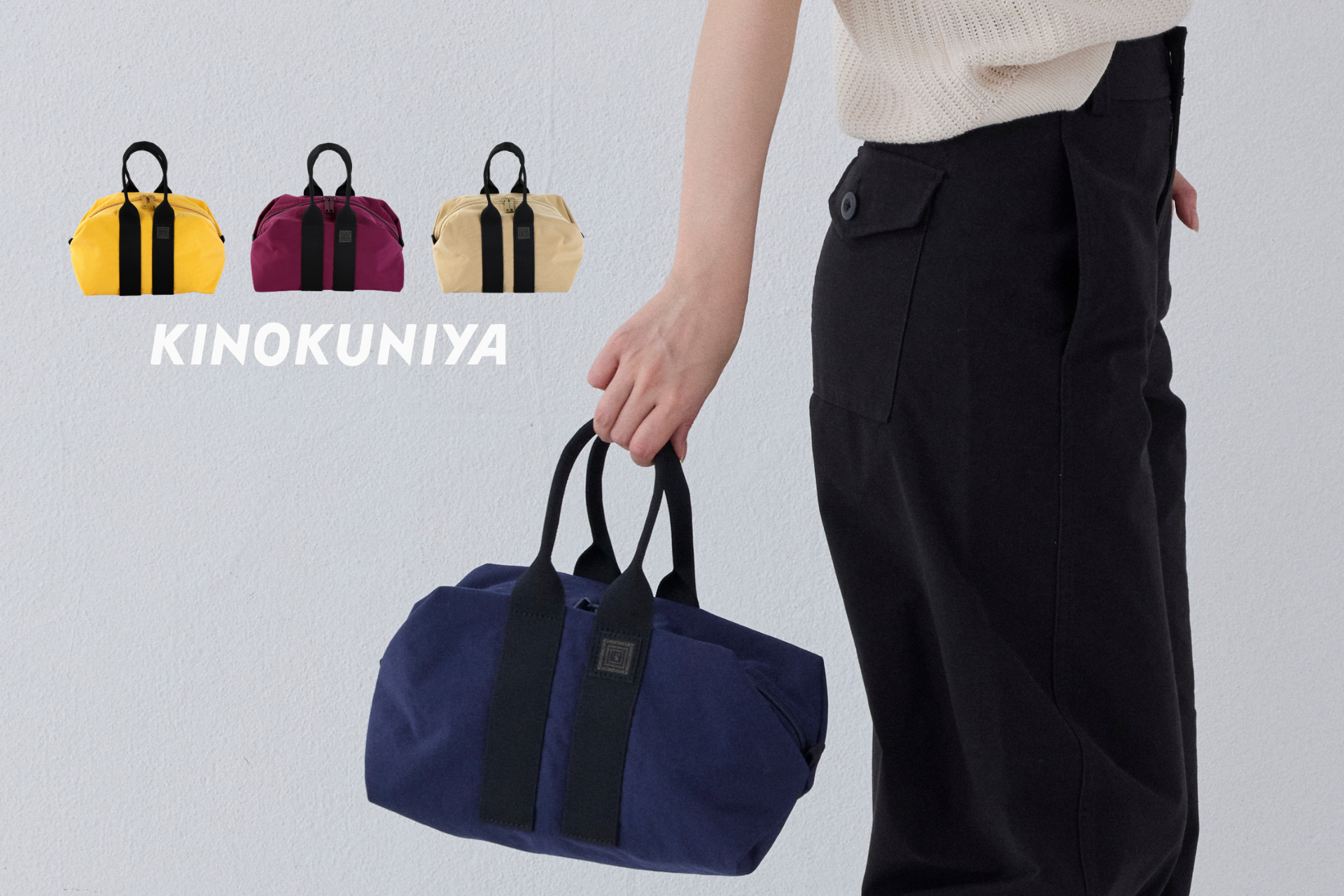
The opening photograph presents four colors in one form: mustard, wine, beige, and navy. Black handles and tape sharpen the gentle colors and shape the horizontal outline. There is no floral pattern or leaf embroidery. Still, plants enter this bag below the level of motif.
Do Not Transfer the Outer Skin’s Color Directly
ONIBEGIE, used for the body, is a synthetic material containing natural components developed by Komatsu Matere. Official information says synthetic fibers are dyed using compounds extracted from onion skins as a base, with various other plant-derived components. This bag is 100% nylon. It is not a natural fiber botanically dyed, but a textile bringing plant-derived components and synthetic fiber together.
The key is quercetin in the outer skin. Komatsu Matere’s development account says tests to fix natural components to synthetic fiber revealed onion skin could serve as a foundation when using other plant-based colorants. Even as the palette expands through olive leaves and pomace, wine and grape pomace, rice hulls, bamboo charcoal, and more, onion-derived material supports it.
Information does not connect each of these four colors one-to-one with a specific plant. The photograph cannot establish grape for wine or indigo for navy. What can be said is that proprietary blends of other natural pigments build upon onion-skin-derived components. Keeping that boundary makes color an entrance to technology and palette together rather than a decoding of raw materials.
Carry Four Colors, Not Merely Yellow
Onion skin may first suggest yellow-brown, but the Mini Boston chooses four colors. Mustard makes a bright field against summer white; wine adds depth to fall brown and gray. Beige reveals material shadow at close range; navy preserves slightly more blue than black. The neighboring clothes alter each expression, rather than confining the palette to one season.
Plants are present in the process determining color, not as conspicuous motifs. Leaves or flowers on a surface announce the relationship at a glance. With outer-skin components in dyeing, the plant appears only after reading. The absence of a loud symbol, followed by a changed view once origin is known, is the bag’s interest.
Komatsu Matere says development began with an employee-cafeteria comment that vegetable color staining white boots was hard to remove. Daily discarded skins met colorfastness noticed by chance at work. That material development began outside a laboratory subtly changes the finished product: color is not only selected, but discovered in life.
From One Sheet of Fabric to a Form You Can Carry
The official notice says one fabric sheet is folded like origami into a dimensional Boston shape. Dimensions are approximately 23 cm wide, 14 cm high, and 14 cm deep. It weighs about 149 g and holds a 500 ml bottle. Though numerically small, a depth equal to its height gives thickness in profile.
The handles measure about 32 cm. Against the nylon body, tape sections are 83% recycled polyester and 17% conventional polyester; zipper tape is also described as recycled polyester. The entire product is not made solely from plant-derived components. Seeing the multiple materials required for one bag keeps environmental consideration from ending in a simple impression.
The editors value that the plant use is not made into too large a story. Onion skin forms a color foundation, but durability and use are determined by other elements. Plant material, nylon, recycled material, sewing, and folded structure each have separate roles. Seen distinctly, material origin becomes concrete information for choosing, not language decorating value.
Add Fall Color to Summer Clothes on August 12
Online sales begin at 8:00 p.m. August 12, followed by stores sequentially from August 13. Each color costs ¥4,950 including tax. Listed stores include Aoyama, Kamakura, Kyoto, Fukuoka, Kobe, Yokohama, Nihombashi, Shibuya, Tachikawa, Ueno, and Kyomachiya in Kyoto. Logistics and weather may delay release, and quantities are limited, so confirm current inventory before visiting.
A summer wardrobe need not change entirely; one carried color can move the scene. Mustard, wine, beige, or navy: behind that choice are discarded skins and synthetic-fiber dye technology. Wearing plants does not always mean drawing flowers or leaves. It can mean knowing where color began and choosing its distance from clothing.