A fixed vessel, a changing arrangement
Shiwa takes its name from fine creases in surfaces such as skin and cloth, and from ripples on water. Introduced at Milan Design Week in April 2026, the collection went on display and sale in Tokyo Aoyama and Osaka on October 30. Its Large, Wide and Tall forms carry folds up to the rim.
The white-clay vessels are slip-cast: liquid clay enters a plaster mould, which absorbs water and leaves a layer of clay along its inner walls. Artisans smooth the surface before applying glaze by airbrush. Folds that can suggest soft fabric are made to hold their shape. The flowers placed inside do not repeat an identical form.
Nara describes his practice as a meeting of architecture and ceramics, moving between deliberate design and chance. The branches arranged in Shiwa make that relationship tangible. The ceramic folds repeat; the branching stems and flower directions do not. Similar curves meet without becoming identical.
From a blue mass to a branch across the table
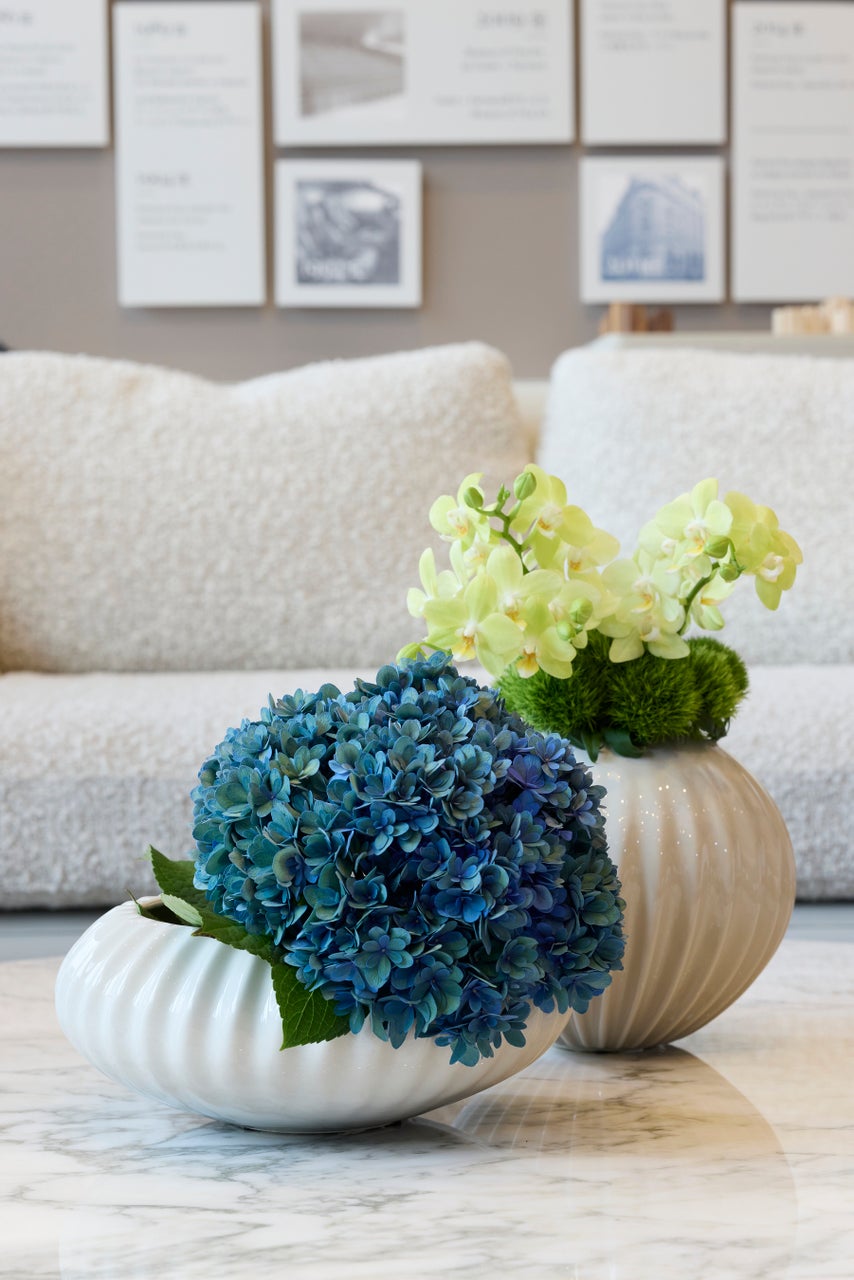
In Gotoh Florist’s photographs, blue hydrangea projects to one side of a low vessel. Its clustered roundness sits beside the rises and dips of white ceramic. Behind it, orchid blooms are spaced along stems reaching upward. The direction of the flowers, not just the height of each vase, changes how the pair relates.
The red-and-orange arrangement takes a different approach. Long, slender branches arc beyond the vessels and down onto the table. Flowers overlap at the centre, while the branches become more clearly visible toward the ends. The eye can pause near the vase, then follow the plant farther out.
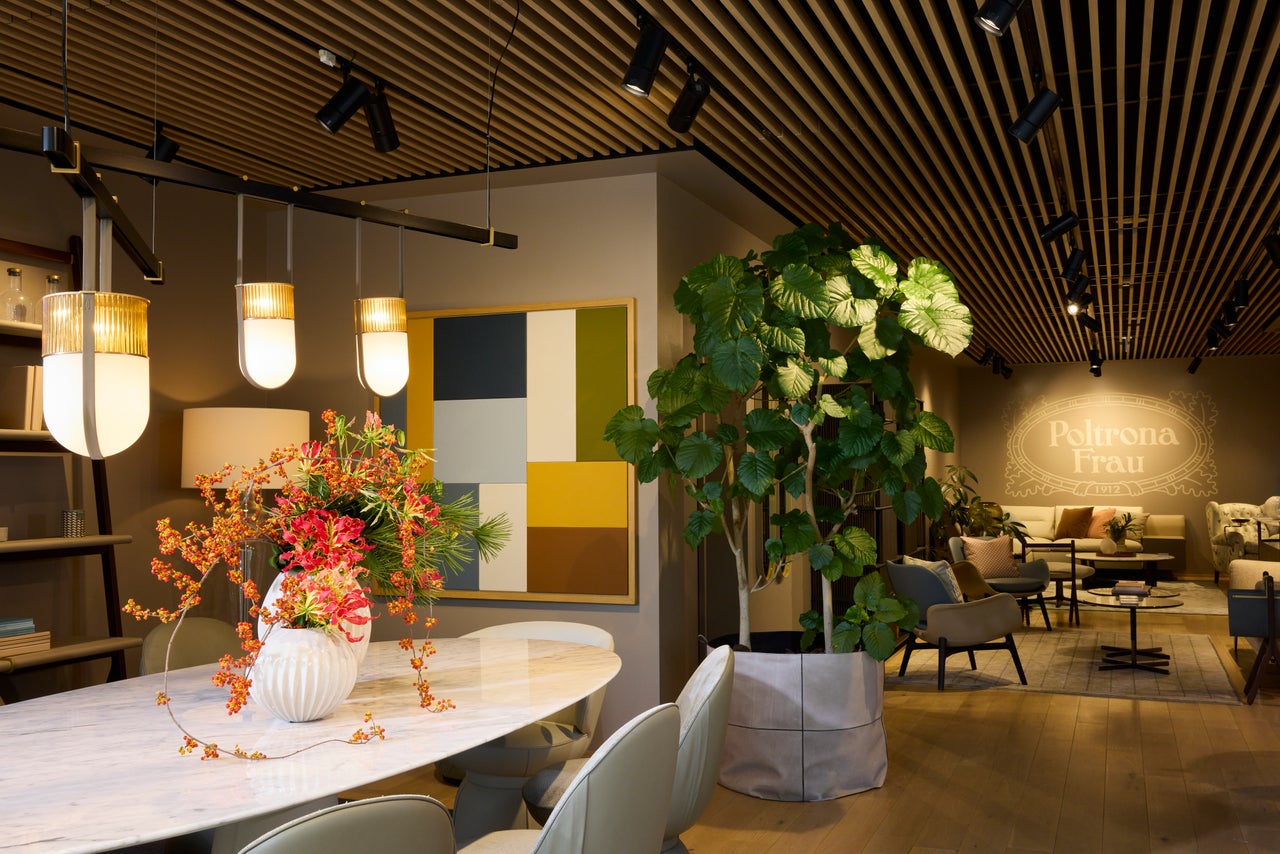
The wider photograph places those lines among furniture: narrow ceiling slats, a long table and the vases’ vertical folds. Branches lean and hang across this more regular geometry. Their direction makes the distance between flowers and furniture visible, rather than simply adding colour beside a chair.
The Aoyama floral styling continues through November 8; that period is distinct from the display and sale of Shiwa itself. A change of flowers begins a different arrangement at the same rim. Hydrangea can spread sideways; a branch can reach beyond the vessel. The white folds remain, beside another plant form.