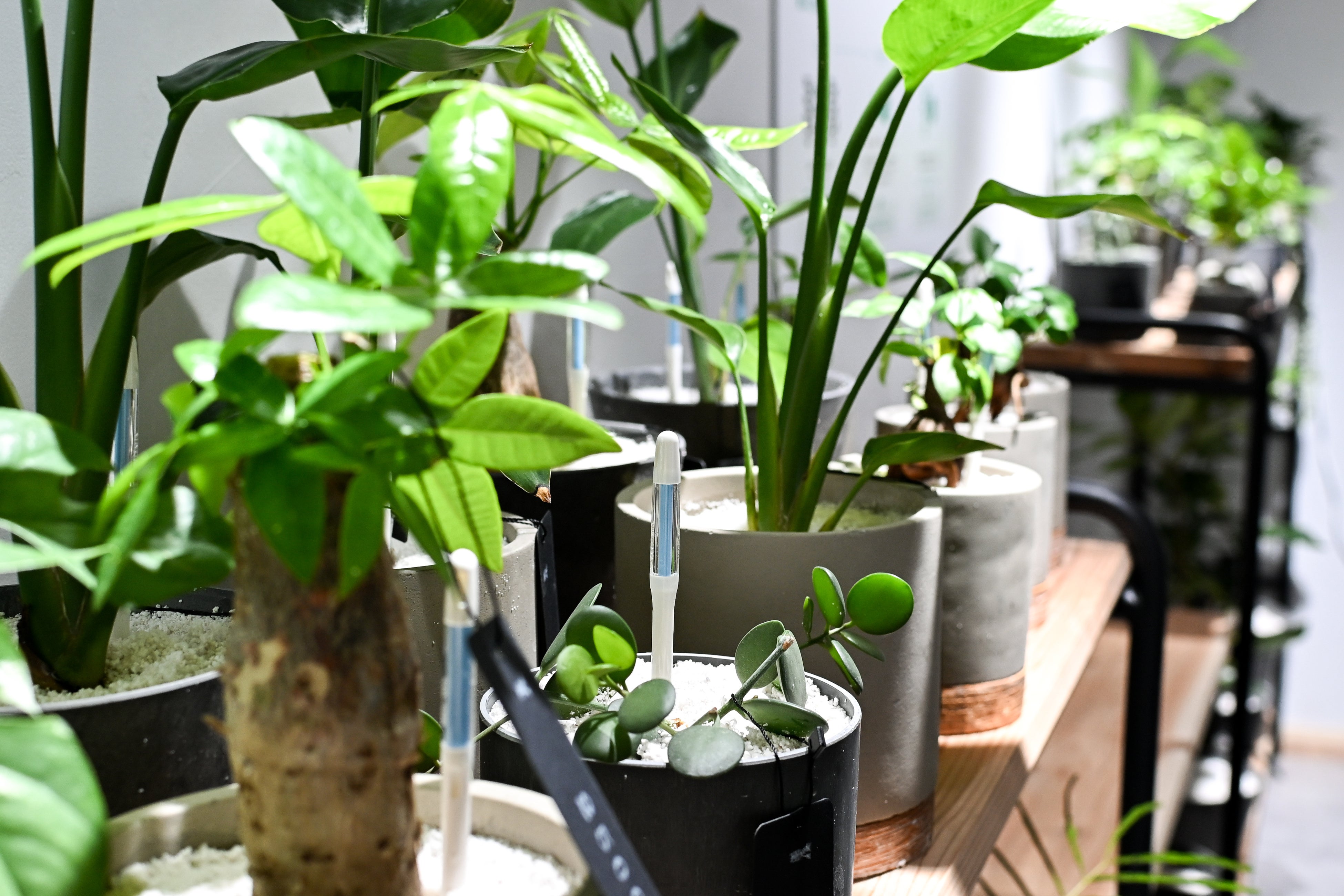
To take a plant home from an unattended shelf, a price tag is not enough. At ONE PLANTS Higashi-Jujo, which opened on 26 September, each plant is sold with a pot, an inorganic growing medium and a moisture indicator. The arrangement places the beginning of plant care inside the object itself—and reveals what no shelf can decide for the grower.
Building the explanation into the shelf
Higashi-Jujo is the third ONE PLANTS shop and its first in Tokyo. Located three minutes on foot from Higashi-Jujo Station, it is open daily from 8 a.m. to 9 p.m. Entry requires registration and a code delivered through LINE. No salesperson is stationed inside, although staff manage plant condition. Growers select the plants, and each is repotted into a vessel chosen by a designer before it reaches the shelf.
The unit on sale is therefore more than a plant. It includes the scale and material of the pot, the substrate around the roots and a tool for reading moisture. That reduces the need to solve two immediate questions at the counter—which pot fits, and whether repotting must happen at once. Yet a prepared combination is not the same as a plant suited to every room. Distance from a window, indoor temperature and moving air all change after it leaves the shop.
The pot and substrate form the first environment
According to the official site, the shop uses ONESOIL, an all-inorganic medium designed by the company for water retention, drainage and nutrient holding, with a lower likelihood of insects. Those are the brand’s claims, not a promise that every species can follow the same watering routine. Still, the choice makes the substrate visible as part of the purchase rather than a hidden accessory. It asks the buyer to consider the environment around the roots, not only the outline of the leaves.
Stock changes with the season. Instead of arriving with one guaranteed species in mind, look at leaf firmness and colour, the base of the plant and any signs of damage. Then compare the whole plant-and-pot unit with the light and space available at home. That small act of looking turns an unattended display from a place of instant purchase into a place where observation begins.
Keeping observation beyond the moisture indicator
Every pot includes a moisture indicator. A visible cue makes sense in a shop without spoken guidance, but the University of Illinois Extension notes that meters can be useful without always being reliable. Water use changes with species, light, temperature, humidity, container, substrate and drainage. The indicator can begin the decision; leaf firmness, pot weight and changes in the room should complete it.
The shop does not eliminate explanation so much as move part of it into the construction of each pot. The more interesting promise of ONE PLANTS Higashi-Jujo is not simply the speed of buying without staff, but the attempt to prepare a better first decision. Once the plant enters a home, observation returns to the grower. The tools can make that attention easier to begin, but they cannot watch the plant on anyone’s behalf.