From a garden to a single container
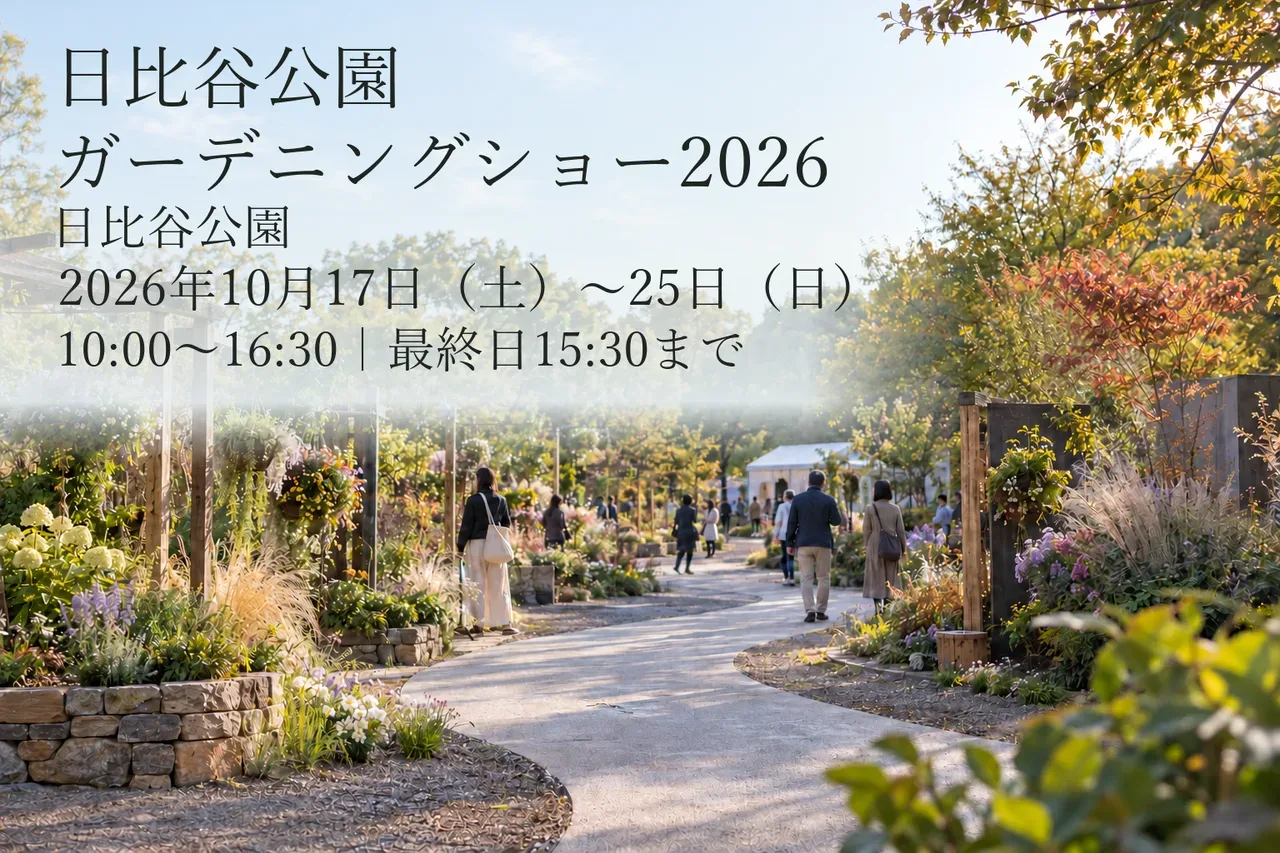
The 24th edition runs from October 17 to 25. Gardening competition entries will be displayed around Hibiya Park’s lawn and elm-tree plazas and nearby paths. Four categories—gardens, lifestyle gardens, container gardens and hanging baskets—allow visitors to move from planting at ground level to plants held in pots or suspended above it.
These are not simply larger and smaller versions of the same thing. In a garden, the eye can travel from the foreground towards the back. A pot brings the shapes extending beyond its rim closer to view. Hanging plants can be seen from below or from the side as well as straight on. Even when similar flowers and greenery are used, changing the relationship between plant and viewer changes what deserves attention.
The official entry guidelines connect the garden category with tradition and innovation in Japanese garden culture, while lifestyle gardens are asked to propose ways of living with gardening. Moving between them offers a way to consider where displaying plants and making a place for people overlap, and where they differ. There is no need to decide in advance what this year’s individual entries will show.
Container gardens, meanwhile, must make the planted vessel recognisable as the main container; they are distinguished from miniature gardens that extend across the surrounding space. This directs attention to the relationship between plant and pot. How much of the vessel remains visible? How do the plants continue or interrupt its outline? Such questions can lead back to a single pot at home.
After the display, watch the making
There are opportunities to learn about making as well as looking. The official programme includes a hanging-basket demonstration on the opening day, guided tours of competition entries and a topiary-clipping demonstration on the 24th. They do not all take place every day, so the programme is worth checking before choosing a visit.
Watching a demonstration need not be about reproducing the display exactly. Understanding an order of planting or a decision about working with branches and leaves can change how a finished arrangement looks. See a work, listen to an explanation, then return to it. Walking back along the path can turn a pleasing first impression into something more specific to think about.
A visitor without room for a garden may still reconsider the direction of a pot or the height at which it sits. Hanging-basket displays may draw attention to the relationship between a suspended plant and eye level. These are things to take home without buying the plants on display. Appearance alone, however, should not determine a plant’s growing conditions: its light and care needs require separate consideration.
The organisers also plan company and organisation tents involving plants and materials, alongside talks and activities about flowers and greenery. Visitors can start with the exhibits and follow an interest into the programme, or build a visit around a demonstration and explore the displays before and afterwards. Choosing one point of interest first leaves space for discoveries along the way.
Choosing one day within the nine
Opening hours are 10:00 to 16:30, with a 15:30 finish on the final day, October 25. Admission is free. The venue is Hibiya Park, close to exits A10 and A14 at Hibiya Station and B2 at Kasumigaseki Station. The organisers give a walk of approximately eight minutes from Yurakucho Station’s Hibiya exit. Even a short visit can focus on one display category or activity.
Individual talks and activities have their own participation conditions. A special lecture at the Green and Water Civic College on the 17th has application information and should be checked separately from the general park displays. Some outdoor performances are listed as cancelled in rain. Before travelling, consult the official programme and current notices for any changes.
This year’s theme brings flowers, greenery and a sense of ease into connection. Looking between a garden, a small container and a basket overhead shows that there is more than one way to make a place for plants. Rather than imitate a whole display, take home one idea about the space between leaves and their container, or between plants and people. A small choice can begin to change where a plant sits at home.