A string-instrument bow is slender. During a performance, the eye follows the strings and the player’s hand, and it is easy to miss that the stick began as a tree. Pernambuco, the wood long favoured for many modern bows, comes from pau-brasil, Paubrasilia echinata, a leguminous tree native to eastern Brazil. A forest history remains inside this tool for making sound.
Joining the tree name to the timber name
Kew’s Plants of the World Online accepts Paubrasilia echinata as the current name, with a native range in eastern Brazil and a primary habitat in seasonally dry tropical biome. The once widely used name Caesalpinia echinata is now treated as a synonym.
The living tree is often called pau-brasil, while bow wood is commonly called pernambuco. The two names can sound like different materials, but they return to the same species. Its red-toned heartwood has a long history in dyes and woodwork and eventually settled into the narrow form of the string bow.
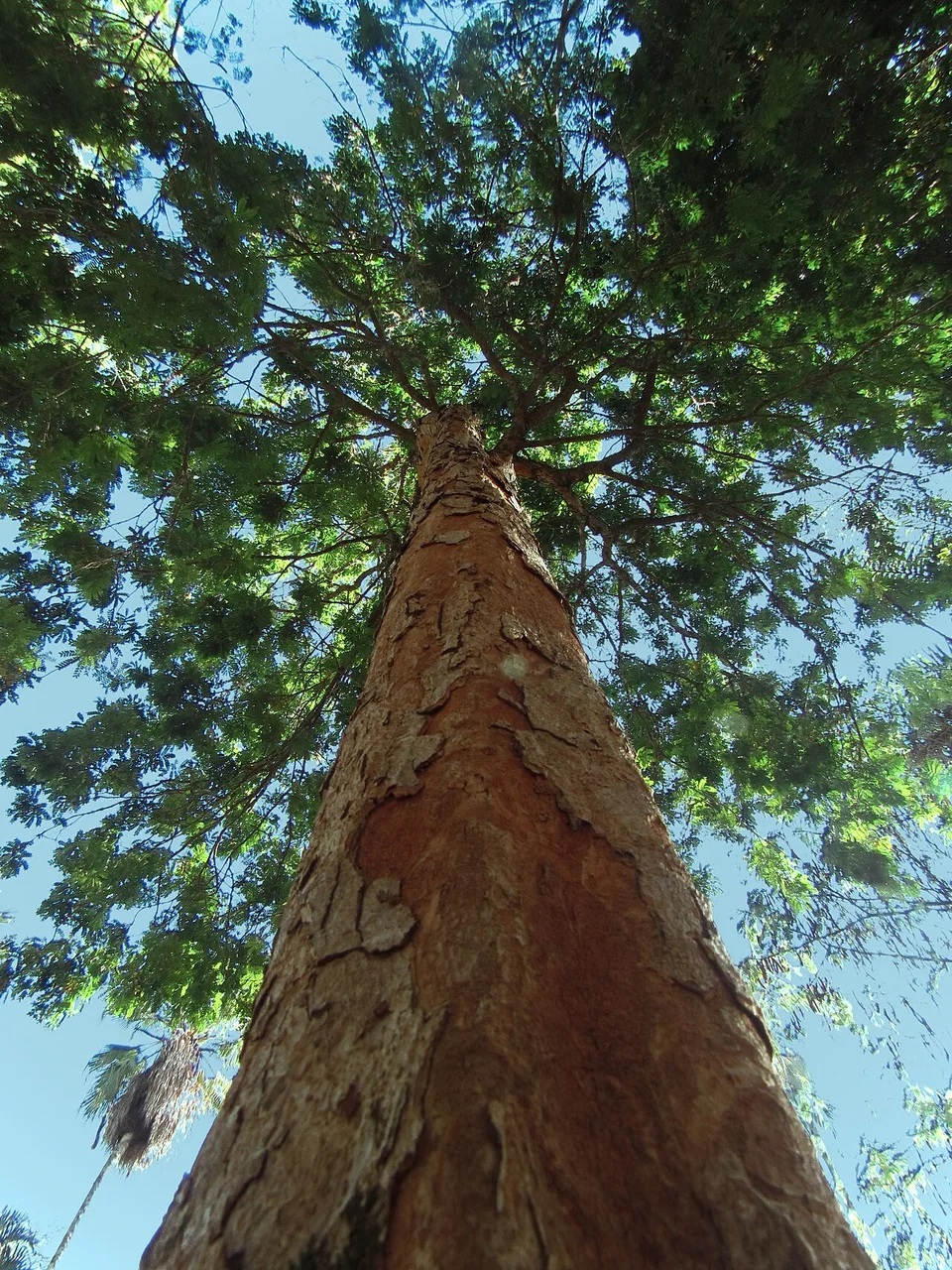
The tree in the photograph stands in a state forest in São Paulo. Its grey-brown trunk, finely divided leaves and small crown look far removed from the polished surface of a finished bow. Wood selection, seasoning, heat and careful cutting occupy the distance between them.
Turning density and elasticity into movement
Research led by the Forestry Institute of São Paulo records pau-brasil wood as the reference for modern bows for nearly two centuries. Density, speed of sound through the wood, elastic modulus and resistance to rupture each matter. The choice is not as simple as finding the heaviest or hardest timber.
A bow stick bends away from the tensioned hair and receives repeated small shocks in use. It needs strength to keep its form and enough resilience to answer changes in the player’s pressure and speed. Large variations in density along a stick can disturb both the resistance felt while shaping it and the balance of the finished bow.
The same study compared six candidate timbers, including ipê, through physical tests and trial bows. Numbers similar to pau-brasil did not alone predict the finished result. Cellular arrangement, workability and consistency across the stick also help a narrow piece of wood receive the player’s hand.
Reading provenance beyond the sound
Pau-brasil has endured both forest loss and a long history of extraction. Brazil’s National Institute of the Atlantic Forest identifies habitat loss and overuse, including more recent demand for bow wood, among the species’ main threats. The bees that pollinate its flowers and the forest linking scattered populations are part of the tree’s future too.
Within CITES, the relationship between pau-brasil and musical instruments continues to be examined through documentation for timber and finished bows, proof of legal origin and the treatment of plantation-grown material. Owning an old bow is not the same as trading newly cut wood. What matters is keeping the origin of each piece from becoming invisible.
Research into alternative timbers does not erase bow-making tradition. It separates performance into density, elasticity and cellular structure, then tests whether another tree can meet those demands. When a slender bow appears on stage, its line extends beyond the strings—to one species in eastern Brazil and to the records meant to keep its wood available for the future.