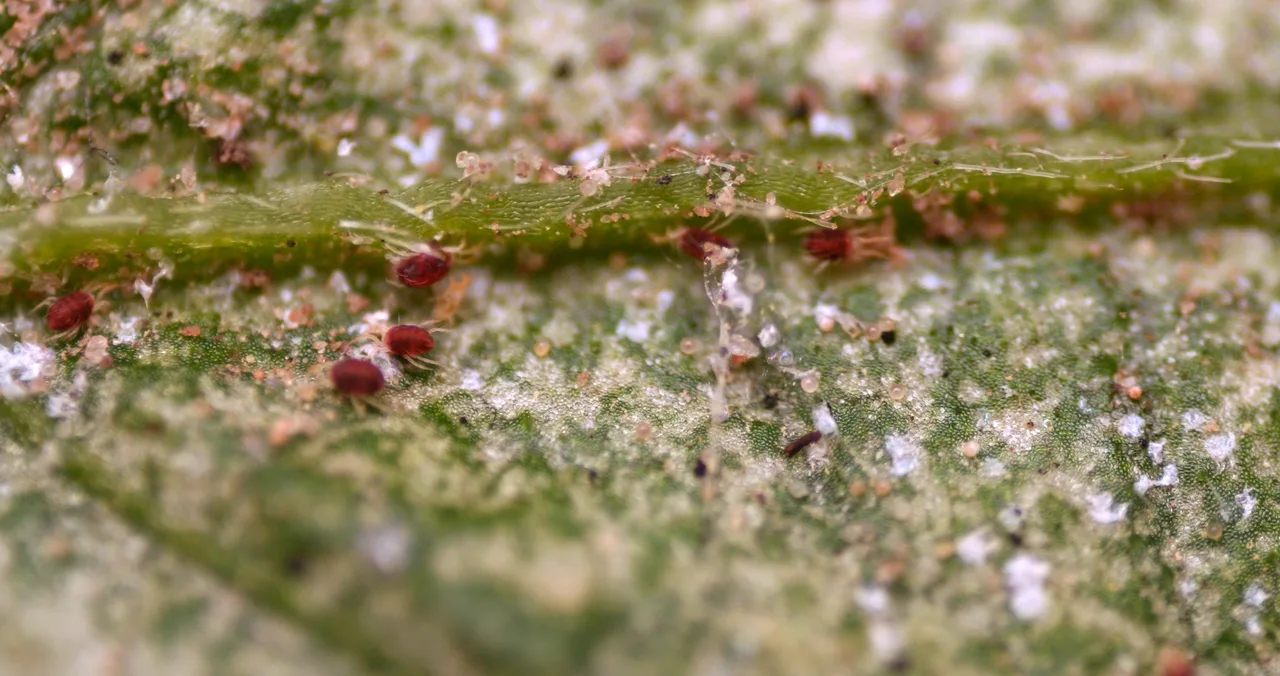
Pinpoint pale marks spread across the upper surface until the leaf looks washed out. The pattern can resemble simple dryness, but turn the leaf towards the light and a finer clue may appear: threads stretched between the veins. The useful evidence is not the fine silk alone, but the tiny moving dots and round eggs beneath it.
Separate pale stippling from webbing below
Spider mites are arachnids rather than insects, and colonies usually occupy leaf undersides. UC IPM notes that even the larger adults are only about 0.5 mm long and can look like moving specks to the unaided eye. Their feeding removes cell contents, first leaving pale stippling; heavier damage can bronze or yellow a leaf and eventually make it fall.
Pale marks alone do not prove an infestation. Mineral deposits, dust, nutrition and root problems can also change a leaf’s colour. More persuasive clues are fine stippling across the blade, mites or eggs beneath it, and silk produced by a growing colony. Hold the petiole base and the space between touching leaves to the light as well.
Indoor leaves are not rinsed by rain, and dry, dusty conditions can build around them. UC IPM describes low indoor humidity as favourable to mite development and notes that very few houseplants are immune. Check the plants already waiting inside, not only the pot that has just crossed the threshold.
Confirm movement on a sheet of white paper
Slide white paper below the leaf and tap it lightly two or three times. Watch the fallen grains for several seconds and look for dots that begin to move. A 10× hand lens makes mites and eggs easier to follow than they are against the leaf. UC IPM likewise recommends checking leaf undersides and shaking suspect material onto white paper before treatment.
Once one leaf tests positive, map the plant before wetting everything. Compare a young and an old leaf, the window and wall sides, and one leaf from the top and bottom. Whether the signs remain on one shoot or reach several stems and neighbouring pots determines how widely the plant should be separated.
Check the medium and the weight of the pot at the same time. Water-stressed plants can suffer more severe mite damage, but stippling does not automatically call for extra watering. If the root zone is already wet, do not add saturation; keep the pest check, leaf washing and root-zone care as separate decisions.
Rinse, separate and watch for a return
For a small infestation, move the plant away from other pots and direct water across the leaf undersides to remove mites and dust. Work where runoff cannot splash neighbouring plants, and rinse carefully around petiole bases. If the medium should not receive more water, cover its surface and begin with pressure gentle enough not to bruise the foliage.
A leaf that looks clean once can still hold eggs. Recheck the same leaves and the white paper every few days, noting whether stippling expands or silk returns. Removing dead material and keeping dust off the foliage also makes the next inspection clearer.
If rinsing is not enough and a horticultural soap or oil is considered, confirm that its label covers both the plant and mites. Test an inconspicuous area for damage, avoid treating a drought-stressed plant or spraying in high heat, and follow the stated dilution, frequency and protective measures. Do not improvise mixtures of different products.