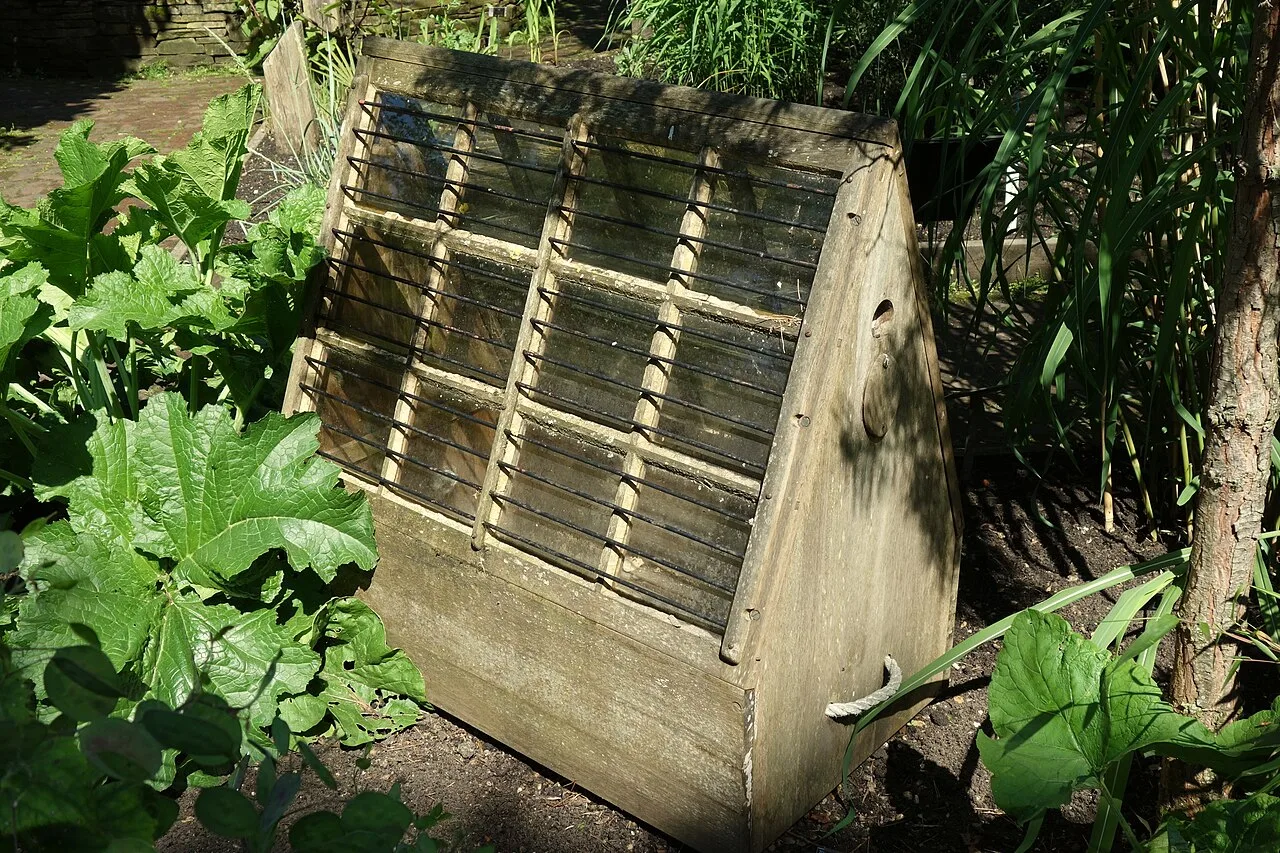
A glass roof and four clear sides rise from a wooden box. The cargo inside was not inert: it held living ferns and young plants. In the nineteenth century, the Wardian case turned a salt-swept deck into a small travelling plant room. It admitted light, kept spray away and returned condensation to the soil. A complete design for moving plants survives within a few panes of glass.
A small greenhouse at sea
Until the early nineteenth century, long-distance transport of living plants often failed. Below deck there was too little light and fresh water; above it, salt spray reached exposed leaves. Records at the Royal Botanic Gardens, Kew include shipments that arrived with their plants dead.
A Wardian case allowed plants to remain on deck under protection. Sunlight entered through the glazing while the frame and covers kept out seawater. Moisture condensed on the inner walls and returned to the soil. Crossed battens steadied the contents in rough seas, and air holes covered with perforated zinc admitted ventilation while excluding rodents.
A moth cocoon and a fern
The story began in 1829 with Nathaniel Bagshaw Ward, a London doctor and amateur naturalist. A fern germinated in the moist soil of a sealed glass bottle holding a moth cocoon. It continued to grow as condensation circulated within the enclosure.
Ward developed the observation into a transport system. In 1833, two cases containing ferns, mosses and grasses travelled from London to Sydney and arrived alive. He gathered his experiments in the 1842 book On the Growth of Plants in Closely Glazed Cases. An accidental sprout had become an operating principle.
Twenty-eight plants to a case
Kew used a case in 1841 for ferns and woody plants sent from New Zealand by Joseph Dalton Hooker. By 1847 the container was in regular service, with a standard case holding about twenty-eight plants.
Its dimensions governed more than capacity. The height of the glazing, the restraint around root balls, drainage and feet that lifted the base from the deck all affected survival. This was not simply a display case. It managed light, water, air and movement at the same time.
The bright and dark sides of plant movement
The case widened botanical research by delivering living material from distant regions. It also became an instrument of empire and trade, moving useful species into new systems of cultivation. Kew records its role in transferring rubber and cinchona from South America to British colonies in Asia.
The box preserved more than plants in transit. It also leaves questions about which species moved, whose lands they left, where they were planted and whose industries they served. The clearer the glass, the easier that background can be to overlook. The design becomes more legible when its beauty and its commercial history remain together.
Before the terrarium
The Wardian case is often described as a forerunner of indoor glass gardens and terrariums. Yet a small modern enclosure and a nineteenth-century shipping case do not share the same scale, ventilation or purpose. Their common idea is narrower: glass can shape the balance of light and moisture around a plant.
The case in the photograph stands at Chelsea Physic Garden. Its plain timber frame, deep lower box and pitched glazing reveal a form built for work at sea. It may resemble furniture now, but each proportion once belonged to the problem of keeping plants alive in motion.
In 1962, a shipment from Fiji became the last time Kew received plants in a Wardian case. Air freight and plant-quarantine rules had made the box obsolete. Its logic persists in terrariums and glazed plant cabinets, however. Behind today’s collecting rooms stands a quiet container first built to carry plants across an ocean.