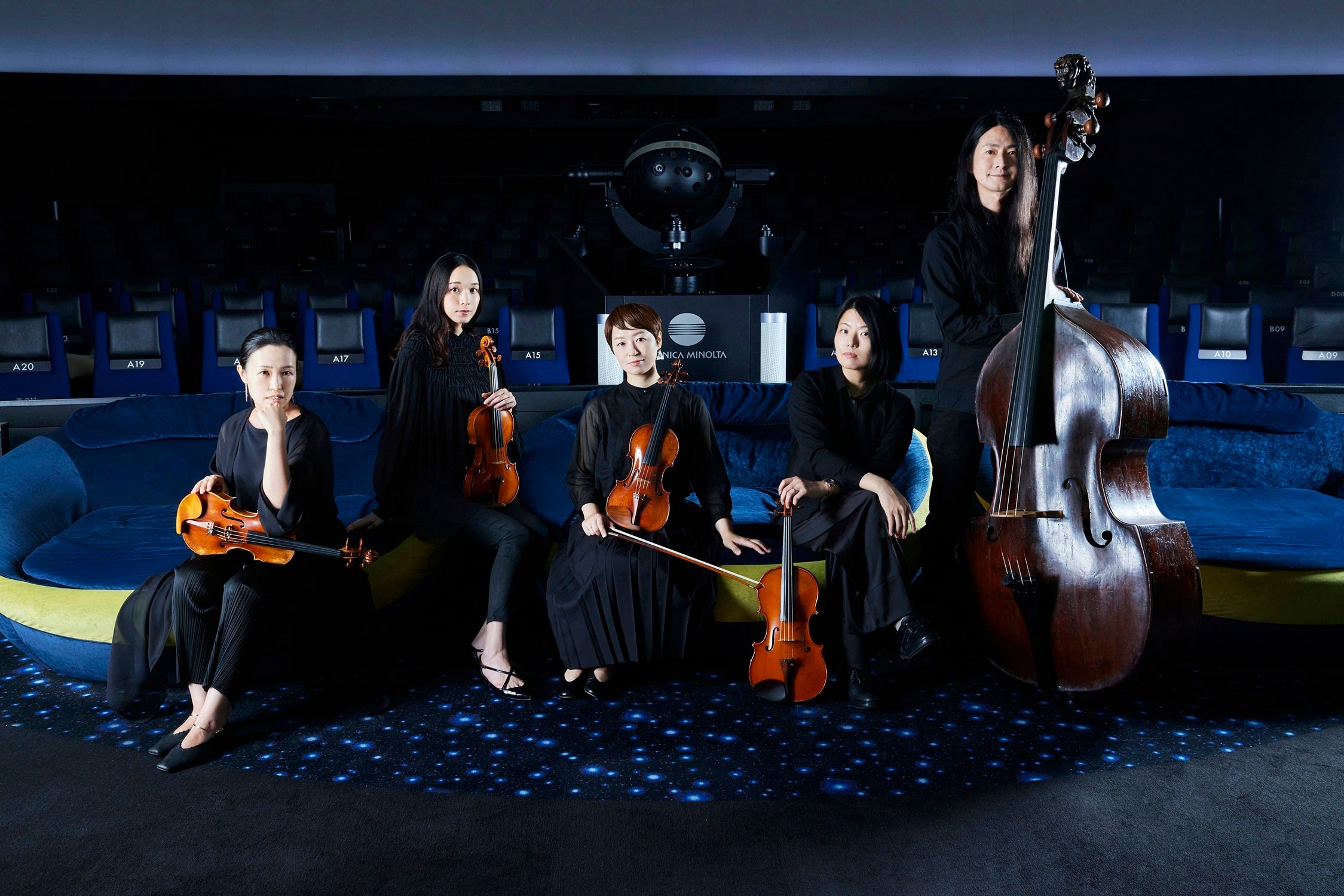
Water lilies on the surface, willows around the pond, and water holding the sky and clouds: the garden Claude Monet made at Giverny sustained his Water Lilies cycle for three decades. Returning to Planetaria Tokyo on 3 October, Planetarium Concert: Classical Music Through Monet translates that painted world of light, colour and passing time into 360-degree imagery and a live string quartet.
Monet built a garden from a pond
In 1893, Monet bought land with a pond near his home at Giverny. He reshaped it into a water garden for visual pleasure and as a source of subjects to paint. Water lilies floated on the pond; a wisteria trellis was later added to the Japanese-style bridge; willows, bamboo and surrounding foliage cast reflections across the surface.
The Water Lilies cycle occupied Monet from the late 1890s until 1926. The Musée de l’Orangerie describes nearly 300 paintings born from the water garden. The lilies were not a motif copied once, but living subjects rearranged each day by season, hour, cloud and wind.
One group of compositions includes the pond edge and dense vegetation. Another crops the view to water alone. Flowers, pads and reflections of trees disperse across a surface without a fixed horizon. Knowing these two structures before the concert makes it easier to distinguish the weight of foliage from the open intervals of water.
Hearing changes of light in strings
The programme names Satie’s Gymnopédie, Debussy’s The Girl with the Flaxen Hair and Clair de lune, Ravel’s Pavane for a Dead Princess, and Beethoven’s Ninth Symphony among its string arrangements. Music from Monet’s time anchors a sequence shaped around his life and changing painted world.
KokonQuartet performs with two violins, viola and double bass. The ensemble replaces the cello of a conventional string quartet with an instrument of still lower range. That span gives the arrangement room for dark resonance below and fine changes of colour above.
The official description promises 360-degree imagery inspired by the light, colour and passing time of Monet’s paintings. It does not identify one Water Lilies canvas as a literal projection. The botanical history of the garden is therefore not a key for finding a correct image; it is a way to notice how colour changes across the dome.
Choosing a distance from image and live sound
The official page recommends the front area for proximity to live sound and the rear area for a more integrated view of music and dome imagery. Side seats offer a lighter way into the atmosphere and performance. Individual seat numbers cannot be selected, but the three areas allow visitors to choose the kind of distance they want.
Because the immersive image reaches the dome walls, projector light may feel strong from some positions, particularly near the wall or toward the rear. Photography, audio recording and video recording are prohibited during the performance. The event keeps the dissolving edges of flowers and the decay of a string note within the time of the room.
From 3 October to 29 November
Performances take place in DOME1 at Konica Minolta Planetaria Tokyo in Yurakucho and run for about 50 minutes. Most begin at 2:15 p.m.; Friday performances begin at 7:15 p.m. On 17 October only, there are two performances, at 12:15 p.m. and 2:15 p.m.
Front and rear reserved seats cost ¥5,500, while side reserved seats cost ¥4,400, plus a system fee. Ticket Board sells tickets until the starting time of each performance, unless the planned allocation sells out. Preschool children are not admitted, and tickets are not sold at the venue counter or by telephone.
A water lily was a single flower on a pond, but for Monet it was also part of a garden clock measuring weather and time. Fifty minutes of strings and projected light now meet the decades he spent returning to a pond of his own making. After leaving the dome, light on a puddle or a potted leaf may hold the eye a little longer.