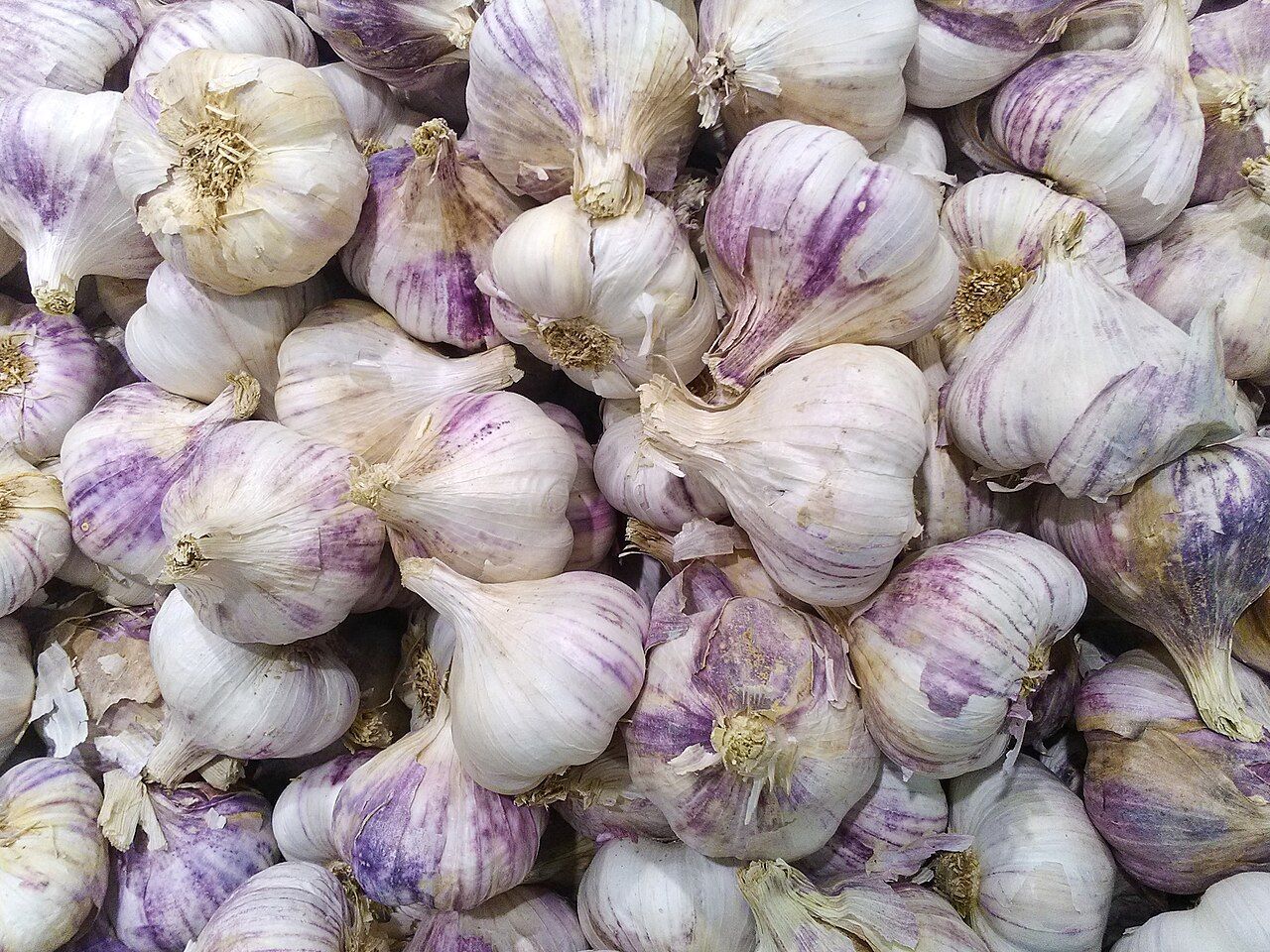
Break open a white bulb and each papery clove appears. In the kitchen, it is a unit of flavor; in the ground, it is the beginning of a plant. Garlic enters the soil in autumn, extends roots through the quiet of winter and builds a new bulb for the following early summer.
The next plant is already inside one clove
The accepted name is Allium sativum. Plants of the World Online at Kew records it as a bulbous plant of temperate regions. What we call one head is a bulb made of several cloves, and each clove carries a growing point above a basal plate that produces roots.
Choose planting stock sold with a variety name and regional guidance rather than taking a bulb from the food aisle. The RHS notes that grocery garlic may be poorly suited to the local climate and may carry disease, so named stock from a garden supplier is the safer starting point.
Autumn planting includes a spell of cold
Garlic does more than tolerate cold. The RHS says many varieties need one or two months around 0–10°C for good bulb development, which is why planting commonly runs from mid-autumn into early winter. Cold becomes part of the sequence that leads to a full bulb.
There is no single planting date for every region. University of Minnesota Extension recommends one or two weeks after the first killing frost for its climate. Winter arrives differently in warm and cold parts of Japan, so the label on the planting stock and a local planting calendar should take priority.
Flat base down, pointed tip up
Separate the bulb into cloves only a day or two before planting. Keep the papery skin in place and set aside any soft or damaged cloves. Roots emerge from the flat basal plate, so that end faces down and the pointed end faces up. An inverted clove has to bend its shoot through the soil.
The RHS gives 15 centimeters between cloves and about 2.5 centimeters of soil over the tip as one ground-planting reference. Light and heavy soils call for different depths. More important than copying a number is choosing soil that drains freely and does not leave the bulb wet through winter.
Winter advances below the surface
In cold-climate guidance, roots and shoots may begin before the ground freezes hard even when no green tip appears until spring. Beneath a bed that seems unchanged, the clove is anchoring itself and preparing for the next season.
Where snow and repeated freezing are expected, leaves or clean straw can soften swings in soil temperature. In warmer, wetter places, a thick cover may hold too much moisture. Winter protection should follow both the severity of the cold and the way the soil dries.
Spring leaves need light and space
When leaves rise in spring, control weeds early and water deeply during prolonged dry spells. Light captured by those leaves is stored below ground. The clove divided in autumn becomes winter roots, spring foliage and an early-summer bulb. Knowing that sequence makes even a quiet bed feel connected to the next harvest.