Plants begin working before a visitor has crossed the garden entrance. A parking garden receives rain, native meadow plants cover a roof, and separate tropical and arid houses protect living collections. Norfolk Botanical Garden in Virginia began member access to its long-term Garden of Tomorrow project on September 11, 2026. The new arrival sequence asks visitors to notice not only buildings, but also how plants direct water and attention.
Read the two opening dates separately
The Garden’s official information lists September 11–13 for members, followed by reserved public admission from September 14. The member festival on September 12 and 13 runs from 10 a.m. to 4 p.m. Rather than flattening different notices into one opening date, visitors should confirm the day and reservation conditions that apply to them.
The project is more than a single greenhouse. An entry pavilion, the Perry Conservatory, an environmental education center, a parking garden, an elevated walk, and a rooftop meadow form one route. Arrival, plant conservation, learning, and stormwater management are layered into the order of a visit instead of being treated as separate support functions.
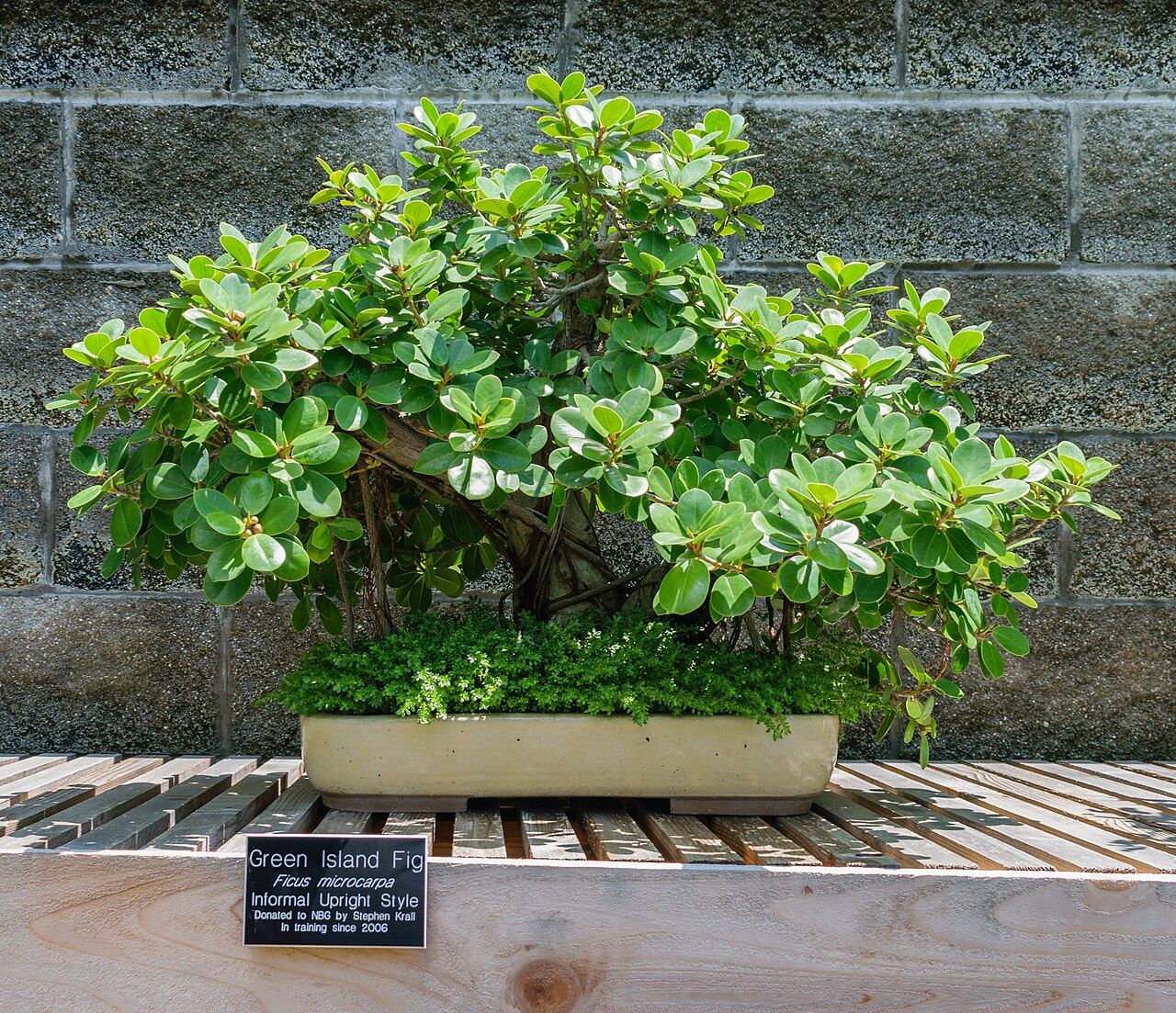
The photograph shows a Ficus microcarpa bonsai photographed in Norfolk Botanical Garden’s Japanese Garden in 2017. It does not show the new conservatory or an opening display. It is included as evidence of the Garden’s existing living collection. The article does not infer the new facility’s appearance from this older image; descriptions of the project come from official planning material.
Read the conservatory from two levels
At the center is the Perry Conservatory, a two-story structure of about 26,000 square feet. Dills Architects says its tropical and arid houses will hold threatened and endangered plants. The plan does not collapse different habitats into a single shelf of rarities. It uses space to keep the needs of tropical and dryland collections legible.
An indoor-outdoor skywalk on the second level looks down into the tropical house and then outward toward the existing rose garden. Moving the viewpoint from low leaves to trunks and canopy changes how the same planting is read. Height becomes an interpretive tool rather than only a circulation device.
The conservatory will also hold Dale Chihuly’s permanent Perry Collection of glass. Official descriptions connect its organic forms and color with attention to nature. The glass should not be confused with the plants themselves. Names, habitats, and conservation purposes remain essential; the artwork is a neighbor that can alter the angle from which a living specimen is seen.
Plant layers extend to roof and parking garden
Above the entry pavilion, the Batten Sky Meadow covers nearly 15,000 square feet. The plan combines native meadow planting with overhead walks and a role in reducing stormwater runoff. Instead of leaving the green roof as a distant pattern, the route brings visitors close enough to notice leaf density and seasonal change.
The arrival area has also been rebuilt as the Brock Parking Garden. Official material describes trees, flowers, rain gardens, permeable paving, and engineered soil cells replacing a conventional stormwater pond. Parking and garden are not separated; the path of rain from hard surface to planting becomes visible at arrival.
Three movements offer a useful way to read the place. Water travels from paving to rain garden, attention rises from ground layer to canopy, and plants shift from an outdoor native meadow to tropical and arid houses. Visitors can compare where planting is not decoration but part of temperature, water, conservation, and learning.
From an older garden to a new entrance
The photographed Ficus microcarpa sits between a sloping wall and a wooden platform in the Japanese Garden. Reading one tree in a small container differs greatly from walking through a two-level conservatory or across a rooftop meadow. Yet the habit of looking from roots to trunk, leaves, and surrounding space can connect those scales.
Garden of Tomorrow does not assign the future to new buildings alone. Conserved plants, rain-receiving landscapes, learning spaces, and older gardens are placed along one route. General public access is listed from September 14 with reservations, so visitors should check the official site for current admission and opening information.