In March 2027, a United States plant exhibit will join GREEN×EXPO in Kamiseya, Yokohama. Led by the United States Botanic Garden and the American Public Gardens Association, it places native plants and public-garden culture at its center. The current official page does not yet list individual plants. That makes the next question botanical: which American landscapes will be represented, and in what seasonal form from spring through early autumn? The event will run for six months.
Plant selection becomes the structure
According to the United States Botanic Garden, this will be the country's first official participation in an International Horticultural Expo since the system began in 1960. The Garden is developing the exhibit with the American Public Gardens Association through four specialist committees covering design, plant selection, programs, and development. Phillip Douglas of Denver Botanic Gardens chairs the Plant Selection Subcommittee.
The official description promises American native plants representing diverse landscapes and gardens. A shade structure and an immersive visitor experience are also planned, but plants are not presented as architectural decoration. The exhibit is rooted in the idea that plants and green spaces help cultivate personal and collective happiness.
The American Public Gardens Association represents nearly 600 member institutions across all 50 states and 20 countries. This is not simply one garden bringing part of its collection abroad. Multiple public gardens are sharing work on design, plants, and learning. How their regional knowledge is woven into one exhibit will matter as much as the eventual plant list.
Species, cultivars, a planting plan, and a flowering schedule are not identified on the USBG page as of September 12. It would be premature to infer regions or heat tolerance. For now, the reliable boundary is the published phrase “American native plants.” Which ecological regions they represent, and how they change across Yokohama's seasons, remain matters for a future official announcement.
Plants mark a six-month season
GREEN×EXPO 2027 will run from March 19 to September 26, 2027. The official site says the full venue will be adorned with about ten million flowers and plants, including roughly 600 cherry trees in approximately 40 varieties at the opening. Those figures describe the Expo as a whole, not the United States exhibit alone.
Inspired by Japan's twenty-four solar terms and seventy-two micro-seasons, the Expo is designed to make seasonal change visible across its six-month run. From spring opening through summer and into early autumn, emergence, flowering, layered foliage, and transitions between displays matter more than a single finished scene. The American plant selection will gain meaning within that extended calendar.
The Expo theme is “Scenery of the Future for Happiness,” while the United States exhibit is titled “The Pursuit of Happiness.” Returned to plants, those broad ideas require more than a national flower. The meaningful work lies in connecting plants from different climates and garden traditions with Yokohama's spring, rainy season, and summer.
A greenhouse as the photographic entry
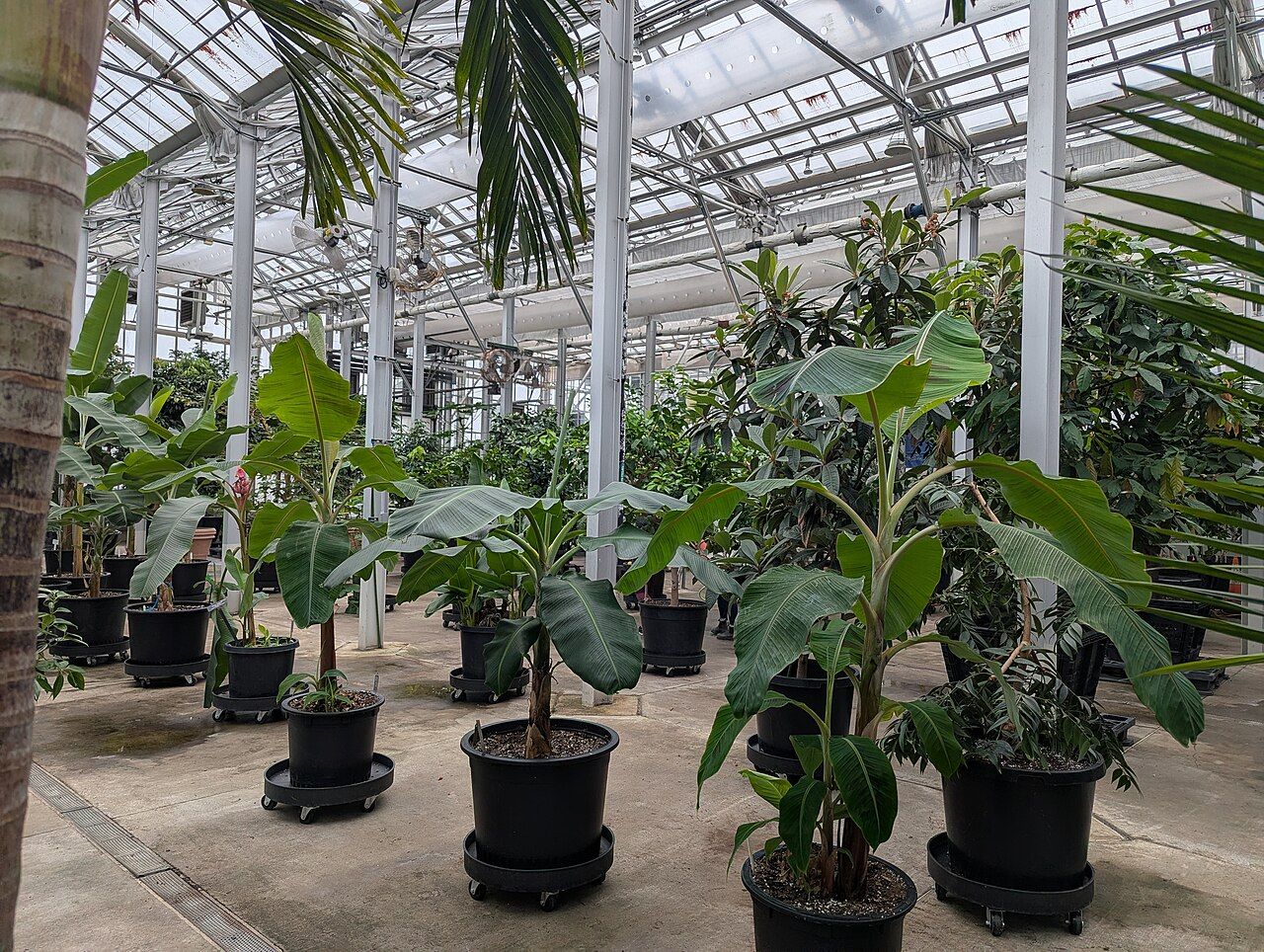
The photograph was taken during a March 7, 2026 open house at the U.S. Botanic Garden Production Facility in Washington, D.C. It does not show the GREEN×EXPO site, the United States pavilion, or plants selected for the exhibit. Rows of pots beneath a high roof provide a visual entry into the long cultivation time behind a living display.
The Production Facility supports foliage, nursery crops, seasonal displays, and the Garden's collection. There is no published indication that the plants in this photograph will be sent to Yokohama. The image belongs to the Garden's everyday growing infrastructure and should not be mistaken for a record of Expo preparations.
Botanic-garden staff across the United States are also expected to have opportunities to contribute educational experiences. The exhibit can therefore become more than a place to view planted material: it can connect each plant with a region and with the institutions that conserve and interpret it. Future program details may reveal how that knowledge will reach visitors.
Four clues to watch in the next announcement
When plant details arrive, four useful questions are native region, seasonal timing, growing conditions in Yokohama, and interpretation for visitors. These are RareDex's editorial guideposts, not selection criteria announced by the organizers. If each plant is connected to a landscape and to a moment in the six-month season, an international exhibit can emerge as a living garden rather than a national label.
The United States exhibit is not yet a finished picture. Still, the presence of a dedicated plant-selection committee and the explicit promise of native plants are consequential. When the names are released, each plant can be met not as decoration, but as a carrier of American landscapes and the knowledge of its public gardens.