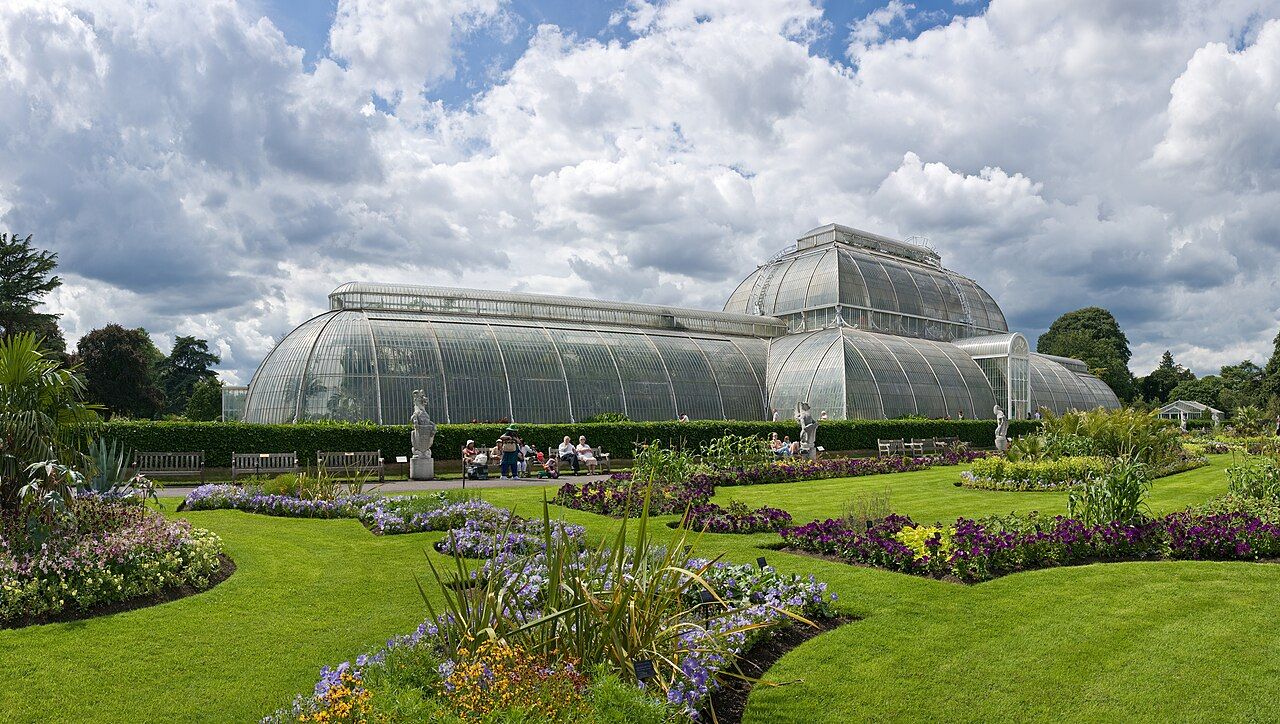
A sculpture may remain still, but the garden around it never holds one appearance. At Kew Gardens in London, Henry Moore: Monumental Nature places 30 outdoor sculptures among trees, water, and historic landscapes. The exhibition continues through 31 January 2027. It is an opportunity to see not only the works, but also the light, distance, and outlines made by living plants.
Do not leave the garden in the background
Kew's official guide says the 30 works were deliberately positioned to create a dialogue with the garden's trees and historic landscapes. Plants are not decorative scenery here. The amount of light filtered by leaves, overlapping branches, the depth of lawn, and reflections on water alter the apparent weight and openings of each sculpture. Bringing the work and the living landscape into one field of view is part of the exhibition's design.
The official description connects Moore's practice with growth, inner and outer form, and animal and botanical life. When body-like curves or shapes suggestive of bone and stone are set against actual canopies and changes in the ground, resemblance is only the first question. Where does a hard material settle into the landscape, and where does it sharpen its outline as something distinct?
Let the eye travel through an opening
Openings in Moore's sculptures do not conceal what lies beyond; they frame part of it. After seeing a work from the front, move a few steps sideways and notice whether a branch, the sky, or a building enters the opening. Up close, the material occupies more of the view; farther away, it returns to the garden. Treating the opening as a frame separates layers of trees that might otherwise read as one continuous mass.
Changing plants, stationary sculpture
The value of an outdoor exhibition that crosses seasons lies in changing plant conditions around fixed placements. A canopy dense with autumn foliage and the exposed structure of branches after leaf fall put different quantities of line inside the same opening. Strong shadows in sun, flatter light under cloud, and leaves moving in wind give a static outline several speeds. These are changes any visitor can test by looking.
Three prompts are enough. First find where the sculpture's outer edge meets the line of the canopy. Then choose one plant or building visible through an opening. Finally turn around and see which landscape the work connects to from the opposite side. Even before learning every title, naming plant height, leaf density, and changes in the ground gives the walk a recordable structure.
Move between botanical art and scale indoors
The Shirley Sherwood Gallery presents more than 90 smaller works, including sculpture, drawings, models, and sketchbooks. Monumental Botanical Art, drawn from the Shirley Sherwood Collection, is shown alongside them. Moving from large outdoor masses to leaves and flowers observed on paper creates a passage between simplifying nature at scale and recording its detail.
The botanical works should not be treated as an appendix. Sculpture that compresses form and botanical art that preserves enough detail to identify a plant operate at different scales of observation. Seen in sequence, they help separate an association—a curve that suggests a body, bone, seed, or branch—from the particular structure of a living plant.
Walk one route twice
According to Kew, the exhibition is included with garden admission, with guided tours daily at 12:30 and 14:00. A family trail around about ten works and accessible touch tours are also available. Dates and entry conditions can change, so visitors should confirm the day's information on the official page before travelling.
On the first walk, use the sculptures as landmarks. On the second, follow the same route from the plants outward. Which tree receives a work's outline? Which opening cuts out sky or glasshouse? Which surface of water unsettles a reflection? Naming one relationship between plant and sculpture can reveal more of this garden-specific experience than simply counting all 30 works.