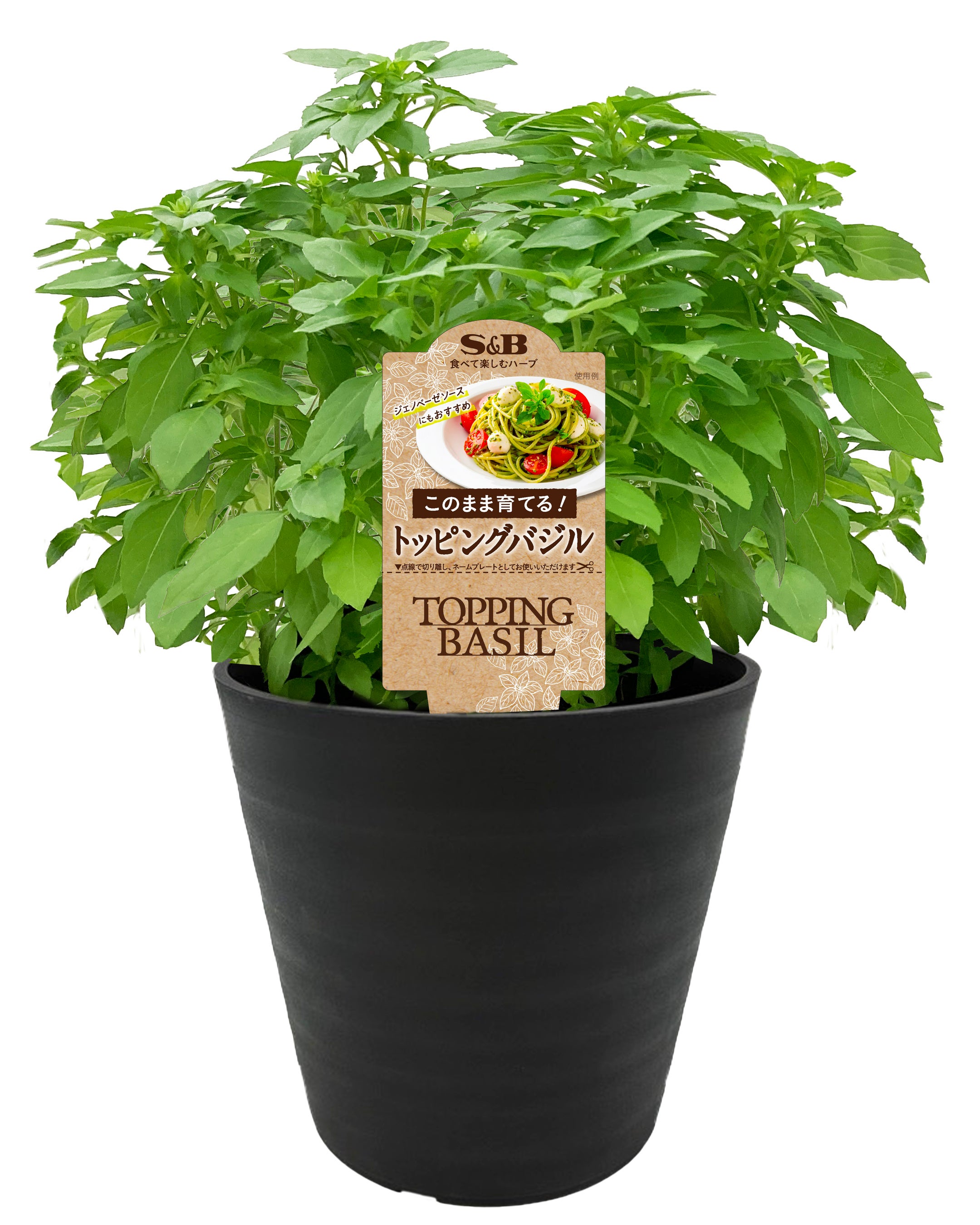
In the official photograph, the first impression is a rounded form made by layers of leaves smaller than those of common sweet basil. Multiple stems rise through them, and the plant spreads beyond the black pot’s outline. Though a culinary herb, it has a distinct presence as a windowsill plant. Its label gathers a photograph of pesto Genovese, growing tips, and a QR code leading to recipes.
From a 3-Inch Seedling to a 5-Inch Pot, Reducing the First Uncertainty
Topping Basil itself is not a new variety appearing for the first time. S&B Foods launched it in April 2024, primarily through home centers and garden stores nationwide, as a 3-inch seedling approximately 8 cm wide and deep and 7.5 cm high. From the outset, its stated traits included remaining about 20–30 cm tall, growing naturally into a dome, and retaining small leaves at maturity.
Added on August 24, 2026, is a version grown in a rigid 5-inch pot approximately 14.5 cm in diameter and 13.5 cm deep. It is sold nationwide, mainly at home centers and garden stores. The product removes the initial step of moving a small seedling into another container, allowing cultivation to begin as purchased. For someone unsure about selecting soil and pot separately after choosing a plant, that difference is substantial.
“No transplanting required” here describes a product designed to grow in its original pot from the day of purchase. A living plant’s roots continue to grow; if the balance between plant and pot changes over a long period, future potting-on should be reconsidered from its condition. As this morning’s Care article observed, pot size is not a fixed final form, but a plant’s present location.
Pick Small Leaves Singly, Gather Tender Stems Together
The interest of this basil lies in the link between leaf size and use. Placed one at a time as a finishing touch, small leaves are less likely to cover a dish. On caprese, toast, or soup, green appears as points rather than a broad field. The fine rhythm of leaves admired on the plant becomes the scale of plating.
When more is needed, there is no need to pick leaf after leaf. S&B Foods describes the stems as comparatively tender and recommends cutting about 5 cm from the top with stems attached for pesto and similar uses. Harvesting the tips does not separate eating from shaping the plant. The RHS likewise recommends regularly pinching several growing tips to keep basil bushy.
Days for one leaf and days for a handful with stems can coexist. A pot need not be hurriedly consumed like stored ingredients. Look at what has grown and choose only what tonight’s plate requires. Unlike a package of fresh herbs, seeing the pre-harvest plant each day subtly changes the order of cooking.
Near the Kitchen, Do Not Omit Light and Air
Convenience for cooking matters, but should not determine placement alone. S&B Foods describes Topping Basil as a cold-sensitive annual that grows well above 15°C. The RHS likewise says basil needs warmth and sun and suits a bright windowsill or summer outdoors. If the area beside the sink is dark, favor a brighter, airier position during the day.
Decide watering from the potting medium and leaves, not the household clock before or after cooking. Arrival in a pot does not mean care-free. Confirm that water drains through the bottom hole and do not leave it standing in the saucer. Harvest with clean hands or scissors, and do not use damaged or pest-affected parts as food.
The label remains as a nameplate and links to cultivation and recipe information—also part of the product’s design. With small pots, the name and starting condition can easily be forgotten. Record the arrival date, leaf spread, and first dish picked for, and the label changes from retail explanation into the history of that particular pot.
What You Buy Is Not Finished Decor, but the Next Plate
The official release gives no price, and store arrivals and inventory are unknown. At retail, look beyond leaf color for damage or trapped moisture among stems, a pot that feels excessively light or heavy, and a complete label with growing information. Even under one product name, every living specimen differs. Choose not only for the neatness of the dome, but for a plant suited to the home’s light and cooking frequency.
Buying basil from a food shelf begins with quantity needed. Choosing a pot at a garden store begins with placement and care. This 5-inch pot brings those two decisions closer. Welcome the plant for the lines of its leaves, then pick new growth for the plate. It does not move only once from decoration to ingredient; it travels back and forth each time it grows.
Before the first harvest, preserve one image of the leaves covering the pot. Weeks later, compare where it branched and the height at which it was cut. Small-leaved basil does more than garnish food. It links the outline of a windowsill with the green on a plate through the same plant.