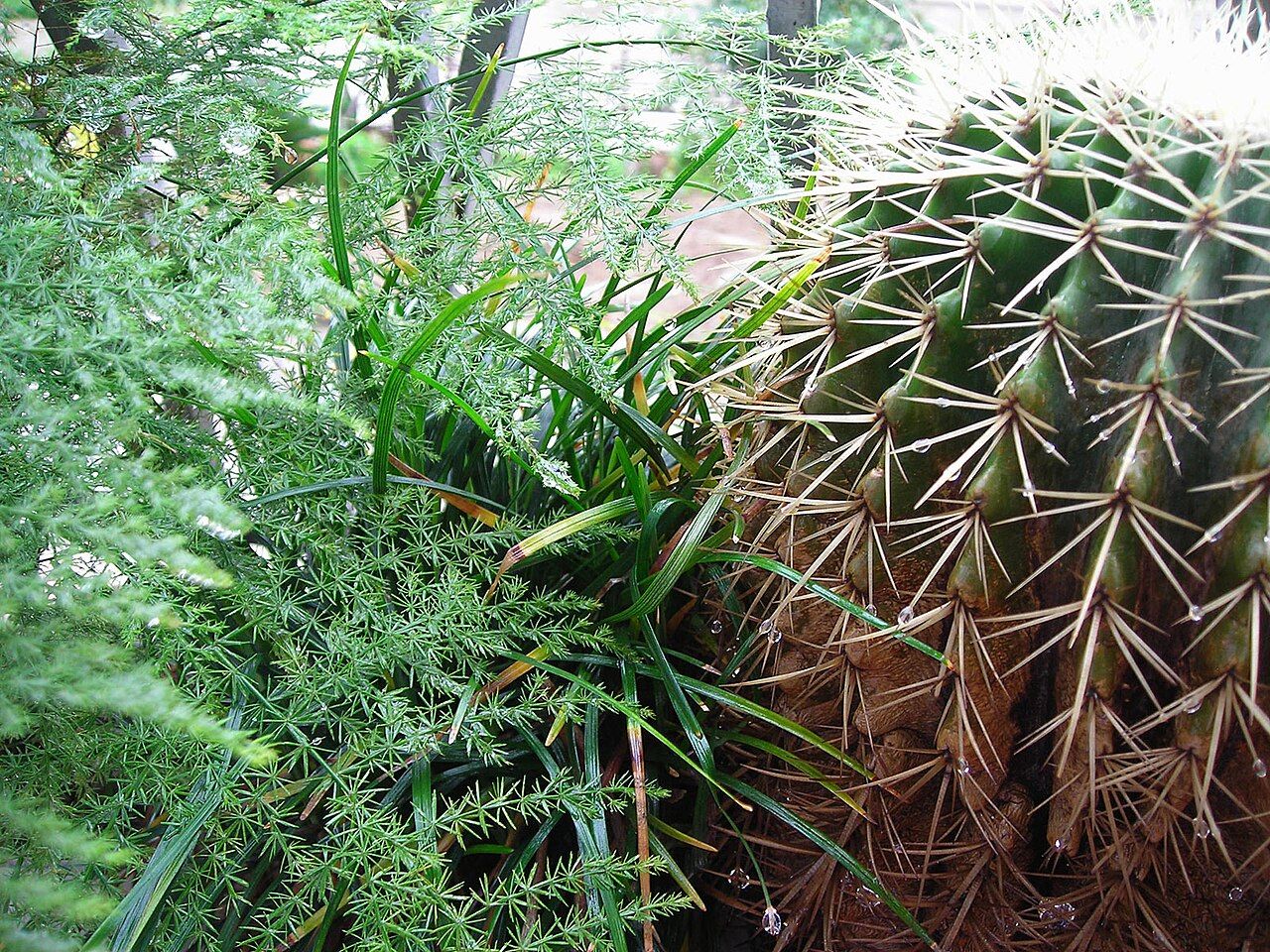
The opening photograph shows a balcony corner where a round cactus and narrow-leaved plants gather after rain. Although droplets remain equally on leaves and spines, the same amount of water may not have reached each pot’s soil. Outdoors, the depth of the eaves, overlapping foliage, and pot position alone change exposure to rain. Afterward, the work is not one task for all pots, but reading each difference.
Look Inside the Pot, Not at Rainfall Alone
Japan Meteorological Agency data for a specified period continued to tally heavy rain associated with atmospheric instability from August 13 through 24, 2026. Yet rainfall across a broad region and the water received by one pot at home are different information. A brief shower may wet only the top few centimeters of medium, while a pot exposed to wind-driven rain for hours may be moist to the bottom. Rain does not support a universal decision to skip watering.
First lift the pot slightly with both hands. If you remember its dry-day weight, the added water is easier to compare. Then put a finger into the medium and check not only the surface but roughly one-third of the pot’s depth. For a large pot that cannot be lifted, a wooden chopstick inserted into the medium can help reveal moisture. Do not judge from leaves alone; consider weight and soil together.
First Clear the Water’s Exit
After rain, empty any water left in a saucer or cachepot. University of Illinois Extension advises removing excess water from saucers so the growing medium can dry somewhat. With a double pot, lift the inner pot and check for water at the bottom of the outer one. Except for aquatic plants and similar species, avoid leaving the root ball immersed in standing water.
Inspect the drainage hole as well. Is it blocked by soil or fine roots, or covered because the pot sits directly on the floor? University of Maryland Extension suggests raising pots slightly on pot feet or bricks. A gap of a few centimeters makes drainage easier to see and the balcony easier to clean.
A thick internal layer of gravel or broken pottery does not necessarily improve drainage. University horticultural guidance explains that a coarse layer beneath the medium may fail to improve drainage and can leave a perched wet layer above it. What matters is that the container itself has appropriate drainage holes and that their exits remain open.
Check the Weight Before Watering a Wilted Plant
Drooping leaves invite an automatic addition of water. But wilting does not indicate dryness alone. Virginia Tech materials show that leaves may also wilt when roots struggle to obtain oxygen in an overly wet environment. If the medium is saturated and the pot heavy while leaves lose strength, inspect drainage and the plant’s base before adding more water.
Soft yellow leaves, algae or moss on the medium, and a pot whose weight stays unchanged can also suggest excess moisture. Do not diagnose root rot from one symptom alone. Species, medium, sunlight, wind, and recent repotting all matter. If there is a strong odor, black soft roots, or collapse at the crown, treat it separately from routine watering adjustment and consult a garden retailer or specialist.
Pot Material Changes Drying Speed
Unglazed clay, glazed ceramic, plastic, and metal dry differently even at the same size. Porous terracotta and wood lose moisture through their sides more readily, while glazed ceramic, plastic, and metal tend to retain it. Pot depth, soil volume, and root density add further variables, so matching vessels visually does not require matching watering intervals.
Arrange a balcony by more than color and height. Loosely grouping pots with similar water needs makes decisions easier after rain. Consider wind exposure for fast-drying terracotta and rain exposure for moisture-retentive containers. Do not place moisture-loving and drought-preferring plants in the same saucer. Arranging pots creates a small landscape and designs the flow of water at once.
Leave One Image the Morning After Rain
After checking, photograph the pot and its position. Which received rain, and which stood beneath the eaves? Was the saucer removed or the pot raised? The photograph does not prove that care was correct; it provides a reference for the next rain. A short note on the pot’s weight when lifted also helps.
After rain, droplets on leaves easily draw the eye. Yet water inside the soil and beneath the container determines the next few days. Empty the saucer, inspect the exit, lift the pot—then add water only to the pot that needs it. Late-summer watering can shift from one task governed by the sky to time spent reading differences among containers.