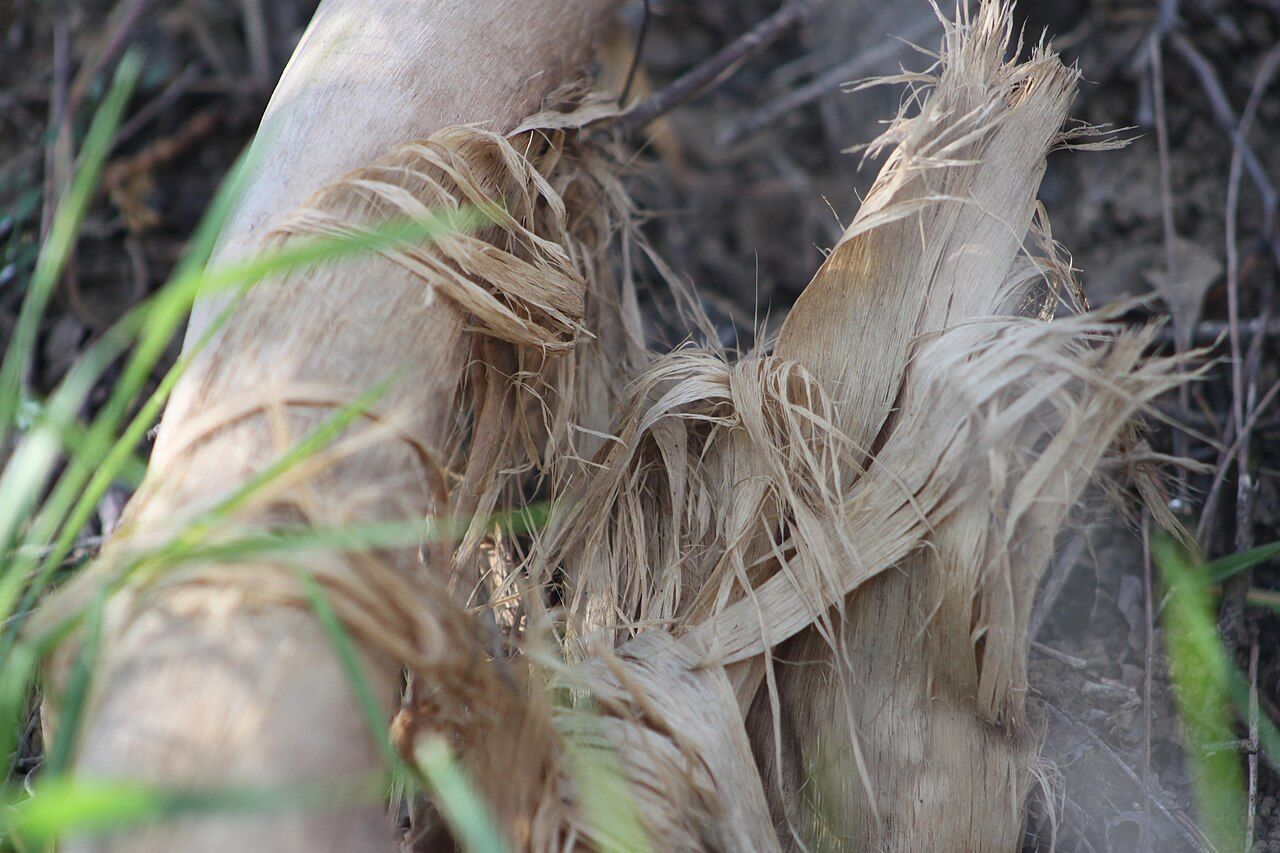
The photograph shows retted hemp fibers. Fine bundles removed from stems reveal the material before it becomes a chair or exhibition object. Because it is not a work in this exhibition, it should not be connected with a particular designer or product. Yet as an entrance returning attention from finished object to plant, the fiber closely approaches the exhibition’s question.
Look at Material History, Not Leaf Shape
Plant Life: The Nature of Design runs August 28, 2026–February 7, 2027, at The Ian Potter Centre: NGV Australia at Federation Square. Admission is free. More than 60 works across furniture, architecture, craft, photography, and video show plant and fungal materials questioning dependence on petroleum-based and nonrenewable resources. This is not an exhibition of floral patterns or leaf outlines. Plants appear as cores, walls, and compositions of things worn—not motifs decorating their surfaces.
A chair by Joris Laarman, for example, invites thought about plant-based resin and plywood. Crafting Plastics! Studio and Kate Scardifield move bioplastics and algae-derived materials into forms that include translucency and softness. Familiar chairs and fabrics connect, when followed through material names, to fields, seas, forests, and cultivation processes. Looking beyond finished form to what made it possible is the exhibition’s point of departure.
Hemp and Mycelium Become a Chair’s Core
In the Banet Chair by the Netherlands-based Aifunghi, mycelium binds hemp fiber to form the chair’s core. Fungi are not plants. Rather than treating them as one thing, see the relationship in which another organism joins plant fibers. The maker says mycelium is grown through fibers packed into a mold, then dried to fix the structure. If the photographed hemp remains loose, the chair shows the form after biological growth has crossed its spaces.
RMIT’s Mycelium Wildfire Jacket also brings mycelium material closer to clothing. Clothing and furniture require different strength, contact, and lifespans. Prototypes and exhibition pieces cannot be described as widely distributed alternatives. More important, plant and fungal materials cannot end with the phrase “good for the environment”; durability, production scale, and destination after disposal must also become design questions. New materials require not only new forms, but new measures for evaluation.
Palm Fiber Measures the Scale of Architecture
At architectural scale, the exhibition presents a mosque made from palm waste by East Architecture Studio. NGV says its woven exterior uses approximately 200 kilometers of palm fiber and its walls incorporate waste from 150 date palms. The numbers show more than volume. Architecture can be broken down from something immense and remote from one plant into the number of trees, length of fiber, and regional craft gathered within it.
Fernando Laposse’s Conflict avocados reconnects the fashionable food with land use and resources in producing regions. The exhibition also includes Indigenous practices involving bull kelp, bamboo, natural rubber from Hevea, and plant fibers. If plant materials are presented only as future inventions, long-held knowledge of gathering, weaving, and use disappears. Placing competitive innovation beside techniques rooted in place asks whose history of material is being told.
Reconsider the Room Through Plants
Being plant-derived does not make a material preferable by itself. Cultivation land, water, processing energy, service life, and recovery method prevent ranking by material name alone. Plant Life is compelling because it does not position plants as innocent answers; it returns extraction and industry, local knowledge, and the end of use to design. By another route than bringing a living pot indoors, it shortens the distance between plants and daily life.
Free opening talks with designers and researchers are planned for August 28, followed by a curator tour on August 29; check official information for reservation terms. Even without visiting Melbourne, published descriptions can encourage a closer look at labels on nearby chairs, fabrics, and baskets. Trace not only wood, but resin feedstocks, what binds fibers, and what covers surfaces: multiple plants may exist inside one product.
Welcoming plants into a room does not mean only planting them in pots. Knowing what land and material produced the chair beneath you or the fabric you wear can also belong to a life with plants. Return the gaze from product name to material, and from material to cultivation or gathering. Everyday objects then rise not only as forms, but as things carrying histories of arrival.