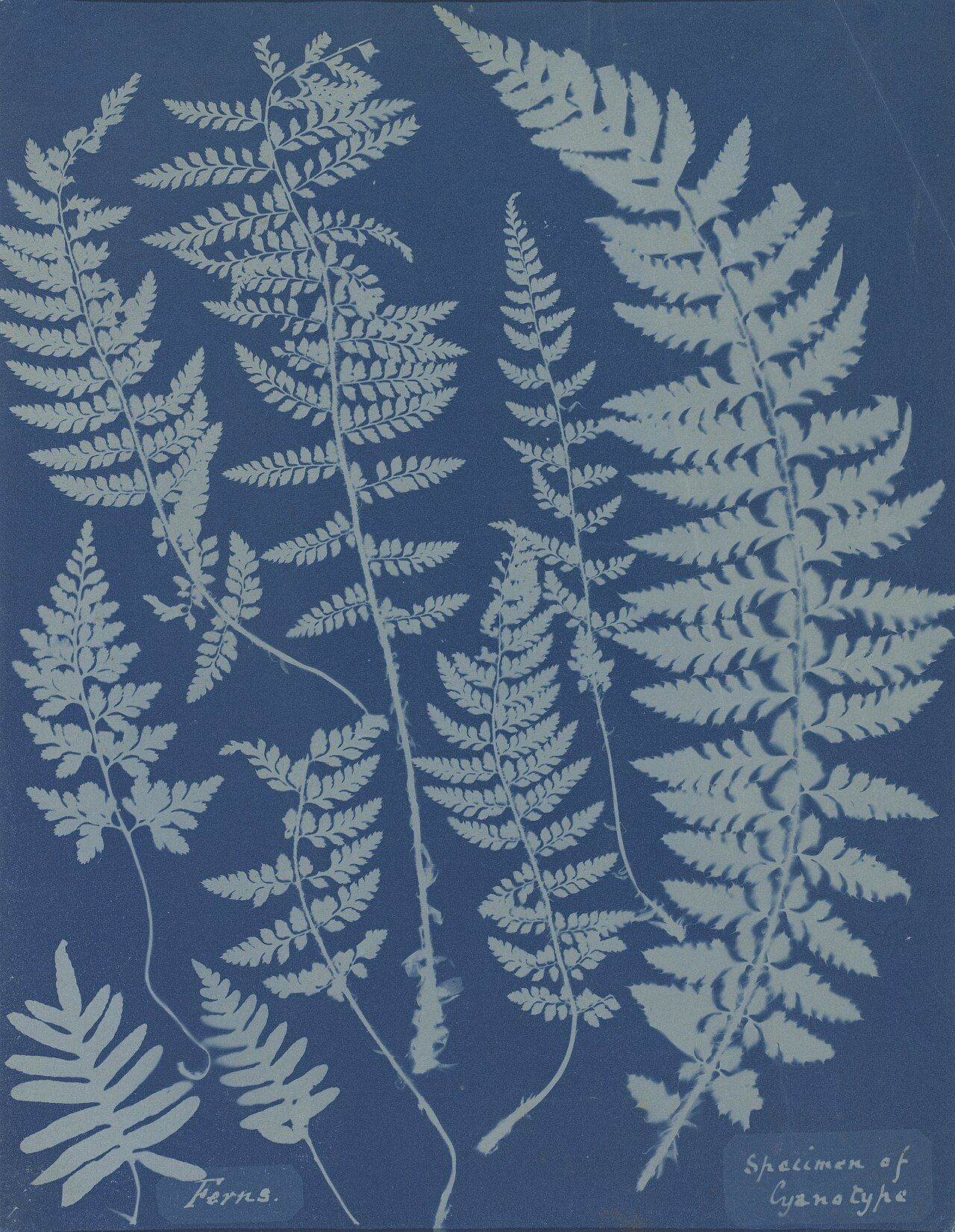
Many species of fern overlap on one sheet. The leaves are not painted blue. Only the areas beneath the plants remain white, preserving fine pinnae and curving stipes. Made by Anna Atkins in the 1840s, this cyanotype recorded plants as contact traces rather than translating them into ink lines. The image is not clothing from the collection, but historical material for understanding its botanical background.
Before Plants Became Pattern, They Were Collected
Temperley London names Victorian fern fever and Hollywood’s 1930s enthusiasm for palms as starting points for Summer 2026. The former generated a culture of seeking wild ferns, cultivating them, and preserving them in albums. The latter multiplied tropical silhouettes in the gardens and streets of the film capital. The brand layers these two botanical enthusiasms from different places and eras into a high-summer wardrobe.
Crucially, ferns and palms are not flattened into one botanical print. Official descriptions name distinct processes: cyanotype, Gothic embroidery, filigree-like work, hand-painted flowers and leaves, and appliqué. Preserve a leaf’s contour, expand it into a field of color, or build thickness with thread—the collection’s range comes from changing the treatment of line for each plant.
Blue Is a Plant’s Shadow, Not a Printing Color
Cyanotype is a photographic process in which paper or cloth sensitized with iron salts is exposed to sunlight and developed in water. When a plant rests on the paper, exposed areas become blue and blocked areas emerge as white forms. Atkins used it to record algae and ferns, developing the technique into early books illustrated with photographs. The spare blue-and-white image has the force of both plant specimen and abstraction.
Temperley London cites cyanotype inspiration, but does not state that a specific Atkins work was used directly. This article likewise does not suggest a collaboration or quotation. What matters is that a way of recording leaves remains, roughly 180 years later, a vocabulary for thinking about clothing surfaces. Beyond realistic depiction, there are entrances through contour, shadow, and repetition.
Fern, Ivy, Palm: Changing the Line with Each Material
In Ivy Story, hand-painted alstroemeria and ivy are placed on silk satin. The flow of vines and layered petal colors give direction to a flat print. Baxter Story joins palms painted in gouache with the feeling of vintage travel posters, developing them through print and embroidery. Here leaves do not stand still like specimens; they work as broad fields that imagine travel.
Madeline Story combines hand-guided embroidery with appliqué fringe. Thickness and movement enter leaves and flowers, and their contours loosen as the wearer walks. For a brand based at its Somerset atelier, handwork is less a contest of ornamental quantity than a translation of a design’s character into material. Fern intricacy, a palm’s broad arc, and a flower’s field of color cannot be expressed with the same stitch.
Vogue Runway’s review likewise reads the collection through British fern fever and Hollywood palms, noting the coexistence of rich decoration and wearability. What official materials can make easy to miss is that botanical history is not confined to garment descriptions; it disperses across translucent materials, relaxed silhouettes, and surfaces bearing traces of the hand.
To Wear Plant History, Look at Differences in Technique
Summer 2026 is currently presented as available for purchase on the brand’s official site. Inventory, price, and distribution vary by country and store, so confirm the latest official listing before buying. When viewing looks on-screen, do not merely search for a preferred floral print. Move closer in order: blue-and-white contour, hand-painted fields of color, raised thread. The plant changes each time.
Realistic print is not the only way to bring plants into clothing. Collect, expose with light, exaggerate with a brush, raise with thread. Temperley London gathers those different processes into one summer. When looking at a familiar fern, consider not only its name but which lines you would want to preserve. Seeing a plant and choosing the surface of cloth move slightly closer there.